
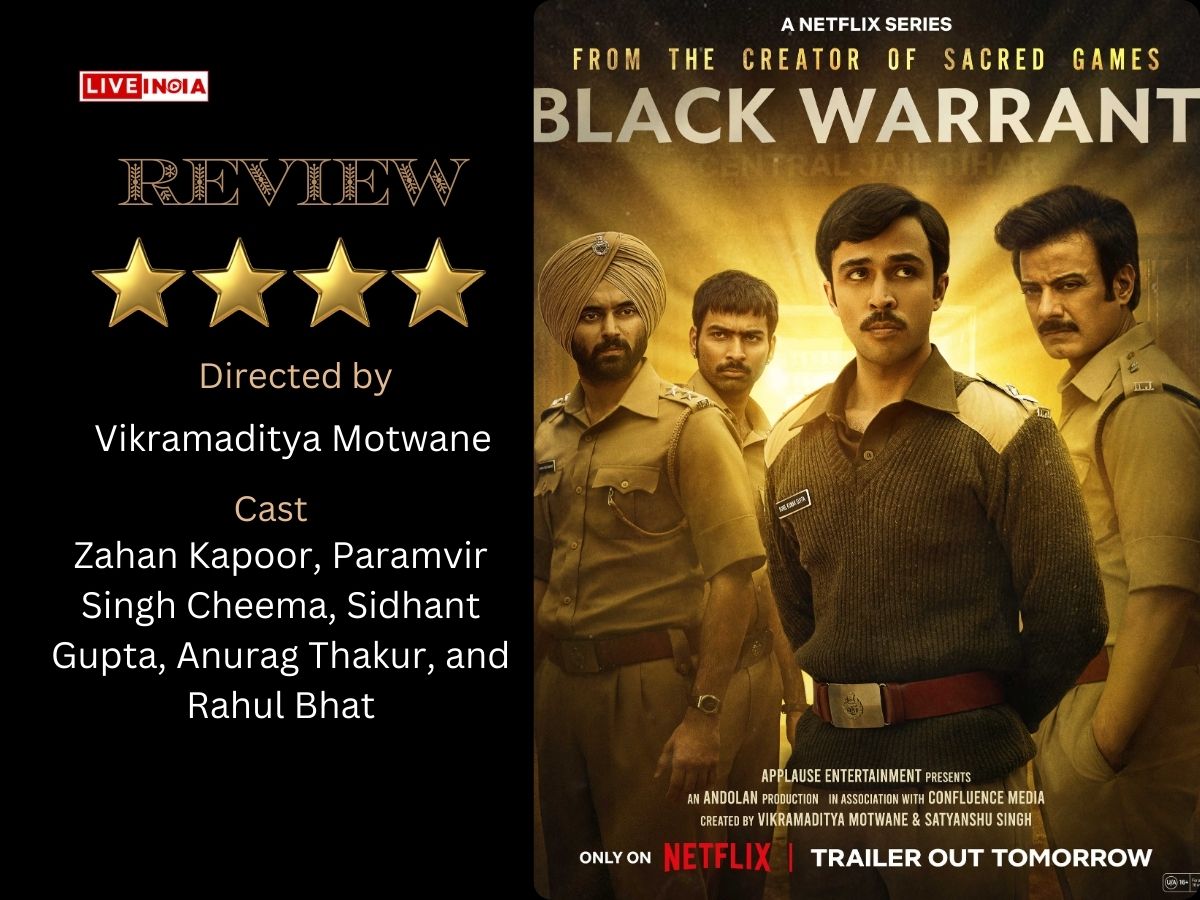


A riveting prison drama blending human resilience and institutional flaws, Black Warrant captures the highs and lows of India’s infamous Tihar Jail.
The adage “The nail that sticks out gets hammered” finds its grim embodiment in Black Warrant, Vikramaditya Motwane’s gripping 7-episode OTT series now streaming on Netflix. Set in the chaotic world of Tihar Jail during the 1980s, the show is a deeply engaging adaptation of Black Warrant: Confessions of a Tihar Jailer, the memoir by Sunil Kumar Gupta, a former superintendent at the notorious prison.
A Story Rooted in Reality
The series unfolds in 1981, following Sunil Gupta (Zahan Kapoor), a young, idealistic Assistant Superintendent thrust into the morally ambiguous corridors of Tihar Jail. Frail in stature but determined in spirit, Gupta’s journey charts his transformation from a reserved rookie into a crusader for prison reform.
The narrative seamlessly weaves in notorious inmates, including Billa-Ranga, Maqbool Bhat, and Charles Sobhraj, offering tantalizing glimpses of their infamy. But these infamous figures serve more as atmospheric backdrops to the real focus: the lives of prison enforcers. The finale, “Double Umar Qaid (Double Life Sentence),” poignantly sums up the series’ theme as Mangat (Paramvir Singh Cheema) observes that life in Tihar is harsher for the officers, who endure a figurative double sentence.
Performances That Leave a Mark
Zahan Kapoor’s portrayal of Sunil Gupta is nothing short of spectacular. His arc—from an underconfident newcomer to a reformist challenging the status quo—forms the emotional backbone of the series. Kapoor channels the grace of his legendary grandfather Shashi Kapoor, delivering a nuanced and compelling performance.
Sidhant Gupta, as the enigmatic Charles Sobhraj, adds layers of intrigue. The chemistry between Zahan and Sidhant lights up the screen, with their tense, cerebral exchanges forming the highlight of the show.
Paramvir Singh Cheema, Anurag Thakur, and Rahul Bhat provide stellar support as Gupta’s conflicted colleagues, each grappling with the complex morality of their roles.
Motwane’s Masterstroke
Motwane, along with co-directors Satyanshu Singh, Ambiecka Pandit, Arkesh Ajay, and Rohini Raveendran Nair, creates a deeply immersive world. From the claustrophobic cells to the bustling prison yards, the show’s production design and cinematography bring Tihar to life. The narrative is laced with moments of introspection and raw human emotion, balancing the brutality of prison life with glimpses of perseverance and hope.
What Makes It Stand Out
- Human Drama Meets Institutional Critique: The series balances the gritty realities of corruption, violence, and gang dynamics with moments of quiet humanity. Themes of faith, friendship, and resilience elevate Black Warrant beyond standard prison dramas.
- Technically Superior: The meticulous production design, taut editing, and atmospheric score underscore the storytelling, immersing viewers in the grim world of Tihar.
- Relevant Socio-Political Commentary: Through Gupta’s eyes, the series critiques the inefficiencies and moral decay of India’s correctional system while championing reform.
Final Thoughts
Black Warrant is not just a story about life behind bars—it’s a tale of courage, change, and the pursuit of justice within a flawed system. With its powerful performances, especially from Zahan Kapoor, and Motwane’s deft direction, the series stands out as a compelling addition to Netflix’s catalog.
For those who appreciate gripping human dramas intertwined with historical commentary, Black Warrant is an unmissable binge-worthy show.
Tags: Black Warrant Netflix review, Vikramaditya Motwane series, Tihar Jail drama, Zahan Kapoor debut, Charles Sobhraj story, prison reform series, Indian Netflix Originals, human resilience in prisons
#BlackWarrant #NetflixSeries #VikramadityaMotwane #TiharJail #PrisonDrama #ZahanKapoor #IndianWebSeries