
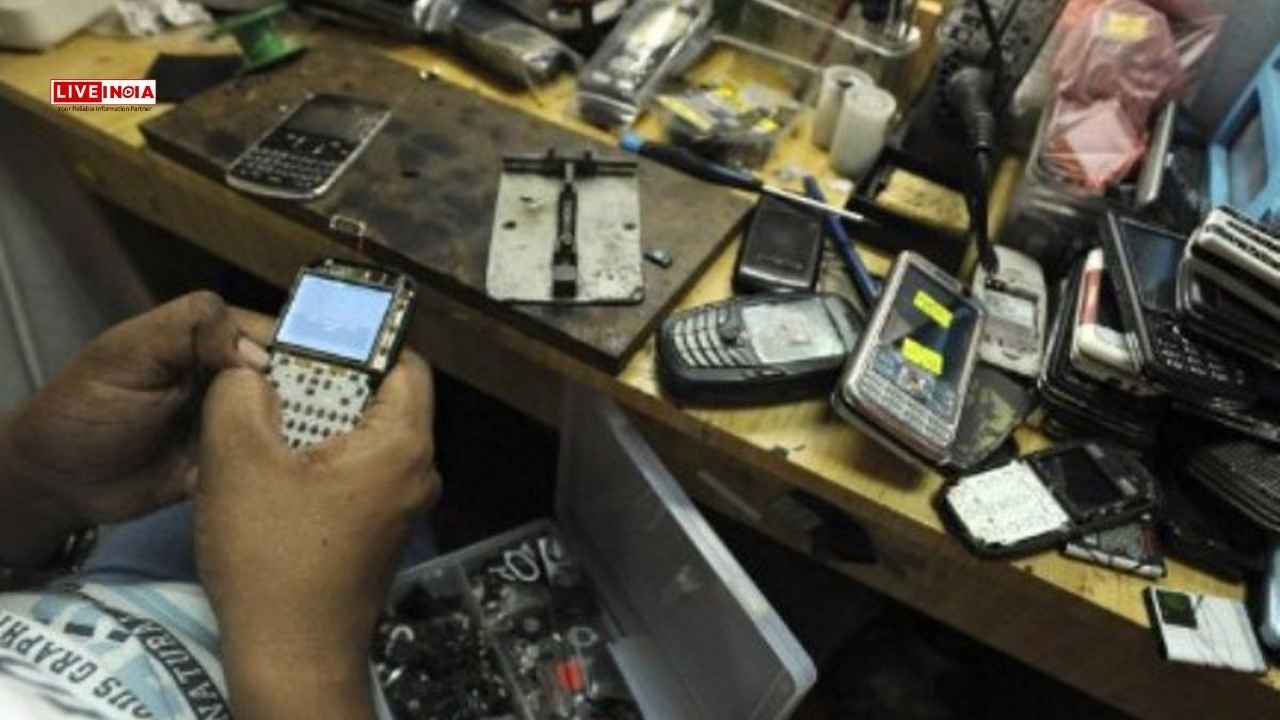


With e-waste skyrocketing, a new eco-friendly method can recover gold from electronics without toxic chemicals—offering a breakthrough in sustainable recycling.
June 28, 2025: In a significant breakthrough for sustainable technology, scientists have unveiled a new eco-friendly and cost-effective method to extract gold from discarded electronics such as old phones, laptops, and tablets. The method, published in Nature Sustainability, could revolutionize e-waste recycling and help recover billions worth of precious metals otherwise lost in landfills.
Also Read: Wait Before Buying! Major Phones Coming July 2025 Foldable phones
Driven by the AI and digital boom, global e-waste has reached record levels, with 62 million tonnes generated in 2022 alone—an 82% increase since 2010, according to the UN’s Global E-Waste Monitor (GEM). And this number is expected to climb to 82 million tonnes by 2030. Shockingly, only 1% of rare earth elements needed globally are currently recovered from e-waste.
How the Method Works
This newly developed technique uses a three-step process that avoids the toxic chemicals common in traditional gold mining and recycling:
Also Read: WhatsApp Launches AI-Powered Chat Summaries: Here’s How It Works
- Step 1: Gold Dissolution – Gold is dissolved from electronic parts using trichloroisocyanuric acid, activated by a halide catalyst.
- Step 2: Gold Binding – A custom polysulfide polymer binds selectively with the dissolved gold in the leach solution.
- Step 3: Gold Recovery – The bound gold is then recovered in high purity by heating (pyrolysis) or breaking down (depolymerizing) the polymer.
The process has shown effectiveness not just on e-waste, but also on natural ores, making it a versatile and sustainable solution. By eliminating the need for mercury and cyanide, it also avoids the environmental damage associated with small-scale gold mining.
Also Read: POCO F7 5G: Price, Specifications And More
Why It Matters
This innovation could help transform discarded gadgets into a valuable secondary resource, aligning with global efforts to reduce landfill waste and promote circular economies. The method is being hailed as a scalable and safer alternative, with strong potential for commercial application.
As the mountain of global e-waste continues to grow—estimated to weigh as much as 1.55 million 40-tonne trucks circling the globe—this discovery offers a beacon of hope. Turning trash into treasure, the process not only supports cleaner environments but also ensures precious resources are not lost forever.
Tags:
gold extraction, e-waste recycling, phones, laptops, electronic waste, Nature Sustainability, green tech, rare earth recovery, gold recovery method, trichloroisocyanuric acid, sustainable science, recycling innovation, digital waste, gold from gadgets