
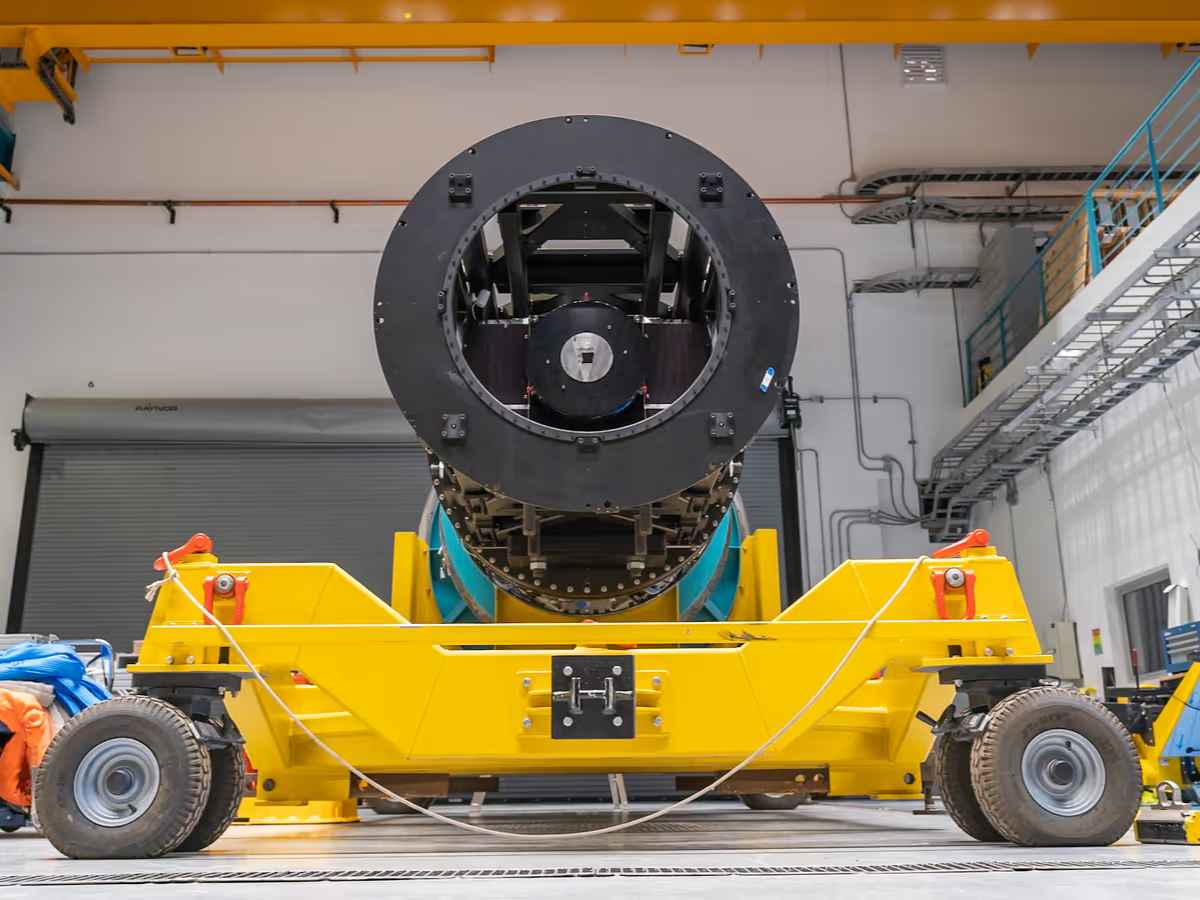


June 18, 2025: The world’s largest digital camera, the Legacy Survey of Space and Time (LSST) Camera, is now operational and ready to capture unprecedented images of the universe. This monumental instrument boasts a resolution of 3,200 megapixels, making it the most powerful camera ever constructed for astronomical research.
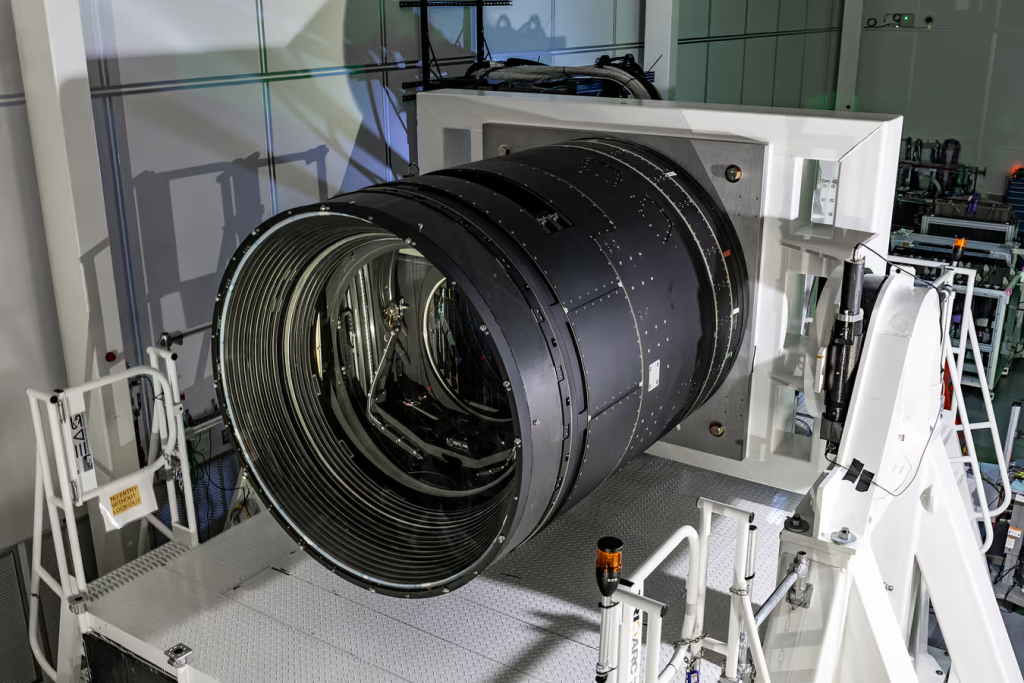
🔭 Key Specifications
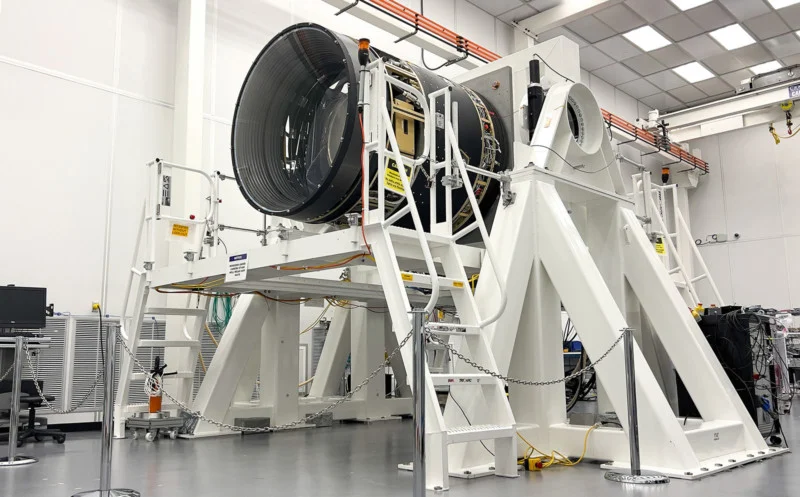
- Resolution: 3,200 megapixels (3.2 gigapixels)
- Size: Approximately the size of a small car
- Weight: Around 6,600 pounds (3,000 kg)
- Front Lens Diameter: Over 5 feet (1.57 meters)
- Focal Plane: Comprises 201 custom-designed CCD sensors arranged across 21 “rafts”
- Pixel Size: Each pixel measures 10 microns
- Field of View: Covers a portion of the sky about the size of 40 full moons
- Sensitivity: Capable of detecting objects 100 million times dimmer than those visible to the naked eye.
🌌 Scientific Objectives
Housed at the Vera C. Rubin Observatory atop Cerro Pachón in Chile, the LSST Camera is designed to conduct a comprehensive survey of the southern sky. Over the next decade, it will:
Map the Universe: Create a detailed map of the night sky, capturing images of approximately 20 billion galaxies and 17 billion stars.
Study Dark Matter and Dark Energy: Investigate the properties and distribution of dark matter and dark energy, which constitute most of the universe’s mass and are believed to drive its accelerated expansion.
Monitor Cosmic Phenomena: Detect and analyze transient events such as supernovae, asteroids, and other dynamic celestial objects.
Explore the Milky Way: Conduct detailed studies of our galaxy’s structure and evolution.
📸 Imaging Capabilities
The LSST Camera’s high resolution allows it to capture incredibly detailed images. For context, its images are so sharp that it could resolve a golf ball from approximately 15 miles (24 kilometers) away. Each image encompasses a vast area of the sky, enabling astronomers to observe and analyze cosmic structures with unprecedented clarity.
🌠 Data Collection and Analysis
The camera is designed to capture 1,000 images per night, each with a 15-second exposure time, resulting in a daily data collection of about 20 terabytes. This immense volume of data will be processed and analyzed to uncover new insights into the universe’s composition and behavior.
The LSST Camera represents a significant leap forward in astronomical instrumentation, offering scientists a powerful tool to explore the cosmos in greater detail than ever before.