
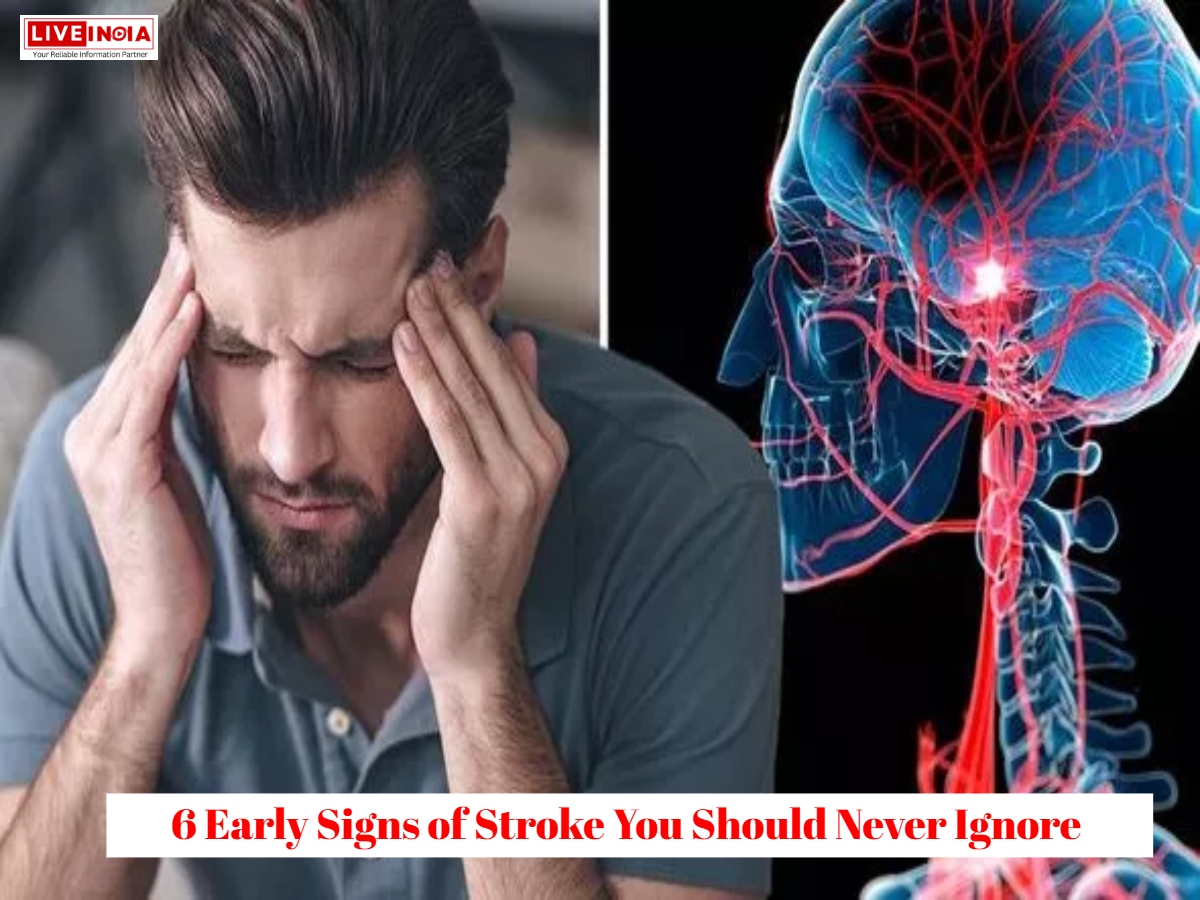


July 6, 2025: We often think of a stroke as something that strikes suddenly — without warning. But did you know that our body usually tries to send signals before it happens? These signs may appear days or even weeks before a stroke. The catch? They’re so subtle, we often mistake them for regular tiredness, stress, or aging.
But being alert to these early signs can literally be life-saving. Let’s break them down, one by one, in a way that’s easy to understand.
1. Dizziness That Feels Different From Usual
Feeling dizzy once in a while is common, especially if you skipped a meal, got up too fast, or haven’t had enough water. But sudden dizziness that feels unusual — like the room is spinning, or you’re having trouble walking straight — could be your brain warning you.
According to the American Stroke Association, this type of vertigo, especially when it doesn’t go away quickly or seems out of the blue, may indicate a problem in the posterior part of the brain — the area responsible for balance and coordination. If it keeps coming back or feels different from your regular dizzy spells, don’t ignore it.
2. Tiredness That Feels Like Your Body Is Slowing Down
Everyone feels tired after a long day, but this kind of fatigue feels deeper — like your body is running in slow motion. Stroke survivors often recall feeling drained and weak for days or even weeks before their episode.
Neurologists suggest that this could happen when the brain is silently dealing with mini clots or reduced blood flow. It’s not just “low energy” — it’s your body sending a distress signal.
3. A New Kind of Headache That Won’t Go Away
We all get headaches, especially due to stress or long hours on screens. But when you get a headache that feels different, comes more often, is more intense, or doesn’t go away with usual treatment — it could be a red flag.
Studies have shown that unusual headaches, particularly in people who don’t usually get them, may be linked to narrowing blood vessels or clot formation. You may feel pressure on one side of your head, behind your eyes, or experience a throbbing sensation that’s new.
4. Numbness or Tingling — Especially on One Side
If your arm or leg goes numb after sitting awkwardly, that’s normal. But if you suddenly feel numbness or tingling on one side of your face, arm, or leg — and it keeps happening — don’t take it lightly.
This is a classic sign of a transient ischemic attack (TIA), also called a mini-stroke. TIAs are strong predictors of a major stroke in the near future. Even if the symptoms go away on their own, you must consult a doctor immediately.
5. Vision Trouble That Isn’t Just “Tired Eyes”
Blurred vision, seeing double, or temporary blackouts in one eye? Most of us blame it on long screen time or bad lighting. But if this keeps happening — especially suddenly — it might be because your brain isn’t getting enough oxygen.
Vision is often the first thing affected when blood flow to the brain is compromised. If one eye goes blurry, you see tunnel vision, or your sight blacks out for a few moments — take it seriously, especially if it happens more than once.
6. Difficulty Speaking or Understanding Others
Ever felt like you couldn’t find the right word or said something totally wrong without realizing it? It can be funny once or twice, but if it keeps happening, it could be an early sign of aphasia — a condition linked with strokes.
This may show up as:
- Slurred speech
- Mixing up words
- Struggling to understand simple conversations
This happens when the language centres in the brain aren’t getting enough oxygen. It’s subtle, but if you find it hard to talk or make sense of speech more than once, it’s worth checking out.
Final Thoughts
These signs don’t mean you’re definitely going to have a stroke, but they shouldn’t be ignored, especially if you’re at risk due to high blood pressure, diabetes, smoking, or a family history of stroke.
If you or someone you know is experiencing any of these symptoms repeatedly, consult a doctor immediately. Acting early can prevent serious damage and even save lives.