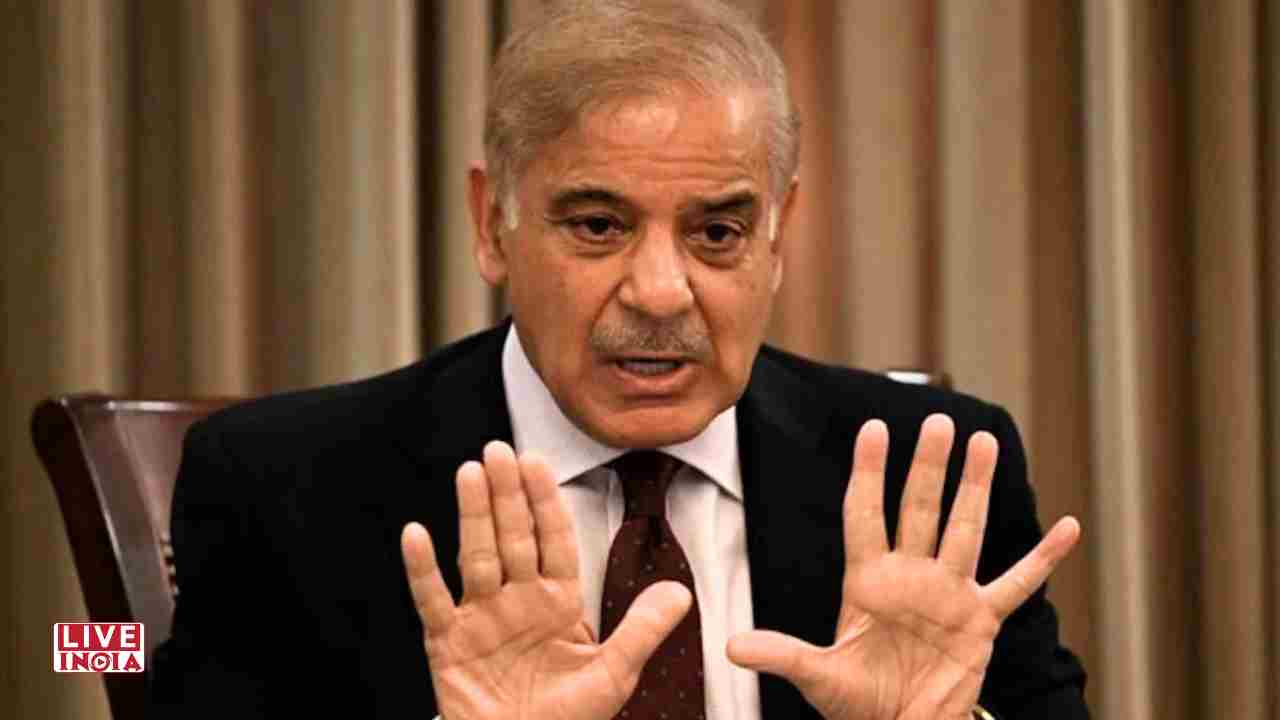
After series of denials, Pakistan PM Sharif admits India's missiles hit Nur Khan Airbase
New Delhi [India], May 17:
In a rare and revealing admission, Pakistan’s Prime Minister Shehbaz Sharif has publicly confirmed that Indian ballistic missiles struck Nur Khan Airbase and multiple other military sites on May 10. This marks a stark departure from Pakistan’s usual practice of downplaying or denying Indian military actions.
Speaking during a ceremony at the Pakistan Monument, Sharif disclosed that he was contacted around 2:30 am by Army Chief General Syed Asim Munir, who informed him of the missile strikes. “At around 2:30 am on May 10, General Syed Asim Munir called me on a secure line and informed me that India’s ballistic missiles had hit Nur Khan Airbase and other areas,” Sharif said, according to Geo News.
Sharif also highlighted Pakistan Air Force’s response, referencing the use of indigenous technology and Chinese fighter jets to safeguard Pakistani airspace.
The statement has drawn strong reactions in India. BJP leader Amit Malviya commented on social media platform X, emphasizing the scale and precision of India’s Operation Sindoor. “Let that sink in — the Prime Minister was woken up in the middle of the night with news of strikes deep inside Pakistan. This speaks volumes about the scale, precision, and boldness of #OperationSindoor,” Malviya posted.
Operation Sindoor, launched by India on May 7, was a calculated military operation in retaliation to the Pahalgam terror attack of April 22, which left 26 civilians dead. Indian armed forces targeted and destroyed terror infrastructure across Pakistan and Pakistan-occupied Jammu and Kashmir, reportedly eliminating over 100 terrorists affiliated with Jaish-e-Mohammed, Lashkar-e-Taiba, and Hizbul Mujahideen.
In response, Pakistan initiated cross-border shelling and attempted drone incursions along the Line of Control and in Jammu & Kashmir. India responded by conducting coordinated strikes that significantly damaged radar systems, communication hubs, and airfields across 11 Pakistani airbases.
The intensifying hostilities culminated in a ceasefire understanding announced on May 10, shortly after the missile strikes — a moment now publicly acknowledged by Pakistan’s own leadership.
Sunny Deol and Akshaye Khanna face off in a high-stakes courtroom drama of ethics and…
No refund for Vande Bharat and Amrit Bharat tickets cancelled within eight hours of departure…
Services to four destinations suspended till February 28 over regional security concerns February 3, 2026:…
Eight Opposition MPs suspended after repeated disruptions over national security debate February 3, 2026: The…
Makers consider recast after Deepika Padukone’s exit from Kalki 2898 AD 2 February 3, 2026:…
Former India captain calls award a special moment, vows to keep winning matches for the…