
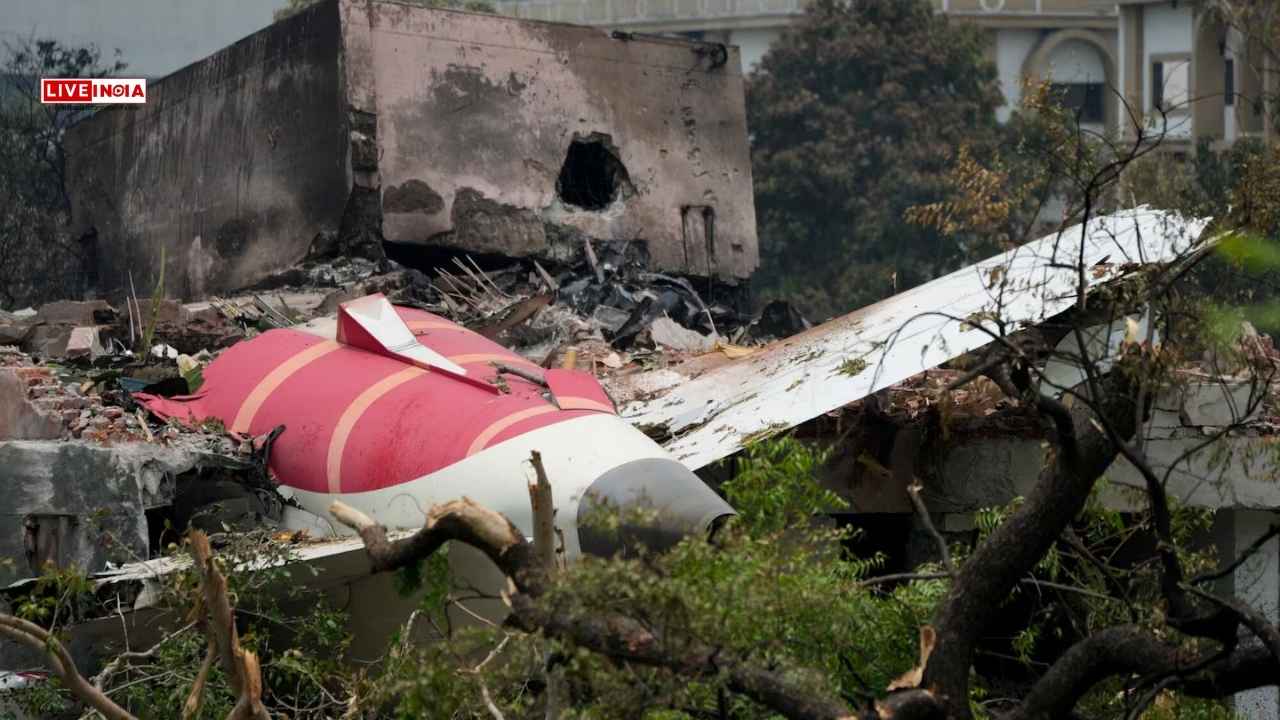


AAIB’s preliminary report on the Ahmedabad crash that killed 260 reveals a possible fuel cutoff failure, a 32-second flight, and desperate pilot attempts to recover control.
Ahmedabad | July 12, 2025 – The Aircraft Accident Investigation Bureau (AAIB) has released its preliminary findings into the Air India AI171 plane crash that occurred on June 12, resulting in the deaths of 260 people, including those on the ground. Only one passenger survived, making it one of India’s worst aviation disasters in decades.
The London-bound Boeing 787-8 Dreamliner crashed just seconds after taking off from Ahmedabad airport, slamming into a nearby hostel. The 15-page AAIB report outlines a sequence of technical and operational events that led to the catastrophe.
Also Read: Air India Crash Probe Focuses on Suspected Dual Engine Failure in Boeing 787 Dreamliner
Key Takeaways From the AAIB Crash Report:
- Fuel Cutoff Triggered Both Engine Shutdowns:
Within seconds of takeoff, the aircraft’s fuel control switches were moved from RUN to CUTOFF, shutting down both engines nearly simultaneously. - Startling Cockpit Audio:
One pilot is heard saying, “Why did you cut off?” The other responds, “I didn’t,” suggesting the transition to CUTOFF may have been inadvertent or due to malfunction. - Emergency Systems Engaged:
The Ram Air Turbine (RAT) – a device that provides hydraulic power in case of engine failure – deployed automatically. CCTV footage from the airport confirms the RAT deployed just seconds after liftoff. - Desperate Attempt to Restart Engines:
The pilots attempted to recover power. Engine 1 partially responded, but Engine 2 failed to reignite. Despite the relight attempt, the plane was airborne for only 32 seconds before crashing 0.9 nautical miles from the runway. - Thrust Lever Discrepancy:
Investigators found the thrust levers at idle, yet the black box data indicated takeoff thrust was still engaged. This points to a possible disconnect or system failure. - No Fuel Contamination:
Fuel samples tested clean, ruling out contamination from refueling. - Normal Takeoff Configuration:
The aircraft had a standard flap setting of 5 degrees, landing gear down, and good weather conditions with clear visibility and no bird activity. - Experienced and Fit Crew:
The captain had 8,200 flying hours and the first officer 1,100 hours. Both were rested, certified, and fit for duty. - FAA Advisory Ignored?:
A prior FAA advisory had flagged a potential locking issue with fuel control switches on Boeing aircraft. Air India reportedly did not conduct inspections to address this advisory. - No Sabotage, No Dangerous Goods:
The report found no signs of sabotage or any hazardous cargo. The aircraft was within weight and balance limits.
Also Read: UK families of AI-171 crash victims may sue Air India, Boeing over compensation
What Lies Ahead?
While the AAIB stresses that the report is preliminary, the findings suggest a possible critical design or maintenance oversight. The final report is expected to examine in detail whether Air India’s maintenance protocol failed to address the FAA warning or whether a design flaw played a fatal role.
Also Read: Why Air India Plane Crashed?
Tags:
Air India crash, AI171 crash report, Ahmedabad plane crash, Air India Boeing 787 accident, Aircraft Accident Investigation Bureau, Ram Air Turbine deployment, pilot cockpit recording, Boeing fuel cutoff flaw, FAA advisory ignored, Indian aviation disaster
#AirIndiaCrash #AI171Report #AhmedabadAccident #AAIBFindings #Boeing787 #AviationNews #PilotCommunication #RATDeployment #IndianAirTragedy #AviationInvestigation