Asia-Pacific Democracies Must Strengthen Resilience Amid New US-China Cold War, Says Expert in Taipei
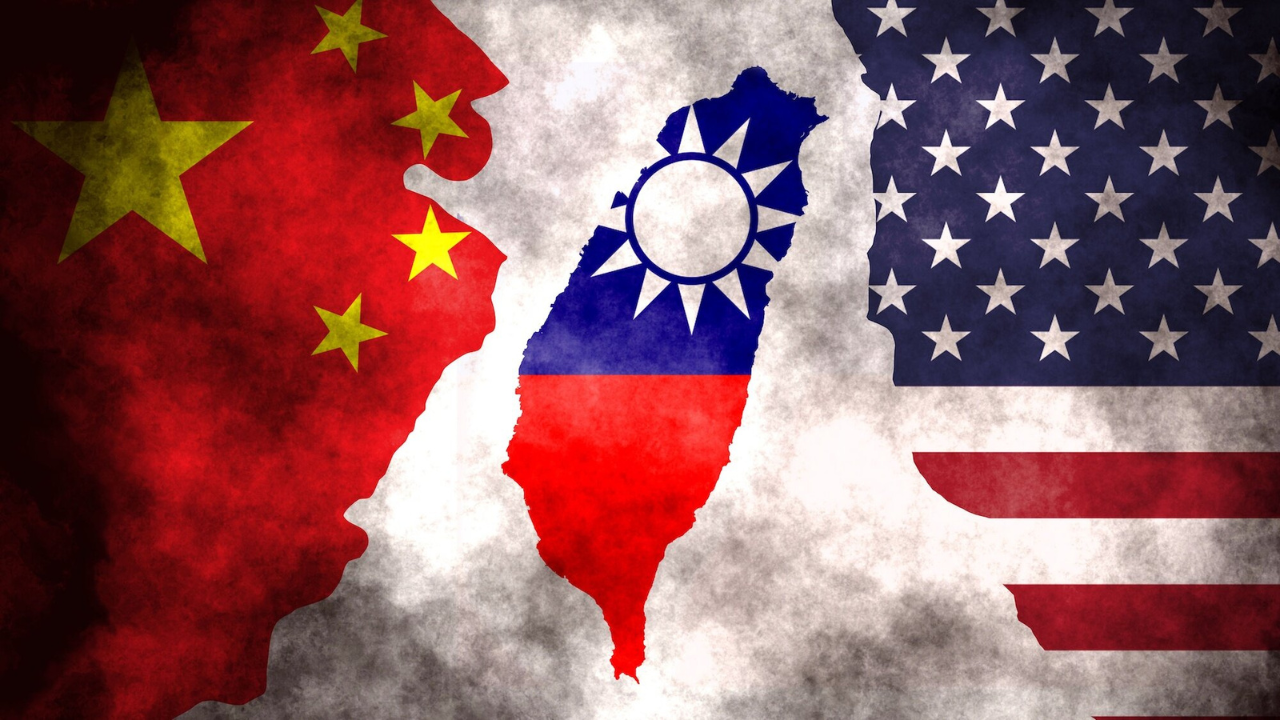
May 13, 2025: Liberal democracies in the Asia-Pacific must urgently boost their resilience and unity as the world enters a new Cold War, marked by deepening rivalry between the United States and China, a leading international affairs expert warned in Taipei.
Robin Niblett, distinguished fellow at Chatham House and senior adviser at the Centre for Strategic and International Studies (CSIS), said the confrontation between the two global powers now spans geopolitical, military, technological, and ideological domains.
Delivering the keynote address at a forum hosted by the Centre for Asia-Pacific Resilience and Innovation (CAPRI), Niblett emphasized the growing threat posed by China’s efforts to expand influence beyond the first island chain through naval expansion, nuclear buildup, and aggressive South China Sea maneuvers.
“If China wants to be economically secure as the world’s largest exporter, it wants to break out of the first island chain,” he said, warning that this effort is both strategic and ideological.
He underscored China’s “military-civil fusion”, a policy blending innovation with military enhancement, and said this underlines the Chinese Communist Party’s (CCP) broader goal of reinforcing authoritarian governance.
“This is not just a power contest—it’s an ideological clash between top-down authoritarianism and bottom-up democracy,” Niblett remarked.
According to Niblett, Russia’s invasion of Ukraine catalyzed the current phase of the US-China rivalry, solidifying alliances and exposing authoritarian cooperation.
“The US-China contest became a Cold War because of Russia’s full-scale invasion of Ukraine,” he explained, noting Beijing’s alignment with Moscow raised alarm among democracies in the region.
He also highlighted contrasting approaches between US Presidents Joe Biden and Donald Trump. While Biden has focused on strengthening alliances via platforms like the G7, Trump’s return would pose risks due to his transactional stance on international partnerships.
“Trump does not believe in alliances. He sees them as dependencies, not partnerships,” Niblett warned, cautioning that this could undermine regional security cooperation.
With “gray zone” warfare from China increasing—through military drills near Taiwan and assertive naval actions—Asia-Pacific nations fear the destabilizing effects of a “me-first” American approach under Trump.
To counter these threats, Niblett urged democratic nations in the region to:
“Taiwan’s future lies with the other liberal democracies that rely on America for their security,” he asserted, calling for closer cooperation with ASEAN, strategic engagement with Washington, and regional integration.
He concluded by urging democracies to prepare for recalibrated relations with the US, warning that the geopolitical landscape would remain unstable without strategic foresight and unity among like-minded nations.
In a deeply moving interview on the On Purpose podcast on February 5, 2026, singer…
On February 5, 2026, Prime Minister Narendra Modi addressed the Rajya Sabha to reply to…
In a shocking development for fans of the newly launched reality show The 50, veteran…
In a viral Instagram video shared on February 4, 2026, comedian Samay Raina delivered a…
New details have emerged in the investigation of the firing incident outside filmmaker Rohit Shetty’s…
Singer Talwiinder, the enigmatic masked voice behind hits like Khayaal, has finally addressed the whirlwind…