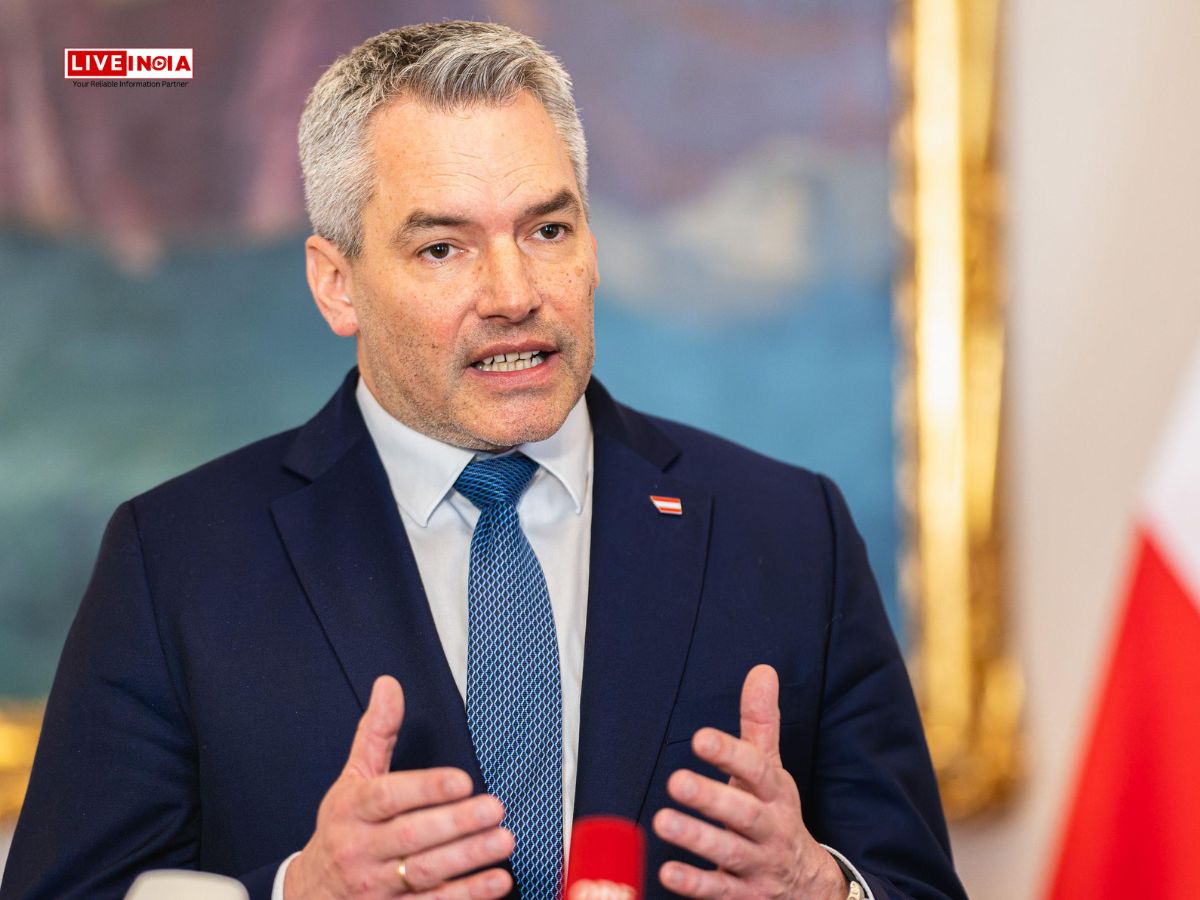
Austrian Chancellor Karl Nehammer Resigns After Failed Coalition Talks
Vienna [Austria], January 5: Austrian Chancellor Karl Nehammer announced on Saturday that he will resign as both Chancellor and Chairman of the People’s Party (ÖVP) in the coming days following the collapse of coalition talks with the Social Democrats (SPÖ) and liberal Neos party.
The announcement came shortly after the Neos party withdrew from negotiations, ending hopes of forming a centrist coalition that would exclude the far-right Freedom Party (FPÖ).
In a video statement shared on social media, Nehammer expressed disappointment over the failure to form a coalition despite what he called “long and honest negotiations.”
“After the breakoff of the coalition talks, I am going to do the following: I will step down both as Chancellor and party chairman of the People’s Party in the coming days,” Nehammer said.
He emphasized that his party would not support measures that could “harm the economy or introduce new taxes.”
On X (formerly Twitter), Nehammer wrote: “We have negotiated long and honestly. No agreement is possible with the SPÖ on key points. The People’s Party stands by its promises: We will not agree to measures that are hostile to performance and the economy or to new taxes. We are therefore ending negotiations with the SPÖ and will not continue them.”
The political deadlock stems from the refusal of most mainstream parties to form a coalition with the far-right Freedom Party (FPÖ), which secured nearly 30% of the vote in the September parliamentary elections. Despite its electoral success, the FPÖ’s eurosceptic stance and pro-Russia views have made it an undesirable coalition partner.
In October, President Alexander Van der Bellen tasked Nehammer with forming a government, but the failure of negotiations has left Austria in a state of political uncertainty.
Neos party leader Beate Meinl-Reisinger stated that “progress was not possible and fundamental reforms had not been agreed upon.”
Following Nehammer’s resignation, the People’s Party (ÖVP) is expected to convene to discuss potential successors. Meanwhile, President Van der Bellen might appoint an interim government while parties attempt to navigate the political impasse.
Austria faces serious economic challenges, including a €18-24 billion budget shortfall, rising unemployment, and ongoing recession for the past two years. The country’s budget deficit stands at 3.7% of GDP, exceeding the EU’s recommended limit of 3%.
The next government will need to implement significant fiscal reforms to address these economic concerns while navigating the fractured political landscape.
Indirect Muscat negotiations face agenda dispute as US urges citizens to leave Iran February 6,…
Production house rejects claims linking Delhi missing girls rumours to film publicity February 6, 2026:…
‘Tere Sang’ teaser goes viral ahead of Valentine’s Week release February 6, 2026: Singer Arijit…
Former Bigg Boss 9 contestant and singer Suyyash Rai has sparked a social media firestorm…
Congress MLC says Siddaramaiah will remain CM for full five-year term February 6, 2026: Congress…
In a major legal blow, Bollywood actor Rajpal Yadav surrendered to the Tihar Jail authorities…