
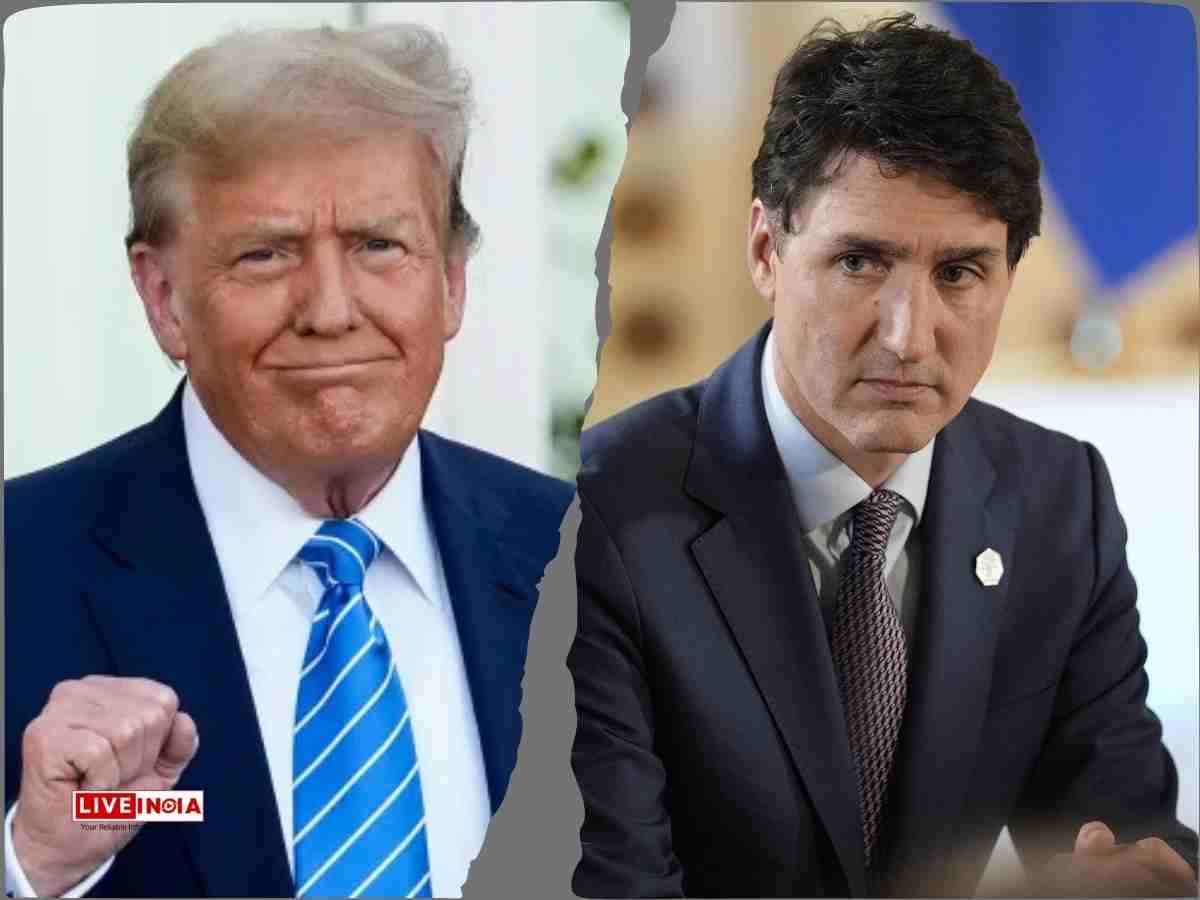


“Canada Will Not Let This Go Unanswered” – Trudeau Responds to U.S. Trade Action
Ottawa [Canada], March 4: Canada is gearing up for a trade war with the United States as Prime Minister Justin Trudeau announced retaliatory tariffs on U.S. goods, effective midnight on Tuesday, if Washington moves forward with its planned tariffs on Canadian imports.
The announcement follows U.S. President Donald Trump’s decision to impose 25% tariffs on Canadian exports and 10% tariffs on Canadian energy, a move Trudeau called “unjustified” and a violation of existing trade agreements.
Trudeau: “We Stand Firm for Our Economy and Workers”
In an official statement on Monday, Trudeau made it clear that Canada would not sit idle while its economy and workers were affected by U.S. trade aggression.
“Our tariffs will remain in place until the U.S. trade action is withdrawn,” Trudeau stated. “If U.S. tariffs do not cease, we are in active discussions with provinces and territories to pursue additional non-tariff measures. While we urge the U.S. administration to reconsider, Canada remains firm in standing up for our economy, our jobs, our workers, and for a fair deal.”
According to Trudeau, the new U.S. tariffs will disrupt the successful trade relationship between the two countries and could lead to higher costs for American consumers on essential goods like groceries, fuel, and automobiles.
Canada’s Retaliatory Measures
Trudeau outlined Canada’s retaliatory tariffs, which will be implemented in two phases:
✅ Immediate Tariffs: 25% tariffs on $30 billion worth of U.S. goods from midnight on March 5.
✅ Expanded Tariffs in 21 Days: An additional $125 billion worth of tariffs on U.S. imports if the U.S. does not withdraw its trade action.
“Canada will not let this unjustified decision go unanswered,” Trudeau warned.
Trump: “No Room Left for Canada or Mexico”
Trump, who paused the tariffs for 30 days in February, said he had hoped for progress on border security discussions but was now moving forward as planned.
“Tariffs are all set and are going into effect on March 4,” Trump said during an investment announcement. “No room left for Mexico or Canada.”
The U.S. has also announced additional 10% tariffs on China, further escalating trade tensions.
Fentanyl Crisis and Border Security at the Center of Trade Dispute
Trump has tied the tariffs to illicit drug trafficking, claiming that fentanyl from Canada and Mexico continues to flood into the U.S.
“Drugs are still pouring into our country from Mexico and Canada at very high and unacceptable levels. More than 100,000 people died last year due to the distribution of these dangerous and highly addictive poisons,” Trump said on Truth Social.
Trudeau pushed back on these claims, emphasizing Canada’s aggressive measures to curb fentanyl trafficking, including:
✔ A $1.3 billion border security plan
✔ Deployment of new helicopters and security personnel
✔ Creation of a U.S.-Canada Joint Strike Force on organized crime
According to Trudeau, these measures led to a 97% drop in fentanyl seizures at the U.S.-Canada border.
What’s Next? A Brewing Trade War
As both nations brace for economic retaliation, the stakes remain high. Canada and the U.S. have historically shared one of the largest trade partnerships in the world, but with both leaders digging in their heels, tensions are set to rise.
Will the two allies find common ground before economic repercussions hit businesses and consumers on both sides of the border? Or is this the beginning of a long and bitter trade dispute?
Tags:
Canada-U.S. Trade War, Justin Trudeau, Donald Trump, U.S. Tariffs, Canada Retaliation, Global Trade, Fentanyl Crisis, Economic Policy, International Relations, Trade Tensions