
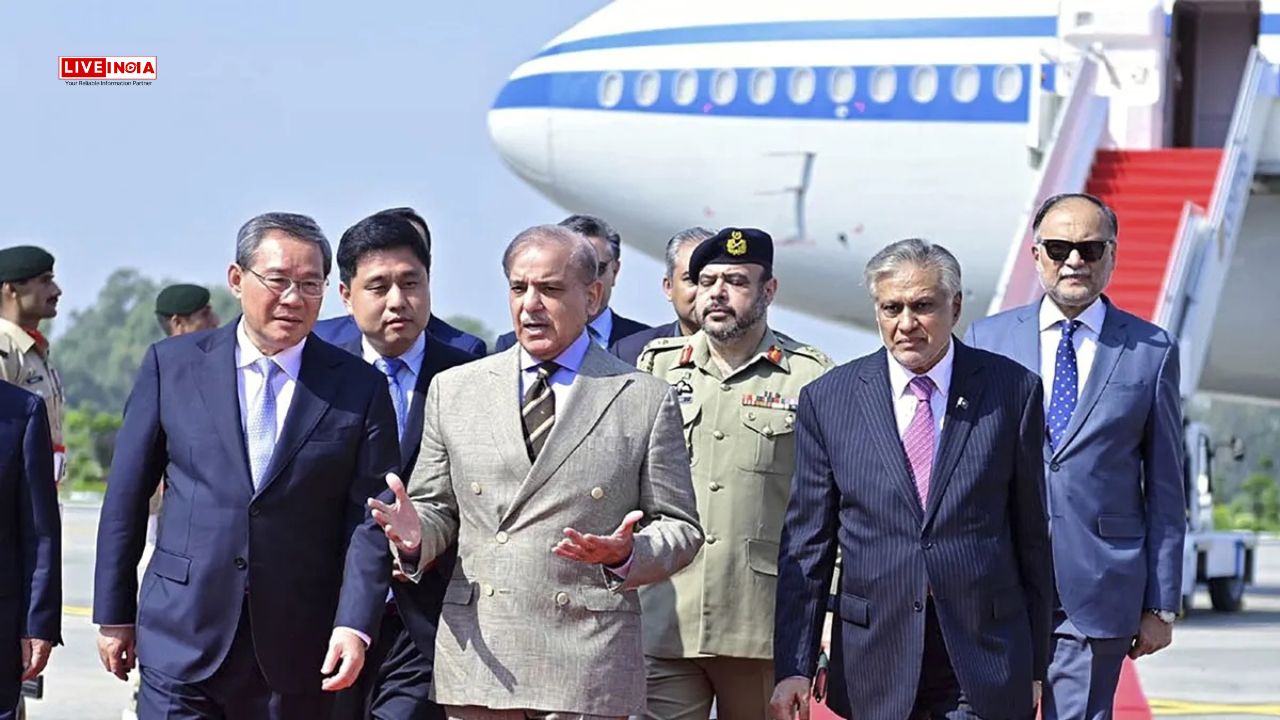


Pakistan’s diplomatic tightrope between Washington and Beijing comes under scrutiny as conflicting narratives emerge over who brokered the India-Pakistan ceasefire.
May 13, 2025: In the aftermath of the high-stakes conflict between India and Pakistan sparked by the April 22 terror attack in Pahalgam, multiple global powers have stepped into the diplomatic ring—but not without friction. While India insists the ceasefire request came directly from Pakistan, both the United States and China have tried to stake claims in the truce narrative, sparking speculation over Beijing’s apparent displeasure with its longtime ally Islamabad.
🔹 Trump’s Surprise Announcement
Just as tensions peaked, US President Donald Trump took to social media to declare that it was Washington that brokered a “full and immediate ceasefire” between India and Pakistan. The declaration, made on Truth Social, seemed to catch even India off-guard. New Delhi later clarified that ceasefire discussions were bilateral, initiated via a hotline call from Pakistan’s Director General of Military Operations (DGMO) to India’s.
Also Read: India Reaffirms Unyielding Stand: Talks With Pakistan Only on PoK, Not Kashmir
🔹 China’s Silence—and Then, Retaliation
What raised diplomatic eyebrows was China’s delayed reaction. While hotlines in New Delhi, Washington, and Islamabad were abuzz, Beijing remained on hold, and reportedly fumed over Islamabad’s decision to first engage the US rather than its “iron-clad friend.”
China’s foreign ministry only issued a statement hours later, after Pakistan had already broken the announced ceasefire with a fresh wave of drone incursions into Indian airspace. Pakistan soon released a second statement referencing its discussions with Beijing, followed by China’s public endorsement of Pakistan’s “restraint”.
Also Read: “The New Normal Is Here — Pakistan Must Accept It”: India Warns After Operation Sindoor
Many observers saw the sudden halt in Pakistani drone activity shortly after Beijing’s involvement as an effort to appease China and acknowledge its regional influence.
🔹 Diplomatic Double Play by Pakistan?
Pakistan’s dual communication strategy—releasing two separate statements, one following Trump’s announcement and another following its conversation with China—suggests a delicate diplomatic balancing act. While publicly embracing US-led mediation to save face domestically, Islamabad was also careful not to alienate China, its largest arms supplier and economic backer.
Also Read: MEA Reacts On India Targeting Pak Nuclear Facilities: “Our Response Was…”
🔹 India Sticks to Facts, Bilateralism
India, however, has remained consistent in rejecting any third-party intervention. Foreign Secretary Vikram Misri stated clearly that the ceasefire was agreed upon after a direct DGMO-to-DGMO call from Pakistan at 3:35 PM IST on May 10.
“Both sides agreed to cease all military action—on land, in the air, and at sea—from 5 PM IST the same day,” he said, reiterating India’s zero-tolerance policy on terrorism.
🔹 Trump’s Trade Claims Dismissed
Adding another twist, President Trump later claimed he used trade pressure to convince India and Pakistan to halt hostilities. “If you want trade, stop fighting,” he boasted in a public statement.
India’s Ministry of External Affairs categorically denied this assertion. “There was no reference to trade in any official discussion,” MEA clarified, citing calls between PM Modi, Foreign Minister Jaishankar, NSA Ajit Doval, and US officials including Vice President JD Vance and Secretary Marco Rubio.
🧭 The Bottom Line:
While the ceasefire held after days of cross-border missile strikes, the diplomacy behind it revealed deep fractures in Pakistan’s alliances. China’s late involvement and visible irritation could signal growing doubts about Islamabad’s loyalty amid shifting regional power plays.
India, meanwhile, has made it clear: bilateral talks only—and only about Pakistan’s withdrawal from PoK and dismantling of terror networks.
📌 Tags:
India Pakistan ceasefire, Operation Sindoor, Donald Trump, China Pakistan relations, US mediation, Wang Yi, DGMO hotline, Beijing Islamabad tensions, Indian foreign policy, Kashmir conflict, OperationSindoor,