
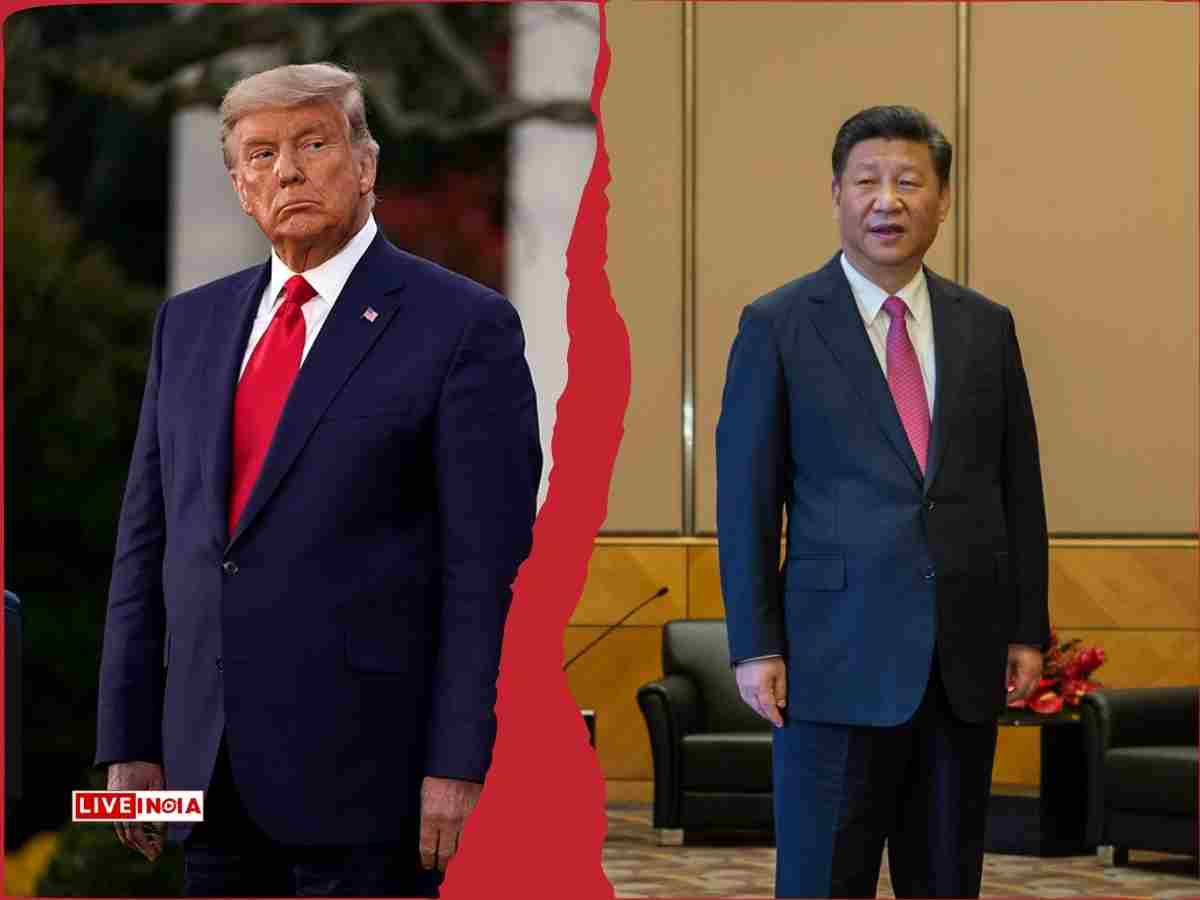


“We Will Defend Our Interests” – Beijing Retaliates Against U.S. Tariffs
Beijing, March 4: China has announced retaliatory tariffs of up to 15% on key U.S. food imports, including chicken, wheat, corn, soybeans, and dairy products, in response to the latest trade measures imposed by U.S. President Donald Trump. The new tariffs will take effect from March 10, intensifying the already escalating U.S.-China trade conflict.
Additionally, Beijing has blacklisted several American companies, adding them to its “unreliable entities” list, further limiting their ability to operate in China.
China Strikes Back: New Tariffs on U.S. Agriculture
In a firm countermeasure, China’s Finance Ministry declared a 15% tariff on U.S. chicken, wheat, corn, and cotton, along with a 10% tariff on soybeans, pork, beef, aquatic products, fruits, vegetables, and dairy items.
The Chinese Commerce Ministry stated:
“The U.S. has resorted to unilateralism and bullying, ignoring international trade norms. China will take countermeasures to firmly safeguard its rights and interests.”
These measures come after the United States imposed an additional 10% tariff on all Chinese imports starting March 4, following a similar move in February 2025.
Beijing Targets American Firms
Alongside new tariffs, China has blacklisted 15 U.S. companies, including drone maker Skydio, barring them from doing business in China.
The Ministry of Commerce also added 10 more American firms to its “unreliable entities” list, further restricting their access to Chinese markets and trade.
Chinese state-run Xinhua News Agency quoted a government spokesperson urging Washington to reconsider:
“We hope the U.S. can work in the same direction as China and find a solution through equal-footed consultation.”
The Bigger Picture: A Global Trade Battle
The latest move from Beijing is part of an escalating global trade dispute triggered by Trump’s aggressive tariff policies. On March 4, the U.S. also imposed a 25% tariff on Canadian and Mexican imports, alongside its new 10% tariff on China.
This led Canadian Prime Minister Justin Trudeau to announce retaliatory tariffs against U.S. goods. Trudeau reaffirmed Canada’s stance, saying:
“Our tariffs will remain in place until the U.S. withdraws its trade action. We are actively discussing further measures to protect Canadian jobs and industries.”
Despite calls for negotiation, Trump dismissed any possibility of reversing his decision, stating:
“The tariffs are set and will go into effect. There is no room left for Canada or Mexico to avoid them.”
What’s Next? A Prolonged Economic Showdown
With China, Canada, and Mexico now imposing retaliatory tariffs, global trade tensions are at an all-time high. Experts warn that these economic battles could disrupt supply chains, drive up costs for consumers, and impact global markets.
As the U.S. and its trading partners lock horns, the world watches closely to see if diplomacy can prevail—or if a full-blown trade war is inevitable.
Tags:
China Tariffs, U.S.-China Trade War, Donald Trump, U.S. Trade Policy, Chinese Economy, Global Trade, Retaliatory Tariffs, Beijing vs Washington, Trade Disputes, Agriculture Tariffs