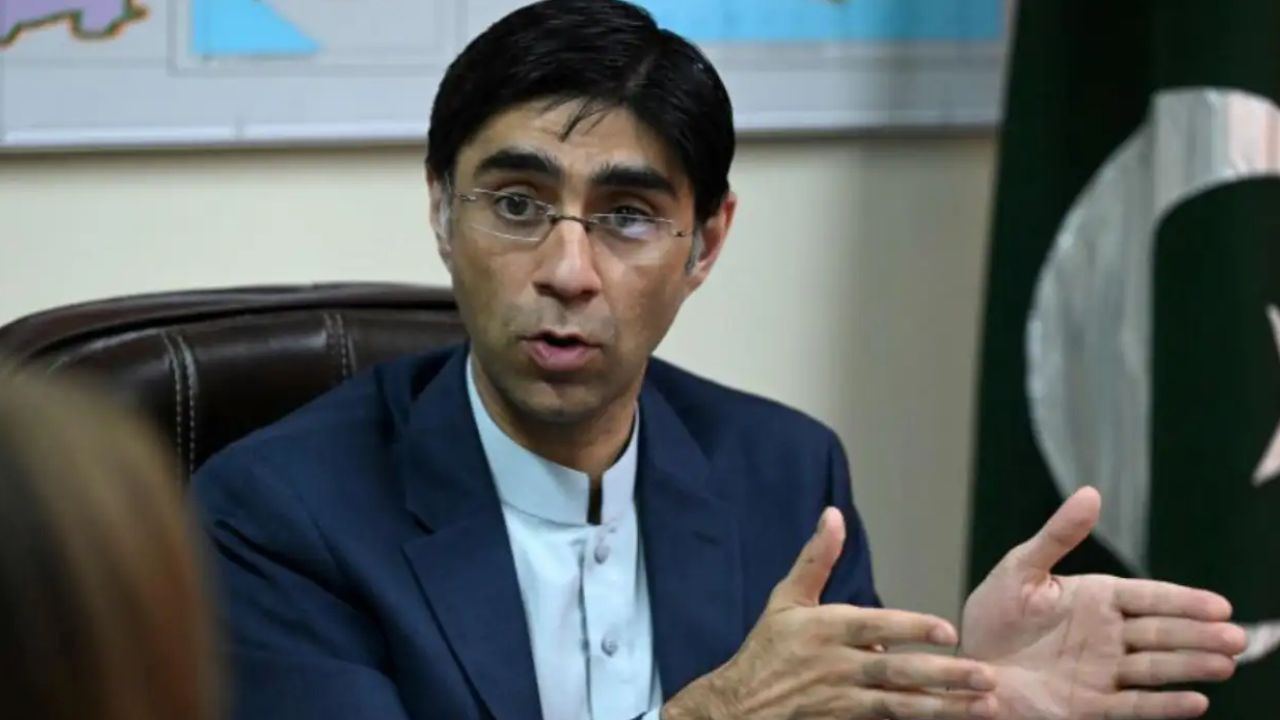
"Crisis Without Clarity: Pakistan's Former NSA Warns Against Miscalculation Amid India Tensions"
May 3, 2025: As tensions escalate between India and Pakistan following the deadly April 22 attack in Pahalgam, a former national security adviser of Pakistan, Moeed Yusuf, has cautioned against the lack of crisis management mechanisms between the two nuclear-armed neighbors. Speaking to Al Jazeera, Yusuf underscored the dangers of misinterpretation, missteps, and the unpredictable consequences of retaliation in the absence of structured dialogue.
The brutal attack in Indian-administered Kashmir left 26 dead and led India to imply Pakistan’s involvement, a claim Islamabad vehemently denies. Since then, both countries have engaged in tit-for-tat measures: India has paused its obligations under the Indus Waters Treaty, while Pakistan has threatened to withdraw from the Simla Agreement. Diplomatic missions have been downsized, and cross-border shelling has resumed along the Line of Control (LoC), recalling memories of the 2019 Pulwama-Balakot crisis.
Yusuf, who served as NSA from May 2021 to April 2022 and has authored books on regional security, said the lack of a bilateral crisis resolution framework between the two countries remains the biggest vulnerability. “Historically, both countries have relied on third parties—primarily the United States—to de-escalate tensions. But this time, the US has maintained a hands-off approach,” he observed, pointing to President Donald Trump’s recent remarks that India and Pakistan should resolve the issue on their own.
This perceived neutrality has altered the dynamics, Yusuf argues. “India seems more impacted by the lack of overt US backing. During Pulwama in 2019, they were emboldened by Washington’s support. Now, even with the US urging restraint, the absence of pressure on Pakistan may be frustrating for New Delhi.”
Meanwhile, Pakistan has signaled readiness to defend itself but remains cautious. Yusuf emphasized that while a major war is unlikely, the risk of unintended escalation remains dangerously real. “Even a misread troop movement or miscommunication could lead to a crisis spiraling out of control.”
On the role of other countries, Yusuf acknowledged more active involvement by China and Gulf states this time around. Pakistani Prime Minister Shehbaz Sharif has reached out to key allies including Saudi Arabia, the UAE, and China for support and diplomatic leverage.
Reflecting on the broader India-Pakistan relationship, Yusuf lamented the shift away from constructive engagement. He pointed out that Pakistan once offered multiple opportunities for dialogue—even after India revoked Kashmir’s special status in 2019—but was met with “hubris and ideological rigidity” from New Delhi.
“The Pakistani leadership no longer believes in appeasement. The mood has shifted. If India wants to talk, we’re open—but we’re not chasing diplomacy anymore,” he said.
Nevertheless, Yusuf acknowledged that some form of engagement will be necessary. “Major agreements like the Indus Water Treaty and Simla Accord can’t be sidelined forever. At some point, both countries will have to return to the table.”
He concluded with a sobering reminder: “Neither India nor Pakistan can fulfill their economic or regional ambitions without improving bilateral ties. But sadly, given the current attitude, the road ahead appears bleak.”
Sunny Deol and Akshaye Khanna face off in a high-stakes courtroom drama of ethics and…
No refund for Vande Bharat and Amrit Bharat tickets cancelled within eight hours of departure…
Services to four destinations suspended till February 28 over regional security concerns February 3, 2026:…
Eight Opposition MPs suspended after repeated disruptions over national security debate February 3, 2026: The…
Makers consider recast after Deepika Padukone’s exit from Kalki 2898 AD 2 February 3, 2026:…
Former India captain calls award a special moment, vows to keep winning matches for the…