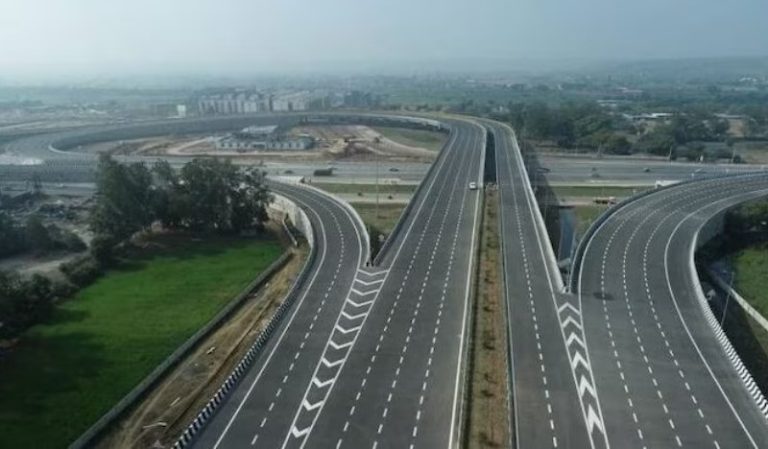
Prime Minister Narendra Modi is set to inaugurate the Delhi–Dehradun Expressway (NH-709B) today, Tuesday, April 14, 2026, from Dehradun. The ₹11,868.6 crore project is a major infrastructure milestone that slashes travel time between the national capital and the winter capital of Uttarakhand from 6 hours to just 2.5 hours.
The Prime Minister will also perform darshan and pooja at the Jai Maa Daat Kali Temple before the formal ceremony, which is expected to be attended by Union Minister Nitin Gadkari, Uttarakhand CM Pushkar Singh Dhami, and UP CM Yogi Adityanath.
Project Overview & Key Features
The 210-km expressway is a six-lane (expandable to eight) access-controlled corridor designed for speeds up to 100 km/h.
| Feature | Details |
| Total Length | 210 km |
| Route Highlights | Delhi (Akshardham), Baghpat, Baraut, Shamli, Saharanpur, Dehradun. |
| Wildlife Protection | 12-km elevated corridor (Asia’s largest) through Rajaji National Park. |
| Connectivity | Links with Delhi-Mumbai Expressway and Eastern Peripheral Expressway. |
| Spurs | Dedicated 50-km spur to Haridwar and Roorkee. |
A Model for Eco-Sensitive Infrastructure
The expressway stands out for its “wildlife-first” engineering, specifically in the Ganeshpur to Dehradun section:
The Elevated Corridor: A 12-km stretch passes over Rajaji National Park, allowing elephants and leopards to move freely underneath.
Animal Underpasses: Six dedicated underpasses have already recorded over 40,444 wildlife detections (including elephants and tigers) according to a Wildlife Institute of India (WII) study.
Daat Kali Tunnel: A 340-meter tunnel near the Daat Kali temple helps avoid steep mountain inclines and reduces the environmental footprint on the Shivalik range.
Connectivity and Economic Impact
The “Delhi–Dehradun Economic Corridor” is expected to be a game-changer for tourism and trade:
Pilgrimage Boost: It significantly eases travel for the Char Dham Yatra (starting April 23) and those visiting Haridwar.
De-congestion: The initial 32-km stretch (Akshardham to Baghpat), which opened in late 2025, has already reduced traffic bottlenecks in East Delhi and Ghaziabad.
Strategic Links: It features two major spurs:
Saharanpur–Haridwar: Connecting to the Char Dham Highway.
Ambala–Shamli: Connecting to the Bareilly–Ludhiana Economic Corridor.
Environmental Considerations
While the project is celebrated for its wildlife mitigations, it has faced scrutiny:
Tree Felling: Approximately 17,913 trees were felled or transplanted.
Compensatory Afforestation: NHAI has allocated ₹40 crore for planting 50,600 trees along the right-of-way in UP and Uttarakhand.
Legal Oversight: The National Green Tribunal (NGT) remains involved in monitoring the project’s long-term environmental adherence.