

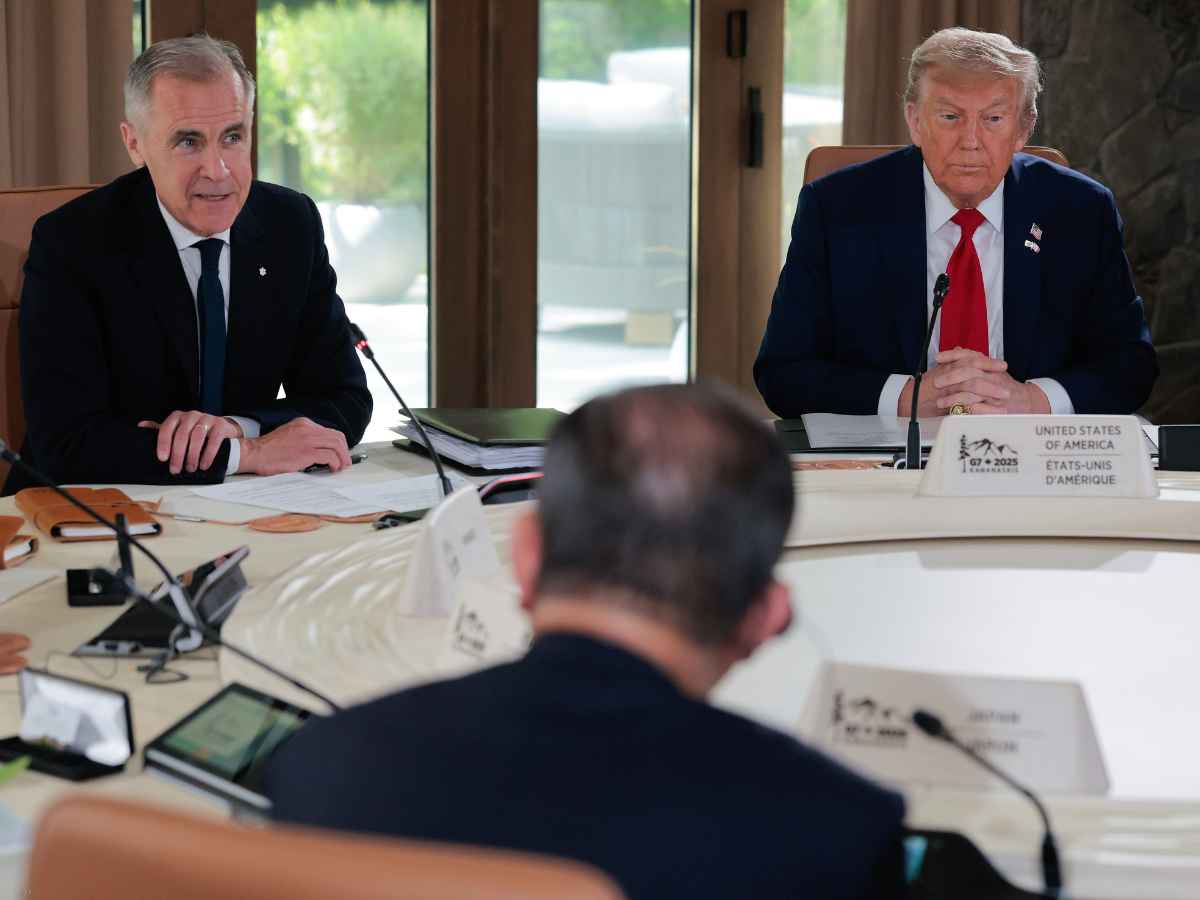


June 28, 2025: Former U.S. President Donald Trump has reignited tensions with Canada, announcing via his social media platform Truth Social that he is “terminating all discussions on trade” with the country, effective immediately. The decision comes as Canada prepares to implement its controversial Digital Services Tax (DST) — a move that Trump claims unfairly targets U.S.-based tech giants and violates international trade agreements.
What Is the Digital Services Tax?
The Canadian Digital Services Tax, set to take effect from June 30, 2025, imposes a 3% levy on revenues earned by large multinational tech companies from Canadian users. The tax applies to corporations with global revenues exceeding €750 million and Canadian digital services revenues over CAD 20 million, and will be retroactively applied from January 1, 2022.
Ottawa says the measure is aimed at ensuring foreign tech giants pay their fair share in Canada, where they generate significant profits but often pay minimal taxes.
🇨🇦 Canada Holds Firm
Canadian Finance Minister François-Philippe Champagne has defended the move, stating that it is in line with domestic tax principles and necessary due to delays in global efforts to develop a coordinated international framework for digital taxation.
“The tax was passed by Parliament and reflects Canada’s sovereign right to tax revenues earned from digital services consumed within our borders,” he said earlier this month.
🇺🇸 US Opposition Mounts
The U.S. response has been swift and severe. The U.S. Trade Representative (USTR) had already initiated dispute settlement consultations under the US-Mexico-Canada Agreement (USMCA) in 2024, arguing that the DST discriminates against American companies and contravenes key provisions of the trade pact.
A report by the USTR last year estimated that the tax could cost U.S. firms as much as $3 billion and lead to 3,000 job losses. The U.S. Chamber of Commerce has echoed those concerns, calling the tax “discriminatory” and in violation of World Trade Organization (WTO) principles.
Trump’s Escalation: Political or Economic?
Trump’s decision to terminate trade discussions adds a political layer to what was already a high-stakes economic disagreement. While the tax was introduced in 2022 and passed into law in 2023, its retroactive enforcement and the looming June 30 deadline have reignited tensions just as Trump mounts a political comeback.
Observers note that Trump had previously imposed tariffs on Canadian aluminum, steel, and other goods during his presidency — moves that strained relations with one of the United States’ closest allies.
With his latest move, Trump appears to be using the DST to reignite his signature stance on trade and project a tough-on-Canada posture as part of his 2025 agenda.
What’s at Stake
Canada estimates the tax will generate CAD 7.2 billion over five years. The revenue potential, combined with its symbolic importance, may make it difficult for Ottawa to back down — especially after past experiences with unilateral U.S. tariffs.
Meanwhile, U.S. companies such as Google, Meta, and Amazon are bracing for higher costs, and trade experts warn of a possible tit-for-tat escalation if Trump or his allies push for retaliatory tariffs.
The Digital Services Tax is more than just a revenue policy — it’s become a flashpoint in cross-border politics, potentially shaping trade relations, diplomatic ties, and the tech industry’s future in North America.
As the first payments under the DST come due, and as Trump ramps up the rhetoric, both governments face a defining moment in the evolution of 21st-century digital trade diplomacy.