
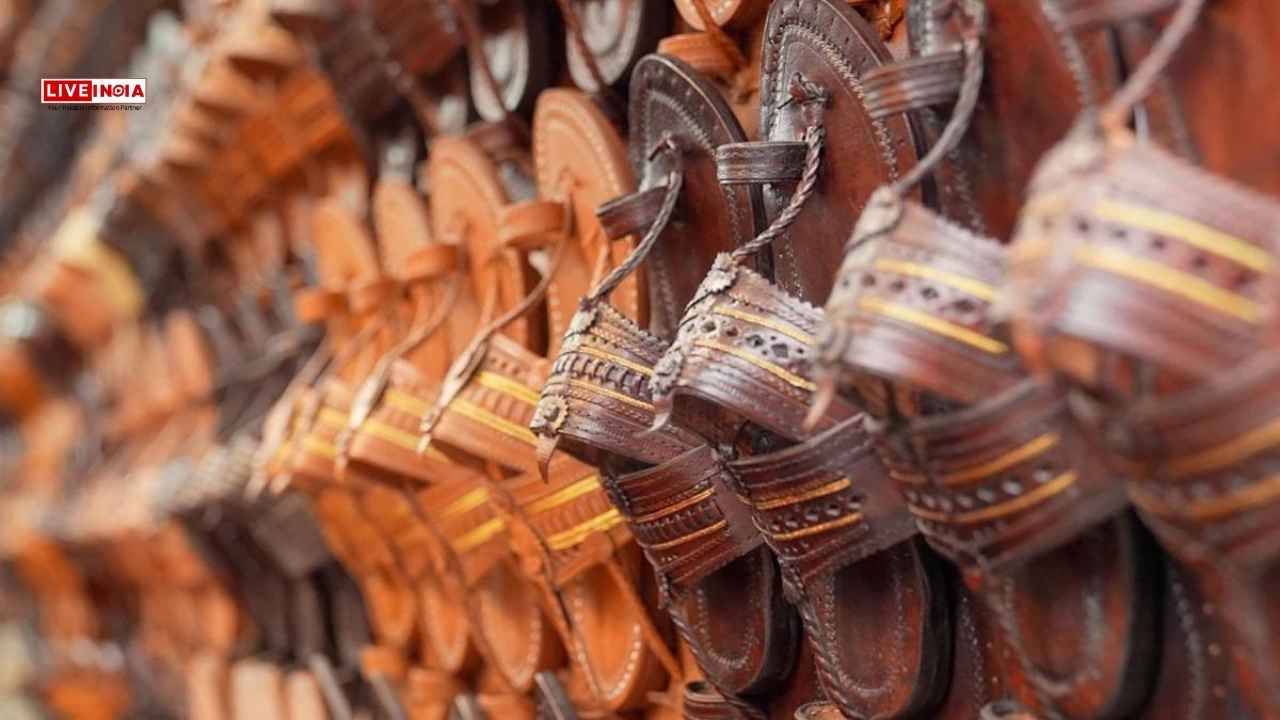


Luxury label accused of cultural appropriation as Kolhapuri artisans demand credit, compensation, and co-branding after Prada showcases similar sandal design without acknowledgement
July-5, 2025: In the leather-scented alleys of Kolhapur, Maharashtra, a quiet storm is brewing — one that has now caught the eye of the global fashion world. Local artisans, many of whom have spent decades handcrafting the iconic Kolhapuri chappals, are accusing Italian luxury fashion house Prada of plagiarising their traditional sandal design without credit or consent.
The controversy erupted after Prada showcased a line of leather sandals at Milan Fashion Week that bore a striking resemblance to centuries-old Kolhapuri designs — yet made no reference to their Indian origins. The backlash was swift: social media exploded, artisans voiced their outrage, and politicians and trade bodies rallied behind the craftsmen demanding recognition and restitution.
🛠️ “Do They Have Gold in Them?”: Artisans React
Sadashiv Sanake, 58, has been making Kolhapuri sandals since childhood. Working long hours in a modest workshop, he produces 8-10 pairs daily, selling them for just $8–10 each. When shown Prada’s runway footage, he laughed in disbelief.
“Do they have gold in them?” he asked, learning that Prada sandals can retail for £600 to £1,000.
Another artisan, Sunita Satpute, earns just $4-5 a day, engraving intricate patterns by hand. She laments that her children are unwilling to continue the family craft due to low pay and poor conditions. “This is all I know,” she says. “But it’s no longer enough.”
👣 A Craft with Centuries of Legacy
Kolhapuri sandals date back to the 12th century, originally crafted by the Charmakar (Dalit cobbler) community, later supported through royal patronage under Chhatrapati Shahu Maharaj in the early 1900s. Today, around 100,000 artisans across India continue the trade, contributing to an industry worth over $200 million, according to MACCIA (Maharashtra Chamber of Commerce, Industry & Agriculture).
Yet, most artisans remain stuck in unorganised sectors, battling rising leather prices, low wages, and synthetic market competition. Political and religious factors have made sourcing traditional cow leather harder, especially after Maharashtra banned cow slaughter in 2015, leading artisans to use costlier buffalo hide from other states.
🌍 Global Exploitation, Local Neglect
While India granted Geographical Indication (GI) status to Kolhapuri sandals in 2019 to protect domestic rights, international laws don’t stop aesthetic imitation.
“There’s no binding law to prevent brands from copying indigenous designs abroad,” says advocate Aishwarya Sandeep.
“India must escalate this to the WTO under TRIPS, but enforcement remains weak.”
Fashion designer Ritu Beri urges India to demand co-branding and royalty-sharing, not just apologies. “It’s about ethical recognition,” she says.
📉 From Craft to Crisis
Artisans and sellers in Kolhapur’s Chappal Gully (Sandal Lane) now face a dual struggle: rising costs and floods of cheap imitations.
“Customers can’t tell real from fake,” says seller Rohit Balkrishna Gavali.
“But thanks to the controversy, people are now asking for the Prada-style design — even from Dubai, the US, and Qatar.”
🧾 Legal Action and Hope for Change
MACCIA has filed a petition in the Bombay High Court, demanding:
- Damages and compensation from Prada
- A court-supervised collaboration between the brand and artisan associations
Prada, in a statement to the BBC, confirmed it is in talks with MACCIA. MCCIA chief Lalit Gandhi says a meeting with Prada is scheduled next week.
“Prada’s use may raise the value of Kolhapuris globally,” Gandhi says. “But artisans deserve their share of that success.”
🧵 Broader Industry Problem
This isn’t the first instance of cultural appropriation by global fashion labels. From Chikankari embroidery to Ikat dyeing and mirror work, Indian crafts have frequently been lifted with no attribution or benefit to their creators.
Gandhi and others see this moment as a turning point. A controversy that might finally bring the long-overdue recognition, respect, and reform that India’s traditional artisans deserve.
🏷️ Tags:
Kolhapuri sandals, Prada controversy, Indian artisans, cultural appropriation, Kolhapur chappals, Prada Milan Fashion Week, MACCIA, WTO TRIPS India, GI Tag India, traditional Indian crafts, artisan compensation, Prada lawsuit India