
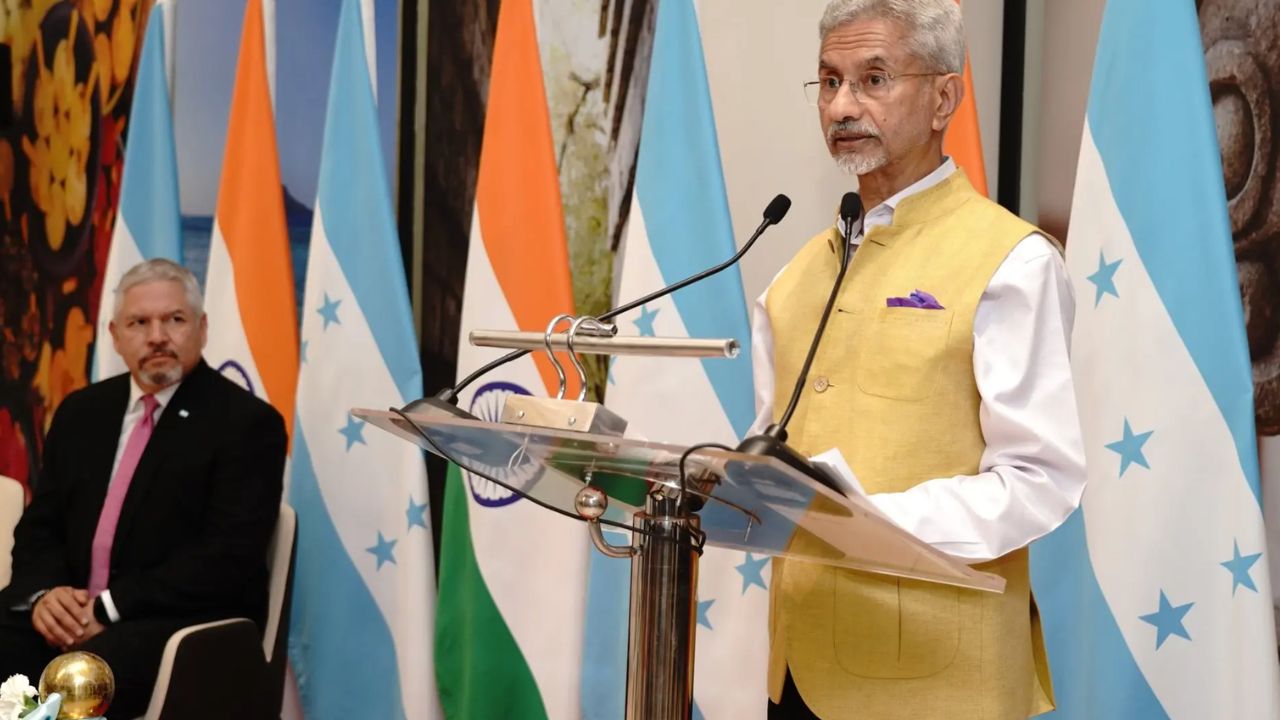


May 22, 2025: During his official visit to the Netherlands, External Affairs Minister S. Jaishankar issued a stern warning to Pakistan, declaring that continued cross-border terrorism would result in serious consequences. In a candid interview with Dutch newspaper de Volkskrant, Jaishankar referenced the recent April 22 terror attack in Pahalgam, Jammu and Kashmir, to underscore the urgent need for accountability.
“We want a definitive end to terrorism,” Jaishankar said. “The ceasefire has paused military actions for now, but if attacks from Pakistan persist, there will be consequences. Pakistan must understand this clearly.”
Jaishankar did not mince words when addressing the role of Pakistan’s military and intelligence apparatus. “I’m not suggesting, I’m stating it — the state is involved. The army is up to its neck in it,” he asserted, noting that many top UN-sanctioned terrorists reside openly in Pakistan’s cities.
The minister emphasized that terrorism in Kashmir is a standalone global crime, not a subset of the political Kashmir issue. He condemned the targeting of Jammu and Kashmir’s thriving tourism industry and the deliberate attempt to communalize the violence.
He reaffirmed India’s long-standing stance that Kashmir is an integral part of India, urging Pakistan to vacate illegally occupied areas. When asked about international mediation offers — including from former US President Donald Trump — Jaishankar reiterated that Kashmir is a strictly bilateral issue.
Jaishankar’s visit comes after Prime Minister Narendra Modi postponed his trip to the Netherlands due to recent military escalations. The discussions in The Hague focused on economic cooperation, technology exchange, and counterterrorism, laying the groundwork for a rescheduled Modi visit later in the year.
Key topics included Dutch arms exports to Pakistan, previously flagged by Indian Defence Minister Rajnath Singh, and broader trade relations. Jaishankar also pushed for progress on the India-EU Free Trade Agreement, targeting a deal by end of 2025.
Highlighting new areas of collaboration, Jaishankar said India is keen to partner with the Netherlands on semiconductors, sustainable energy, and green hydrogen. He emphasized that India seeks fair trade terms for its small-scale farmers, contrasting them with Europe’s heavily subsidized agricultural sector.
On the global stage, Jaishankar made it clear that India is ready to lead, calling for UN Security Council reforms and a permanent seat for India. “We are now the fourth largest economy in the world. We know this comes with responsibility — and we are ready,” he said.
When questioned about India’s neutral stance on the Russia-Ukraine war, Jaishankar said India supports a peaceful resolution and is open to mediation if asked. He rejected Western-style national sanctions, stating, “That is not our way of conducting foreign policy.”
Responding to comparisons with other post-colonial nations like South Africa, Jaishankar quipped, “I conduct a foreign policy that suits our national character. Why doesn’t Europe behave more like us? That would be a good idea.”
The visit follows Operation Sindoor, launched by India on May 7 in response to the April 22 terror attack that killed 26 civilians. The operation targeted terror infrastructure in Pakistan and Pakistan-occupied Kashmir, killing over 100 terrorists. Pakistan retaliated with shelling and drone attacks, prompting India to launch coordinated strikes on 11 Pakistani airbases, damaging radars, communication hubs, and airfields.
A ceasefire understanding was announced on May 10, but Jaishankar made it clear that the future depends entirely on Pakistan’s actions: “Terror must end — or consequences will follow.”