
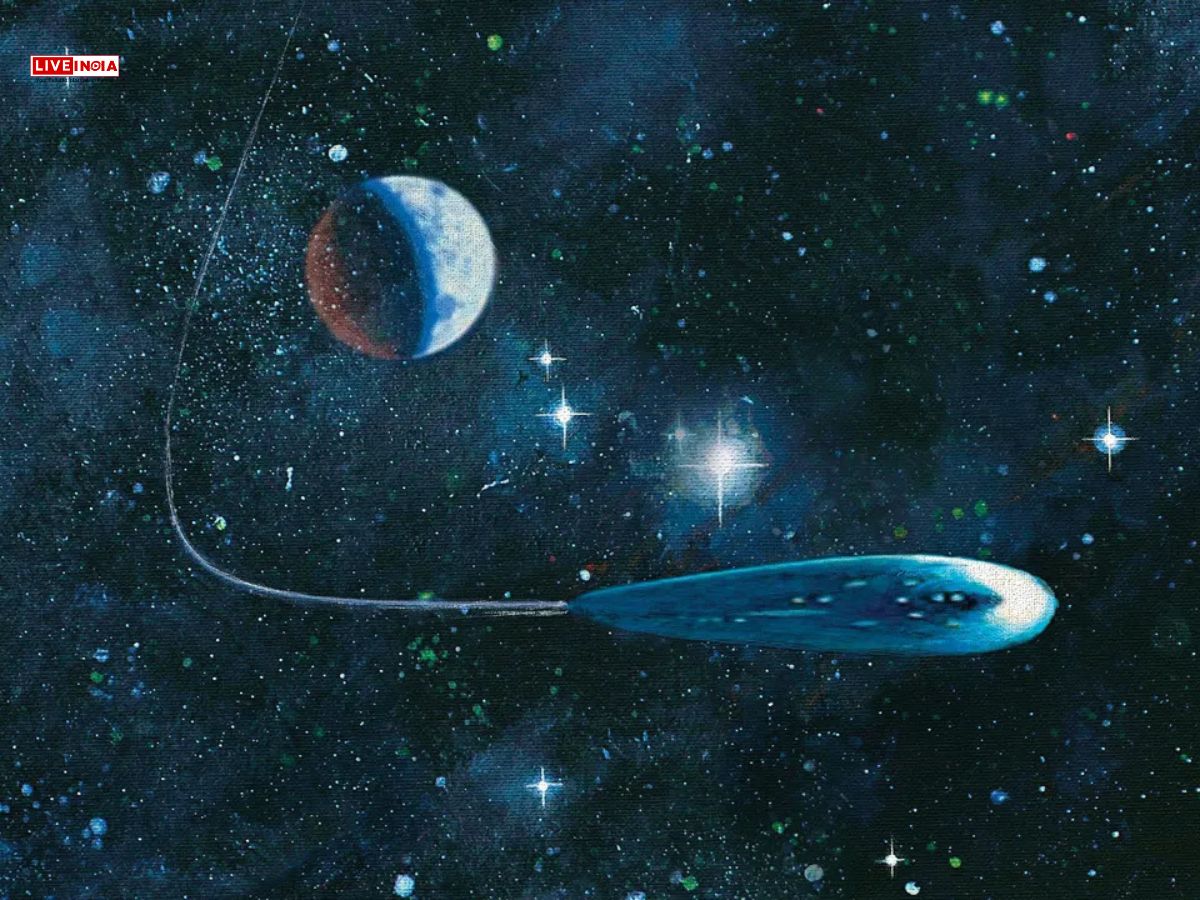


Groundbreaking research from Penn State University challenges traditional theories, suggesting that intelligent life may be a natural consequence of planetary evolution, increasing the chances of extraterrestrial civilizations.
February 16, 2025: Human-Like Civilizations May Be Common in the Universe
A new study published in Science Advances proposes that intelligent life might not be as rare as previously believed, potentially increasing the probability of human-like civilizations existing on other planets.
Also Read: Real Estate Prices Should be Linked to AQI; Zerodha’s Nithin Kamath Sparks Debate
Researchers from Penn State University have challenged the long-standing “hard steps” theory proposed by physicist Brandon Carter in 1983, which suggested that the evolution of complex, intelligent life is a highly improbable event. Instead, they argue that the emergence of life is a predictable process based on a planet’s natural evolution.
Also Read: Artificial Colours in Green Peas Exposed: Viral Video Sparks Social Media Frenzy
“This new perspective suggests that intelligent life might not require a series of lucky breaks to exist. Instead of being an improbable series of events, evolution may simply unfold as global conditions allow,” said Jason Wright, co-author of the study.
Reevaluating the Probability of Life in the Universe
The traditional “hard steps” theory posits that complex life emerges through a rare sequence of improbable events, making intelligent civilizations extremely unlikely. However, the new research suggests that the emergence of humanity on Earth was not a fluke, but a logical consequence of planetary evolution, indicating that similar lifeforms could exist on other planets.
Also Read: Mystery in Buenos Aires: Sarandi Canal Turns Blood Red, Residents Alarmed-Watch
Lead author Dan Mills elaborated:
“Humans didn’t evolve ‘early’ or ‘late’ in Earth’s history but ‘on time’—when conditions were right. Perhaps it’s only a matter of time before other planets achieve these conditions, some faster than Earth, and others slower.”
Evolution as a Predictable Process
The study highlights key evolutionary milestones, arguing that they were not random but rather logical developments based on planetary conditions. For instance, the rise of photosynthesis led to an oxygen-rich atmosphere, which later enabled the expansion of complex animal life.
In contrast to Carter’s hypothesis, which suggests that Earth’s unique conditions were essential for the emergence of complex life, the new model implies that planets naturally go through habitable phases, making the emergence of intelligent life more probable than previously thought.
The research also introduces the concept of “windows of habitability,” proposing that planets like Earth inherently pass through stages that support the emergence of complex organisms.
Reevaluating the Sun’s Lifespan and Life’s Evolution
The study challenges Carter’s assumptions, which were based on the lifespan of the Sun as a limiting factor for intelligent life. By revisiting these calculations, the researchers suggest that intelligent life may be far more common in the universe than previously assumed.
This new perspective reinvigorates the search for extraterrestrial intelligence (SETI) and provides fresh insights into the future of astrobiology. If life on Earth followed a predictable trajectory, then similar pathways could be unfolding on countless exoplanets across the cosmos.
Tags:
Extraterrestrial Life, Alien Civilizations, Astrobiology, Space Exploration, NASA, Intelligent Life, Evolution, Penn State University, Science Advances, Hard Steps Theory, Exoplanets, SETI, Habitability, Life Beyond Earth