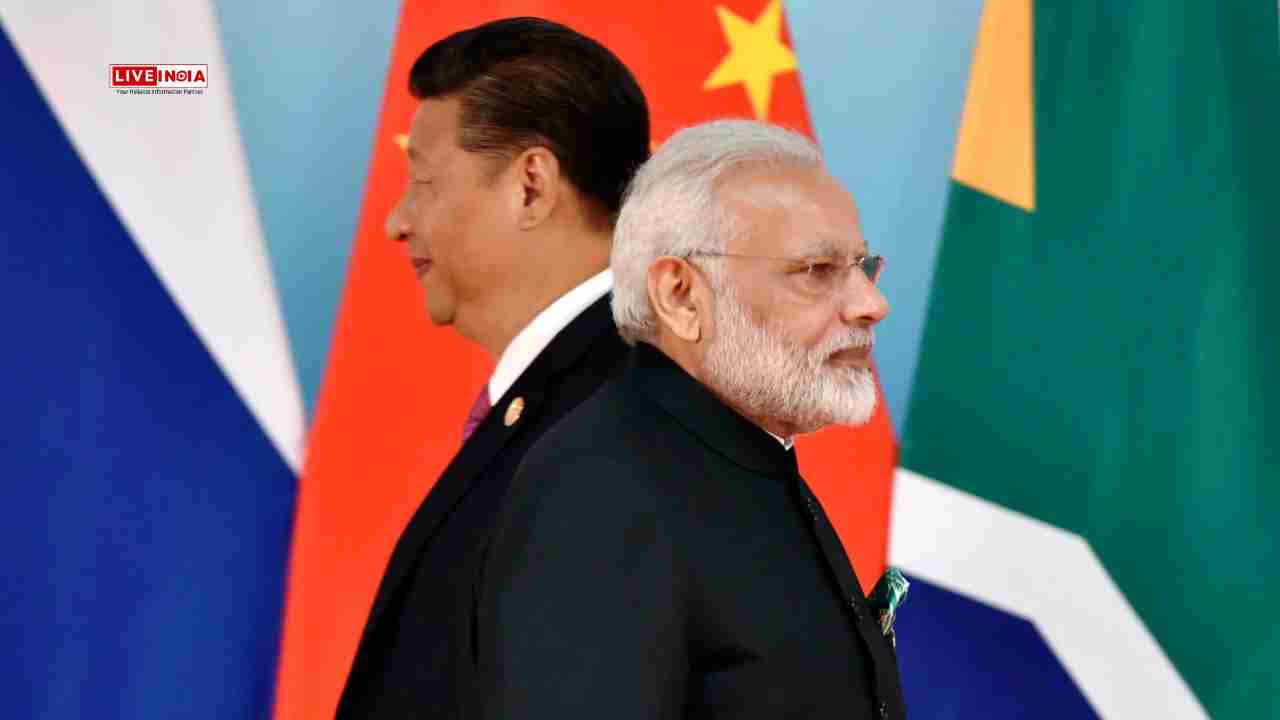
India-China Relations Still Strained, Will Face Issues "For Foreseeable Future": S Jaishankar
New Delhi, March 26, 2025 — External Affairs Minister S Jaishankar has acknowledged that India and China are likely to continue facing diplomatic challenges for the “foreseeable future,” even as both nations attempt to repair ties following the deadly 2020 military standoff in eastern Ladakh.
Also Read: India Rejects China’s New Counties in Ladakh, Lodges Strong Diplomatic Protest
Speaking at an event hosted by the Asia Society, Mr Jaishankar said, “We know that between India and China, there will be issues. But there are ways of addressing them — and what happened in 2020 was not the way.”
In a candid assessment of the bilateral relationship, the minister referred to China’s unilateral attempts to alter the status quo along the Line of Actual Control (LAC) in 2020 — actions that led to a violent clash, prolonged troop deployments, and a near freeze in diplomatic engagement for almost five years.
Relations only began to thaw in October 2024, when both sides reached a military and diplomatic agreement to gradually return to pre-2020 positions along the disputed border. The breakthrough allowed Prime Minister Narendra Modi and Chinese President Xi Jinping to meet on the sidelines of the BRICS summit in Russia, for the first time since the Ladakh standoff.
Also Read: China Condemns Dalai Lama’s Claims on Successor, Insists Beijing Will Decide
“We’re trying to rebuild trust, step-by-step. There’s been some improvement since October 2024, and the goal is to undo some of the damage caused by the 2020 events,” said Jaishankar.
The 2020 confrontation deeply impacted public and government sentiment in India. From trade restrictions and visa delays to reduced air connectivity and curbs on Chinese investments, the fallout was widespread. Jaishankar reiterated that restoring equilibrium in the relationship will require continued engagement, patience, and adherence to diplomatic principles.
India and China share a 4,400 km long disputed boundary, comprising the Line of Actual Control (LAC) — covering Ladakh, Himachal Pradesh, Uttarakhand, and Sikkim — and the MacMohan Line in Arunachal Pradesh. The border remains undefined in many areas, and flashpoints have repeatedly emerged over the past decades.
As both sides work through sensitive military and territorial issues, Jaishankar emphasized the need for dialogue over conflict, suggesting that with sustained effort, a more stable and predictable relationship is still possible.
India-China border, S Jaishankar, India China relations, LAC 2020 clash, Galwan Valley, Xi Jinping Modi BRICS, India China standoff, Ladakh tension, Asia Society talk, foreign policy India, diplomacy, Eastern Ladakh, anti-China sentiment, bilateral relations India China
Iran confirms Supreme Leader’s death; 40 days of national mourning announced March 1, 2026: The…
US President says he knows who will lead Iran but withholds name March 1, 2026:…
Netanyahu, Trump say Iranian Supreme Leader died in airstrikes; Tehran yet to confirm March 1,…
Reports say daughter, son-in-law and granddaughter died in US-Israel strikes March 1, 2026: Iranian media…
Utforska spänningen med onlinecasinon Vad du behöver veta Vad är online casino? Online casino är…
Déverrouiller les secrets des stratégies de casino réussies Ce que vous devez savoir Comprendre les…