


Operation Sindoor triggers major escalation across the border before both nations agree to ceasefire; India warns of strong response to future terror attacks.
May 10, 2025: India-Pakistan Ceasefire Live Updates: Indian Armed Forces Inflict Heavy Damage Before Peace Talks Begin
India and Pakistan entered one of their tensest military standoffs in recent memory this past week, culminating in a ceasefire that took effect at 5 PM IST on May 10. The escalation was sparked by Operation Sindoor, India’s surgical retaliation to the April 22 Pahalgam terror attack which killed 26 civilians, including one Nepali tourist.
Also Read: Vikram Misri Confirms India-Pakistan Ceasefire After Cross-Border Escalation
As part of Operation Sindoor, the Indian Air Force executed precise missile strikes against nine terrorist infrastructure sites across Pakistan and Pakistan-Occupied Kashmir (PoK), targeting Lashkar-e-Taiba (LeT), Jaish-e-Mohammed (JeM), and Hizbul Mujahideen (HM). Among the high-profile targets were JeM’s headquarters in Bahawalpur, LeT’s base in Muridke, and other facilities in Sialkot, Tehra Kalan, Muzaffarabad, and Kotli. Indian military officials described the operation as “focused, measured, and non-escalatory,” intentionally avoiding direct hits on Pakistani military installations.
Also Read: “Pakistan Agrees To Immediate Ceasefire,” Confirms Foreign Minister Ishaq Dar
The overnight assault triggered retaliatory attacks from Pakistan, with explosions reported across Jammu, Jaisalmer, and Punjab. Loitering munitions and high-speed missiles were detected over key cities, including Chandigarh, Sirsa, and Ambala. Civilian blackouts were imposed in several northern districts to minimize damage and prepare for further hostilities.
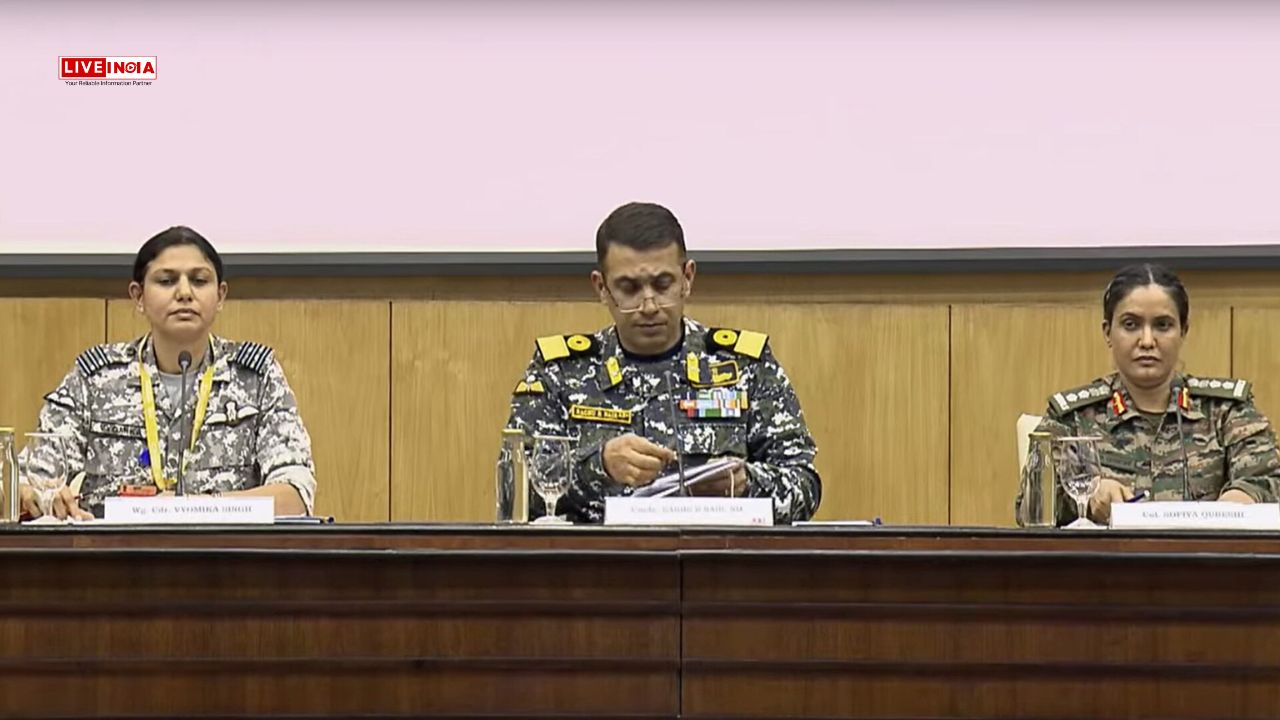
India’s Ministry of Defence later confirmed that its armed forces inflicted heavy damage on Pakistan’s land and air military assets, neutralizing critical sites involved in drone and missile launches. This included drone operation bases and airfields reportedly responsible for attacks on Indian territory.
Following days of shelling and drone engagements, Pakistan’s Director General of Military Operations (DGMO) called his Indian counterpart at 3:35 PM on May 10, leading to a formal agreement to halt all military operations across land, sea, and air. Both nations will hold further DGMO-level talks on May 12.
Foreign Minister S Jaishankar reaffirmed India’s “firm and uncompromising stance” against terrorism while calling the response “measured and responsible.” Prime Minister Narendra Modi, in a cabinet meeting earlier, praised the armed forces for their precision and resolve.
Despite the ceasefire, tensions remain high. Over 1.1 lakh civilians from villages near the Line of Control (LoC) in Baramulla, Bandipora, and Kupwara have evacuated following relentless shelling. Widespread damage to homes, religious structures, and basic infrastructure was reported.
As India continues to monitor the situation, its leadership has made clear that any future act of terror linked to Pakistan will be treated as an act of war—a clear signal that New Delhi’s patience has limits.
📌 Tags:
India Pakistan tensions, Operation Sindoor, ceasefire agreement, Vikram Misri, S Jaishankar, Donald Trump, Indian Air Force, Pahalgam attack, LoC shelling, terror strikes, Pakistan retaliation, DGMO talks, drone warfare, Indian military response, PoK strikes, Lashkar-e-Taiba, Jaish-e-Mohammed, ceasefire news, OperationSindoor,