
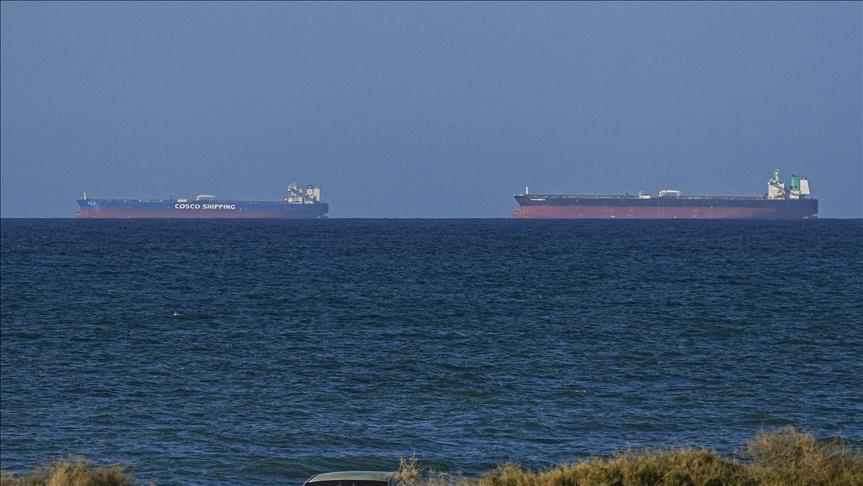


As the fragile ceasefire between the United States and Iran holds for now, Tehran has laid down strict conditions governing maritime traffic and financial commitments, signalling that shipping through the Strait of Hormuz may take considerable time to return to normal.
Iranian officials have warned that the current arrangement represents a major shift from pre-war operations and insisted there will be no immediate restoration of unrestricted shipping.
Only 15 Ships Allowed Daily With IRGC Approval
Under the ceasefire framework, Iran will permit no more than 15 ships per day to transit the Strait of Hormuz, according to a senior Iranian source quoted by Russian news agency TASS ahead of negotiations scheduled in Islamabad.
Each vessel will require prior clearance from Iranian authorities and must comply with a defined operational protocol overseen by the Islamic Revolutionary Guard Corps (IRGC).
“Under the current ceasefire, fewer than 15 ships per day are permitted to transit the Strait of Hormuz. This movement is strictly contingent upon Iran’s approval and enforcement of a specific protocol. There will be no return to the pre-war status quo,” the source said.
The Strait of Hormuz remains one of the world’s most strategically critical maritime routes, handling roughly one-fifth of global seaborne crude oil shipments, making restrictions there a major concern for global energy markets.
Iran Demands Release Of Frozen Overseas Assets
Tehran has also attached a financial condition to the ceasefire, demanding that its blocked foreign assets be unfrozen within the two-week truce period.
Officials described the release of funds as a non-negotiable guarantee for maintaining the agreement.
“The unfreezing of Iran’s blocked assets is a critical executive guarantee that must be realised within this two-week timeframe,” the source said.
Iran has further insisted that the end of the conflict be formally recognised through a resolution at the United Nations Security Council, drafted according to Tehran’s stipulated terms.
Authorities warned that failure to secure such recognition could trigger a renewed military response.
“If the termination of the war is not codified into a UN Security Council resolution based on our stipulated terms, we are fully prepared to resume combat against the US and the Zionist regime,” the source warned.
No Increase In US Military Presence Allowed
Another condition put forward by Tehran is that the United States must not expand its troop presence in the region during the ceasefire period.
Iran also reiterated that its uranium enrichment programme remains consistent with the framework agreed during negotiations.
Officials stated that Tehran continues to adhere strictly to the terms exchanged between both sides.
How The Ceasefire Was Reached
The temporary ceasefire was announced by US President Donald Trump on April 7, just hours before a deadline he had set that warned of severe escalation if Iran failed to respond.
Trump described Iran’s ten-point proposal as a “working basis” for negotiations and cited Tehran’s willingness to reopen the Strait of Hormuz as a key factor in reaching the truce.
Both sides are scheduled to continue discussions during talks in Islamabad on April 10.
Lebanon Conflict Remains A Major Flashpoint
Despite the ceasefire between Washington and Tehran, tensions remain high due to ongoing military operations involving Israel and Hezbollah forces in Lebanon.
Iran has insisted that any comprehensive ceasefire must include Lebanon, but both the US and Israel have maintained that the Lebanon front was never part of the original agreement.
Israeli forces have continued strikes in Lebanon since the ceasefire was announced, increasing pressure on the fragile truce.
Tehran has warned that continued attacks in Lebanon could force Iran to shut the Strait of Hormuz again. It has also launched missile strikes toward Israel and parts of the Gulf region, citing Israeli actions as justification.
Shipping Recovery Likely To Be Slow
Experts believe that even with the ceasefire in place, maritime activity in the Strait of Hormuz is unlikely to return to normal quickly due to strict vessel caps, security protocols, and persistent geopolitical risks.
The new regulatory structure imposed by Iran represents a significant shift in how shipping operations may function in the region moving forward.