

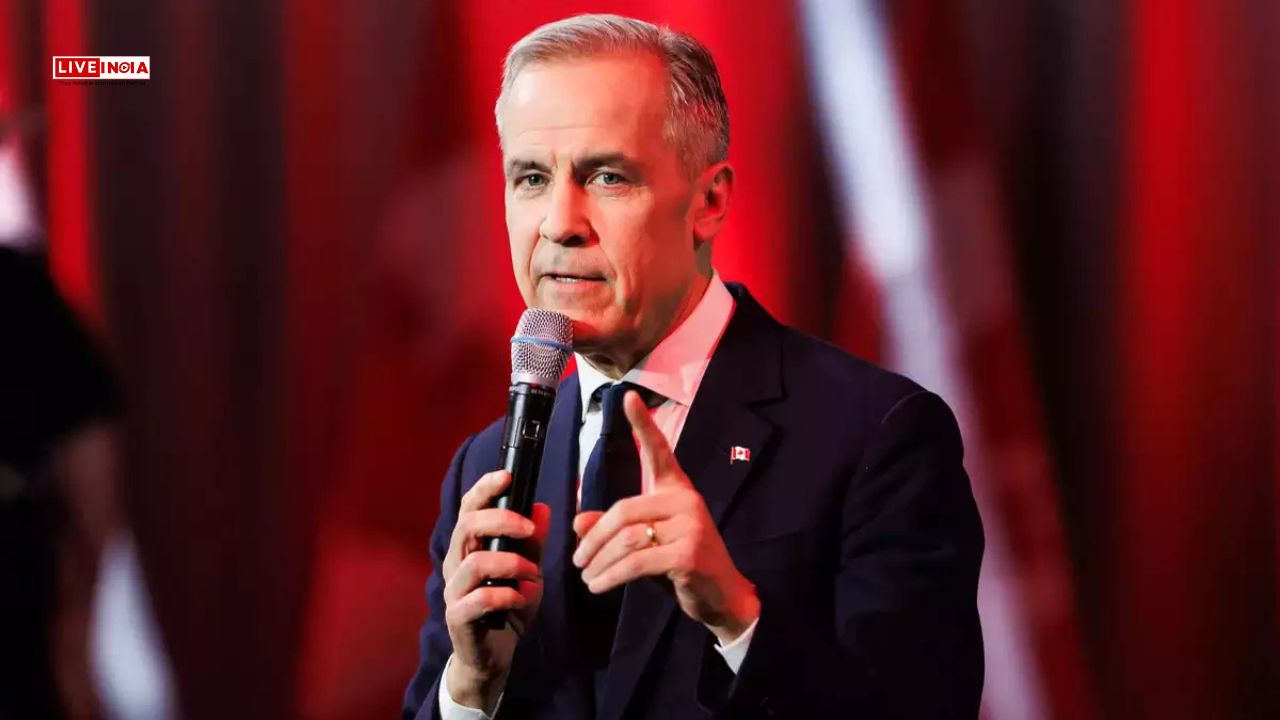


With a new leadership tone in Ottawa, Mark Carney prioritises rebuilding strained ties with New Delhi, aiming for renewed trade, trust, and diaspora cooperation.
April 29, 2025: Mark Carney’s Victory Signals Possible Reset in India-Canada Relations
The election victory of Mark Carney and the Liberal Party in Canada’s 2025 federal polls has raised hopes of a reset in one of Ottawa’s most strained foreign relationships — with India. Carney, a political newcomer but a seasoned global economic leader, had openly stated during his campaign that rebuilding ties with India would be one of his foreign policy priorities.
Also Read: Pakistan Violates Ceasefire for Fifth Consecutive Night Amid Soaring Tensions with India
“What Canada will be looking to do is to diversify our trading relationships with like-minded countries, and there are opportunities to rebuild the relationship with India,” Carney said on the campaign trail. “There needs to be a shared sense of values around that commercial relationship, and if I am Prime Minister, I look forward to the opportunity to build that.”
Diplomatic Breakdown Under Trudeau
India-Canada ties deteriorated dramatically in 2023 after then-Prime Minister Justin Trudeau alleged Indian involvement in the killing of Hardeep Singh Nijjar, a Canadian citizen and Khalistani separatist, in British Columbia. India firmly denied any link, terming the accusations “baseless,” and retaliated with diplomatic expulsions and a suspension of bilateral talks.
Tensions escalated throughout 2024, with both countries withdrawing top envoys and freezing major agreements, including trade negotiations. Ottawa’s perceived tolerance toward separatist activities, particularly within the Sikh diaspora, had long been a point of contention for New Delhi.
Carney’s ascent to leadership, promising a fresh diplomatic approach, is now being closely watched in both capitals.
Carney’s Diplomatic Vision
A former Governor of the Bank of Canada and the Bank of England, Mark Carney, 60, campaigned on strengthening Canada’s sovereignty and diversifying trade away from overdependence on the United States. He repeatedly emphasized India’s importance as a commercial partner aligned with democratic values.
In a February interview, Carney said, “Different person, different policies, different approach to governing,” hinting at a clear break from Trudeau-era foreign policy.
Carney has framed rebuilding trust with India as a cornerstone of his broader strategy to strengthen Canada’s global alliances amid growing tensions with the US under former President Donald Trump.
Managing the Diaspora Factor
Despite political tensions, immigration from India to Canada remained robust during Trudeau’s tenure. India continues to be Canada’s largest source of immigrants, with nearly 2.8 million Indo-Canadians forming a vital part of Canada’s workforce, education sector, and economy.
Carney is expected to continue promoting immigration, especially for skilled workers, students, and tech professionals, but with a stronger stance against extremism threatening India’s sovereignty.
Trade Talks: A Possible Revival
The diplomatic freeze had shelved negotiations on the long-pending Comprehensive Economic Partnership Agreement (CEPA) between India and Canada. With bilateral services trade already valued at CAD 13.49 billion in 2023, both sides had much to lose.
Carney’s emphasis on reviving economic and strategic partnerships could breathe new life into trade negotiations, particularly in sectors like AI, green energy, fintech, and education, where both nations seek to reduce reliance on China and the US.
With Mark Carney at the helm, a new chapter in India-Canada relations appears possible — one that many hope will be defined by mutual respect, expanded economic cooperation, and stronger diaspora management.
Tags:
Mark Carney, Canada elections 2025, India-Canada relations, Justin Trudeau, Khalistan controversy, Hardeep Singh Nijjar, CEPA Canada India, India foreign policy, Canadian politics, Indo-Canadian diaspora, New Delhi Ottawa ties