
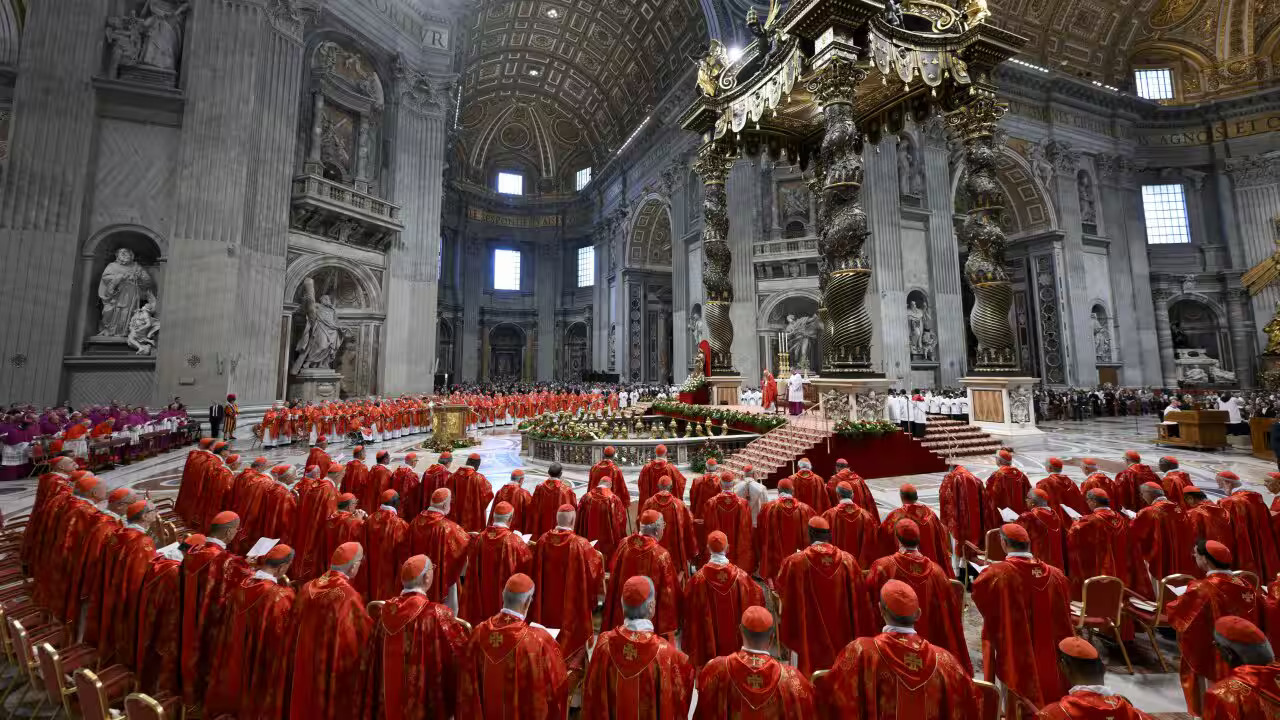


Cardinals fail to elect a new Pope on Day 1 of the conclave; voting resumes Thursday amid centuries-old traditions and strict secrecy.
Washington DC [US], May 8:
Black smoke billowing from the chimney of the Sistine Chapel signaled that the Catholic Church’s first round of voting to elect a new Pope ended without a decision on Wednesday, CNN reported.
After casting their votes, the 133 cardinal electors returned to the Santa Marta residence, where they remain secluded. The conclave will resume voting on Thursday in search of a successor to Pope Francis, who passed away last month.
The process of electing a Pope—known as the conclave—is rooted in deep tradition and intense secrecy. A candidate must secure more than two-thirds of the vote to be chosen as the next pontiff. At the end of each voting session, ballots are burned in a special stove. Black smoke means no consensus has been reached; white smoke announces the election of a new Pope.
Historically, recent Popes have been elected quickly.
- Pope Benedict XVI was elected on the second day after four rounds of voting.
- Pope Francis, his successor, also emerged victorious on Day 2, but after five rounds.
- Pope John Paul II, elected in 1978, required eight rounds over three days.
In contrast, early 20th-century conclaves took longer.
- Pope Pius X (1903) and Pope Pius XII (1939) were both elected after five days of voting.
Reverend Sam Sawyer, Jesuit priest and editor-in-chief at America Media, emphasized that the secrecy of the process ensures the cardinals can vote freely and without outside influence.
“The secrecy really gives the cardinals freedom of conscience… to vote for the man they think is best suited to be the pope,” Sawyer told CNN.
He added that while modern conclaves encourage honest dialogue and spiritual discernment, the tradition of secrecy once served as a protective barrier against political manipulation.
With voting set to resume Thursday, the world watches the iconic chimney once again, awaiting the plume of white smoke that will introduce the next leader of the Catholic Church.