
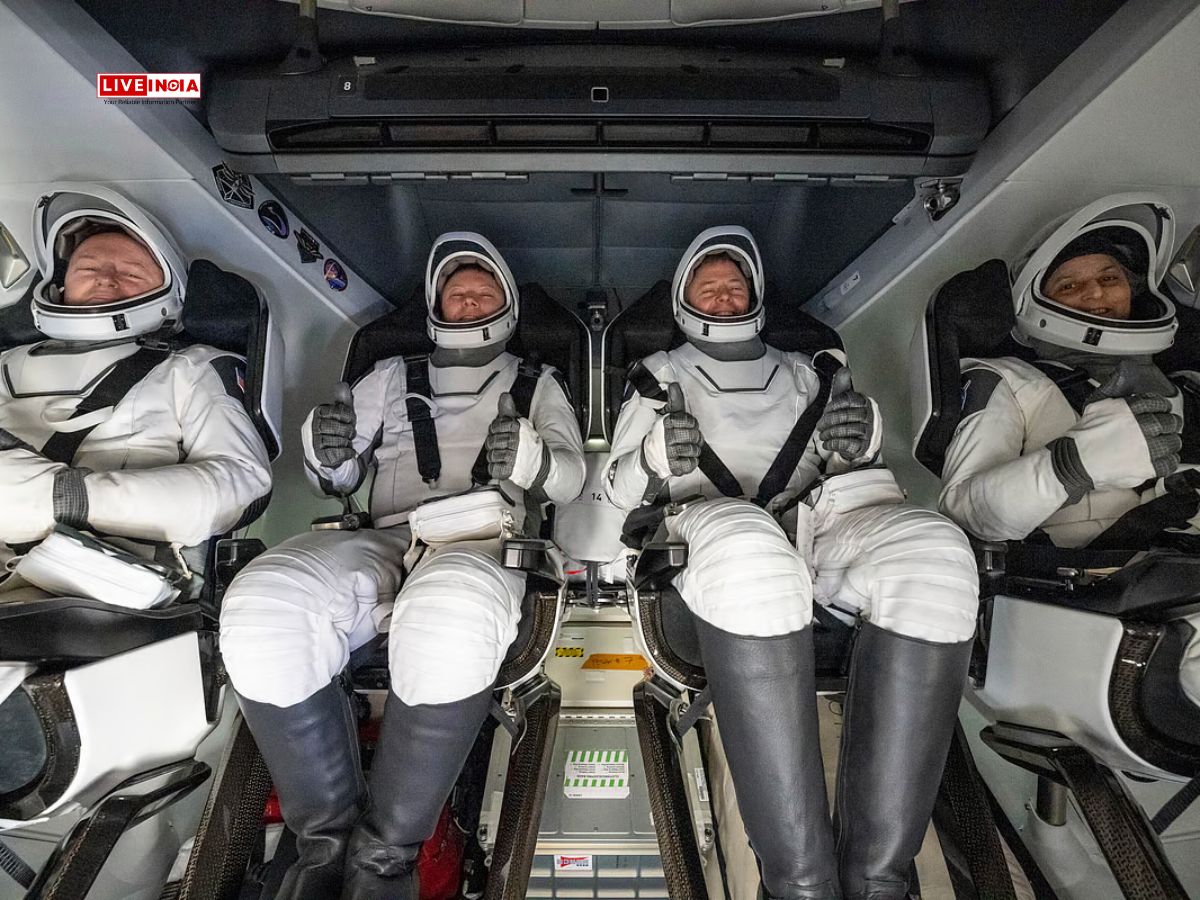


“Crew-9 astronauts face significant health challenges as they undergo a 45-day rehabilitation program to readjust to Earth’s gravity.”
Florida, March 19, 2025
After spending nine months in space, astronaut Sunita Williams and her Crew-9 teammates are back on Earth, but their journey is far from over. Returning from the microgravity environment of the International Space Station (ISS) comes with a host of physical challenges, including what scientists humorously call the “puffy head, chicken legs” syndrome.
Also Read: Jhulasan Celebrates Sunita Williams’ Return: “A Proud Moment for India”
To help the astronauts regain strength, balance, and bone density, NASA has implemented a rigorous 45-day rehabilitation program that will help them readjust to Earth’s gravity.
How Space Affects the Human Body
Life in microgravity significantly alters the human body. Without the constant pull of Earth’s gravity:
- Fluids shift upwards, causing astronauts’ faces to swell (“puffy head”) and legs to become thinner (“chicken legs”).
- Bone density and muscle mass decrease, increasing the risk of osteoporosis and muscle atrophy.
- Balance and coordination weaken due to changes in the inner ear’s vestibular system.
- Height temporarily increases by up to two inches, as spinal discs expand in microgravity.
NASA scientists liken these effects to a highly accelerated version of aging, where bones weaken and cardiovascular health is affected within months.
NASA’s 45-Day Rehabilitation Plan for Crew-9
To counteract these effects, returning astronauts will undergo daily, two-hour rehabilitation sessions under the supervision of Astronaut Strength, Conditioning, and Rehabilitation (ASCR) specialists.
The program is divided into three key phases:
- Phase 1 (Landing Day):
- Focus on walking, flexibility, and muscle activation
- Initial medical assessments and fluid replenishment
- Phase 2 (Cardiovascular & Strength Training):
- Incorporates proprioceptive exercises to restore balance
- Cardiovascular endurance training to rebuild stamina
- Phase 3 (Functional Development – The Longest Phase):
- Tailored strength and mobility programs
- Recovery training based on pre-flight fitness levels and mission roles
NASA studies have shown that astronauts not only regain their pre-flight fitness levels after this rehabilitation but, in many cases, come back stronger and more resilient.
What’s Next for Sunita Williams?
Williams and her fellow astronauts will spend the next 45 days at NASA’s Johnson Space Center in Houston for rehabilitation. They will:
- Undergo regular medical evaluations to track recovery progress.
- Slowly return to normal daily activities, adjusting to Earth’s gravity and movement.
- Prepare for potential future missions, with Williams still being a strong candidate for future deep-space expeditions.
A Mission That Became a Global Phenomenon
Sunita Williams’ prolonged stay at the ISS was the result of a propulsion system failure in Boeing’s Starliner, which forced her and Butch Wilmore to remain in orbit for an extra nine months.
Since then, their extended stay has sparked:
- Global concern for their health
- Political debates over delays in their return
- Increased scrutiny on NASA and Boeing’s space programs
Now that she’s back, Williams’ recovery will be closely monitored, and her return to space could depend on how well she rebounds from the physiological effects of microgravity.
For now, the focus remains on helping Crew-9 regain their strength and celebrating their safe return to Earth.
Tags:
#SunitaWilliams, #NASA, #SpaceX, #AstronautHealth, #SpaceExploration, #Microgravity, #AstronautRehabilitation, #Crew9, #HumanSpaceflight, #ISS