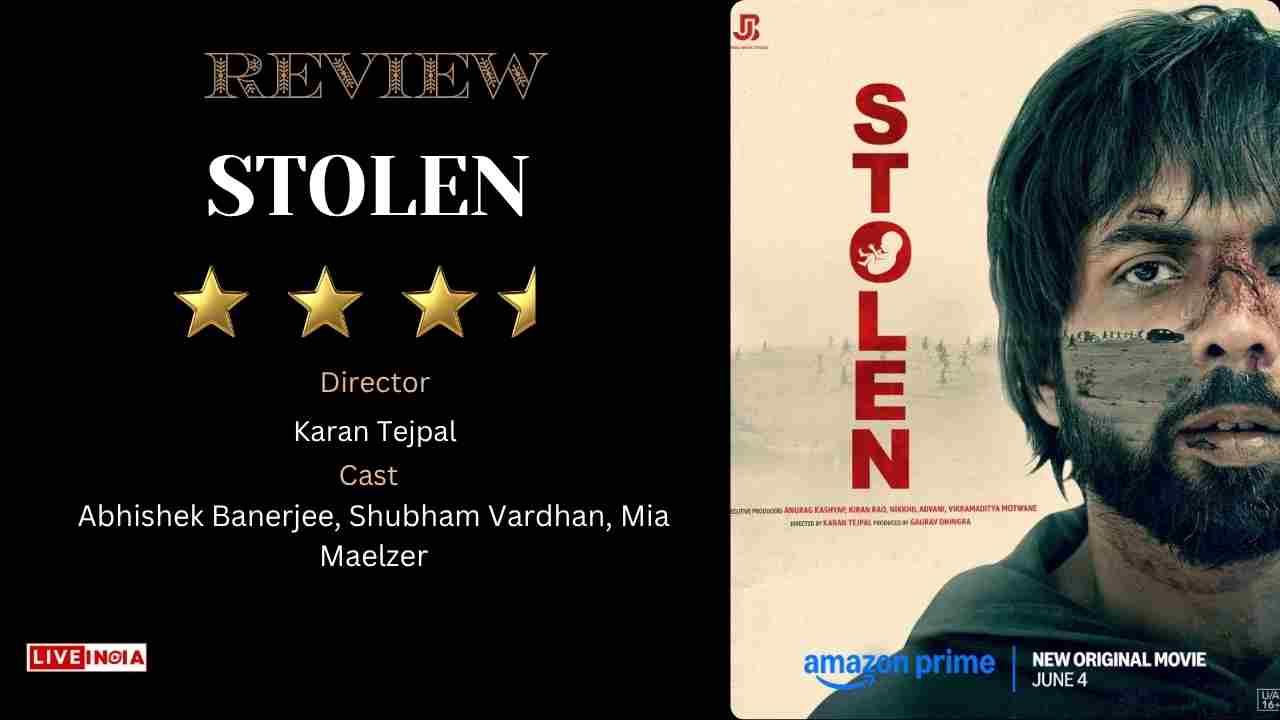
REVIEW- ‘Stolen’: A Chilling Exploration of Mob Violence, Class Divide, and Moral Collapse
Lynching—a word that should belong to history books—has disturbingly re-entered India’s present-day lexicon. Once associated with a barbarism thought long buried, the term is now tied closely with another 21st-century menace: the spread of misinformation through social media platforms, especially WhatsApp. A quick search for “lynch mob” and “WhatsApp” throws up a sobering list of incidents, most of them from India—each echoing a pattern of violence spurred by rumour, prejudice, and silence.
Despite the horrifying resurgence of lynching in India, only a handful of Hindi films have directly confronted this crisis. Mukkabaaz (2018) and Afwaah (2023) featured lynching-like assaults on Dalit and Muslim characters respectively, but their victims survive. None have fully replicated the visual language of actual lynching videos: grainy mobile footage, shaky camera angles, desperate pleas, and a mob addressing their violence to an invisible online audience. The closest anyone came was Dibakar Banerjee in Love Sex Aur Dhokha (2010), whose vérité-style filmmaking hinted at the voyeurism embedded in public violence.
Now, Karan Tejpal’s debut feature Stolen revisits this horror with unnerving restraint and moral complexity. The film opens with a chilling act—a baby is stolen beside its sleeping mother on a railway platform. Minutes later, a message informs us that this story is inspired by real events. In a candid interview, Tejpal shared that Stolen was influenced by a lynching incident in Assam in 2018, where two men were killed by a mob over WhatsApp rumours of child abduction. Similar frenzies occurred in Jharkhand in 2017, resulting in the deaths of five people.
The film’s central narrative follows Gautam (Abhishek Banerjee) and his younger brother Raman (Shubham Vardan), who meet at a railway station. There, they find Raman accused by Jhumpa (Mia Maelzer), a tribal woman, of abducting her child. He had merely picked up a cap from the platform, but that’s enough to ignite suspicion. Two indifferent cops arrive. Raman, moved by Jhumpa’s desperation, insists on justice, but his righteous indignation puts both brothers on a dangerous trajectory. Soon, the group is dragged into a nightmarish journey through India’s unforgiving hinterland.
Gautam instantly recognises the threat. “Bahut galat phase hain yaar,” he mutters—an ominous line of self-awareness. If Raman is the liberal idealist, Gautam is the jaded, upper-class pragmatist—more concerned with salvaging his own skin than interrogating injustice. He doesn’t empathise with Jhumpa, not because he lacks understanding, but because her problems belong to a caste and class he can ignore. When she begs for help, he offers her money.
The film evokes parallels with NH10 (2015), in which urban outsiders are trapped in rural violence. But Stolen avoids easy binaries. There is no single, sadistic villain—just layers of complicity. The antagonists are indistinct: lurking shadows, dispassionate police, or the mob itself. Even the most vile figures reveal moments of conscience. One of the cops, Panditji (Harish Khanna in a standout performance), evolves into a far more complex presence than expected. Similarly, Jhumpa’s backstory keeps shifting, with revelations that echo the narrative richness of Sonchiriya (2019)—another rare film that dared to confront caste, violence, and justice with brutal honesty.
But Stolen belongs, most of all, to Abhishek Banerjee, whose transformation across the film is magnetic. His performance spans the emotional spectrum—from sarcasm and fear to fury and resigned empathy. This is his most layered role yet. Whether as the goofy sidekick in Stree (2018), the menacing antagonist in Paatal Lok (2020), or the casteist politician in Vedaa (2024), Banerjee has refused to be typecast. Here, his portrayal of Gautam—at once privileged, self-interested, yet slowly awakened—is hauntingly real.
Premiered at the Venice Film Festival 2023, Stolen was met with critical acclaim. Yet, its path to Indian audiences was uncertain—especially following the censor troubles faced by Santosh (2024), another film interrogating law, power, and injustice. Thankfully, Stolen is now available on Amazon Prime Video, bypassing a theatrical release.
In a landscape where commercial cinema often avoids the ugly truths of contemporary India, Stolen is a bleak yet essential watch. It’s the kind of film that simultaneously renews hope for Hindi cinema and extinguishes it for the state of the nation.
Bahrain says it intercepted dozens of missiles and drones amid escalating Iran conflict March 6,…
Parties direct Lok Sabha members to attend Parliament as Budget Session resumes on March 9…
Congress leader tells students public life demands resilience, values and readiness to face hardships March…
In traditional Indian medicine, immunity is deeply connected with overall body balance. According to Ayurveda,…
After the vibrant celebrations of Holi, many people are left dealing with colour stains, dryness,…
Think tank analysis highlights soaring military expenses as conflict enters its first week March 6,…