
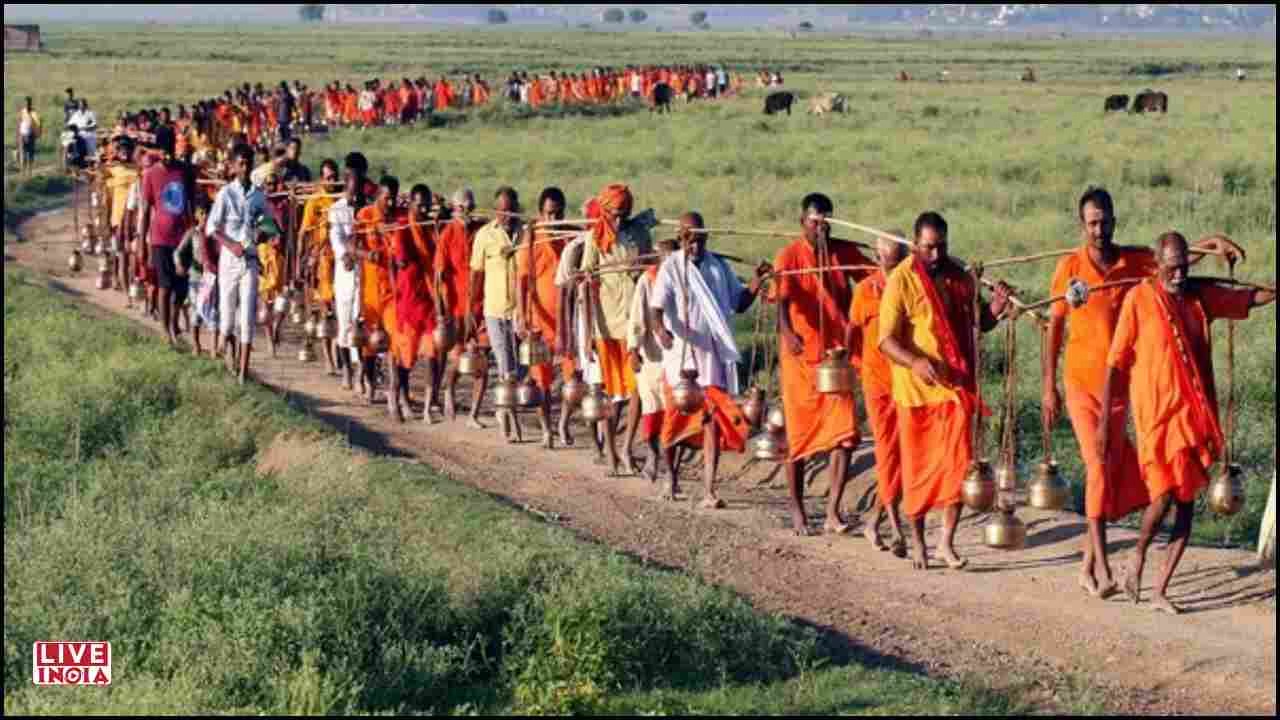


As July 2025 unfolds, millions across India and beyond are immersed in the sacred month of Sawan, also known as Shravan. This auspicious period, the fifth month in the Hindu calendar, is profoundly dedicated to Lord Shiva, marking a time of intense devotion, spiritual awakening, and natural rejuvenation.
The Essence of Sawan: Devotion and Divine Blessings
Sawan holds immense religious and spiritual importance, primarily due to its deep connection with Lord Shiva. According to Hindu mythology, it was during this month that Lord Shiva consumed the formidable Halahala poison, which emerged from the Samudra Manthan (churning of the cosmic ocean), to save the universe from destruction. This selfless act earned him the epithet ‘Neelkanth’ (blue-throated) and established Sawan as a time to honor his boundless compassion and sacrifice. Devotees offer water and milk to Shivlingas, symbolically soothing his throat and seeking his blessings.
Beyond Lord Shiva, Sawan is also significant for Goddess Parvati, who is believed to have undertaken rigorous penance during this month to marry Lord Shiva. This makes Sawan an especially potent period for women seeking marital bliss and an ideal life partner.
Sawan 2025: Key Dates and Regional Variations
The start and end dates of Sawan vary slightly based on regional lunar calendars:
- North India (Purnimanta Calendar): Sawan 2025 commences on July 11, 2025, and concludes on August 9, 2025.
- South and Western India (Amanta Calendar): For these regions, Sawan begins on July 25, 2025, and ends on August 23, 2025.
Key dates within July 2025 include:
- First Sawan Somwar (Monday Fast): July 14, 2025 (observed in North India).
- Sawan Shivratri: July 23, 2025.
Throughout the month, particularly on Mondays, known as ‘Sawan Somwar,’ devotees observe fasts and perform special prayers. Tuesdays in Sawan are dedicated to Goddess Parvati, with married women observing the ‘Mangala Gauri Vrat’ for the well-being and longevity of their husbands.
Rituals and Practices: A Path to Purification
The month is characterized by a myriad of rituals and devotional practices aimed at seeking divine grace and inner purification:
- Fasting: Many devotees observe ‘Sawan Somwar Vrat,’ abstaining from grains, onion, garlic, meat, and alcohol. They opt for a sattvic diet consisting of fruits, milk products, and specific flours like buckwheat and water chestnut.
- Abhishekam and Offerings: A central ritual involves performing ‘Abhishekam’ on the Shivlingam with Panchamrit (a mixture of milk, curd, ghee, honey, and sugar), Gangajal (holy Ganges water), Bel Patra (Bilva leaves), Dhatura, and white flowers. Chanting mantras like “Om Namah Shivaya” and the Maha Mrityunjaya Mantra is also integral.
- Kanwar Yatra: A significant pilgrimage where devotees, known as Kanwariyas, undertake journeys to sacred sites like Haridwar and Gaumukh to collect holy water from the Ganges and offer it to Lord Shiva.
- Spiritual Practices: Beyond rituals, Sawan encourages deep introspection, meditation, and spiritual growth. The heightened cosmic energy during this month is believed to be conducive to inner reflection and making wise life choices.
- Vastu and Home Cleanliness: Many believe that cleaning homes, sprinkling Gangajal, and placing Lord Shiva’s idol in the northeast direction can attract positivity and prosperity. Planting sacred plants like Bael, Tulsi, Shami, Aak, and Datura is also considered auspicious.
- Monsoon Connection: Sawan coincides with the peak monsoon season, bringing lush greenery and rejuvenating the land. This natural renewal is seen as a backdrop for spiritual contemplation, fostering a connection between humanity and nature.
Sawan is not merely a period of religious observance; it is a holistic experience that intertwines spiritual devotion with cultural celebrations and a deep reverence for nature. It is a time for self-discipline, compassion, and a collective endeavor to purify the mind, body, and soul.