
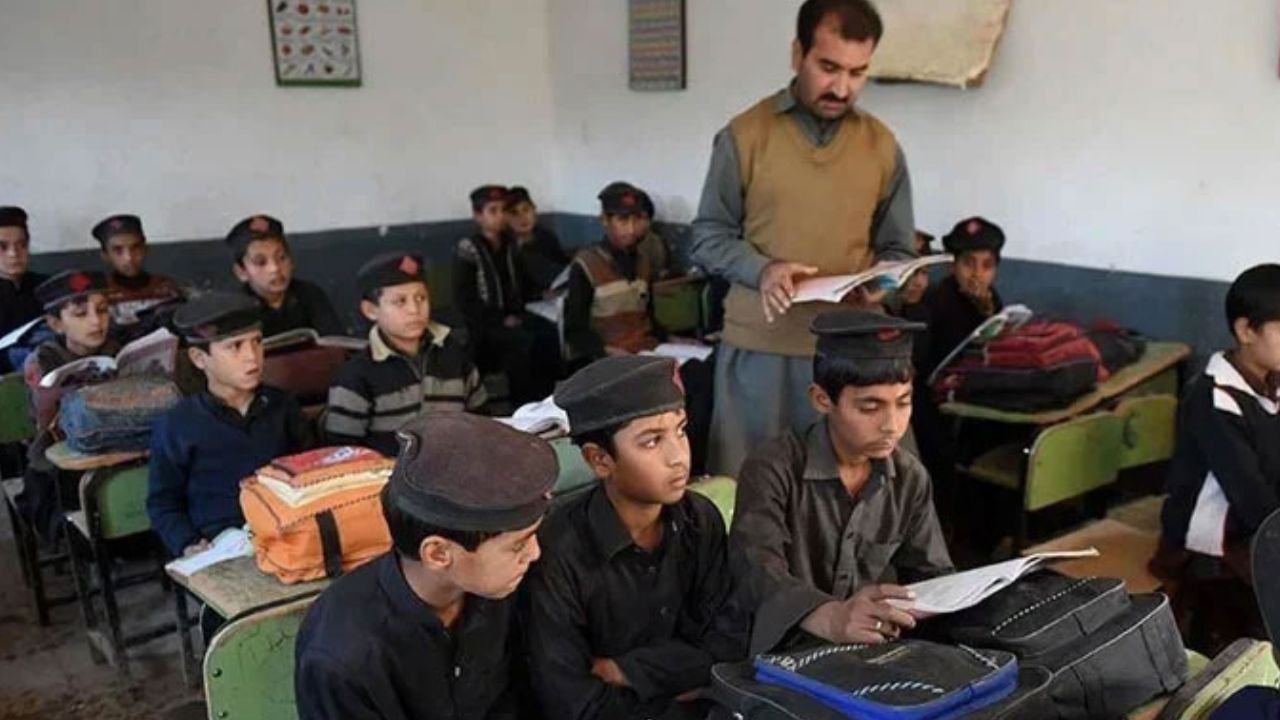


May 13, 2025: A persistent shortage of textbooks has left students and teachers in government schools across Pakistan’s Khyber Pakhtunkhwa province grappling with major disruptions to academic learning, Dawn reported. Despite the new school year having started in early April 2025, many students are still without essential textbooks—particularly in secondary school grades.
For over two decades, students in Khyber Pakhtunkhwa received free textbooks at the beginning of the academic year, courtesy of the provincial government. However, the policy was revised two years ago after printing costs exceeded PKR 10 billion. In response, the government halved the supply of new books and instructed schools to collect used textbooks from promoted students to make up the deficit.
This year, despite the Khyber Pakhtunkhwa Textbook Board claiming it had fulfilled all orders from the Elementary and Secondary Education Department, schools continue to report severe shortages. A teacher from a government high school in Peshawar Cantonment revealed that while there are limited shortages in classes 6–8, the situation is critical in grades 9 and 10, with many students entirely without textbooks. For example, in a classroom of 40 ninth-grade students, only five new physics books and 15 biology books were provided.
Teachers have tried to bridge the gap by collecting old textbooks, but most are in poor condition. Compounding the issue, many tenth-grade students who recently completed their exams failed to return their books, exacerbating the crisis.
Unable to teach effectively, some educators are now urging students to buy books from the market—defeating the purpose of the free textbook policy and placing additional financial burdens on families.
Syed Mohammad Farrul Saqlain, chairman of the Khyber Pakhtunkhwa Textbook Board, stated that 34 million books were printed and handed over to distribution centers across the province based on official demand. He maintained that the board fulfilled its mandate and suggested the crisis stemmed from inaccurate student data and a lack of compliance in returning books.
An official from the education department echoed this view, admitting that the inaccurate student counts and the failure to retrieve old textbooks had led to the current shortfall.
Meanwhile, a representative from the School Officers Association, which represents teachers in high and higher secondary schools, called for urgent government intervention to deliver free textbooks and prevent further learning loss. He warned that asking students to share books or do without them was proving ineffective, particularly when it came to homework and self-study.
He added, “The government must choose—either provide all students with new textbooks or formally end the free textbook program and ask parents to purchase them. The current halfway approach is hurting students the most.”