Triple Tremors Rattle Myanmar Amid Ongoing Seismic Crisis
May 15, 2025: Myanmar experienced three separate earthquakes on Thursday, May 15, 2025, shaking a region already reeling from a recent series of devastating seismic events. According to the National Center for Seismology (NCS), all three quakes occurred at a shallow depth of 10 km—raising the risk of aftershocks and potential damage.
The first tremor, with a magnitude of 3.4, struck at 12:41 a.m. IST. This was followed by a second quake, also of magnitude 3.4, at 5:46 a.m. IST, and then a third, slightly weaker 3.3-magnitude quake hit at 1:31 p.m. IST. The precise coordinates shared by NCS place these quakes across various regions within Myanmar’s seismically active zones.
Shallow earthquakes like these, although lower in magnitude, pose a greater risk to life and infrastructure due to their proximity to the Earth’s surface. These tremors are capable of producing strong ground shaking and increasing the likelihood of structural damage, injury, or fatalities, particularly in densely populated or poorly constructed areas.
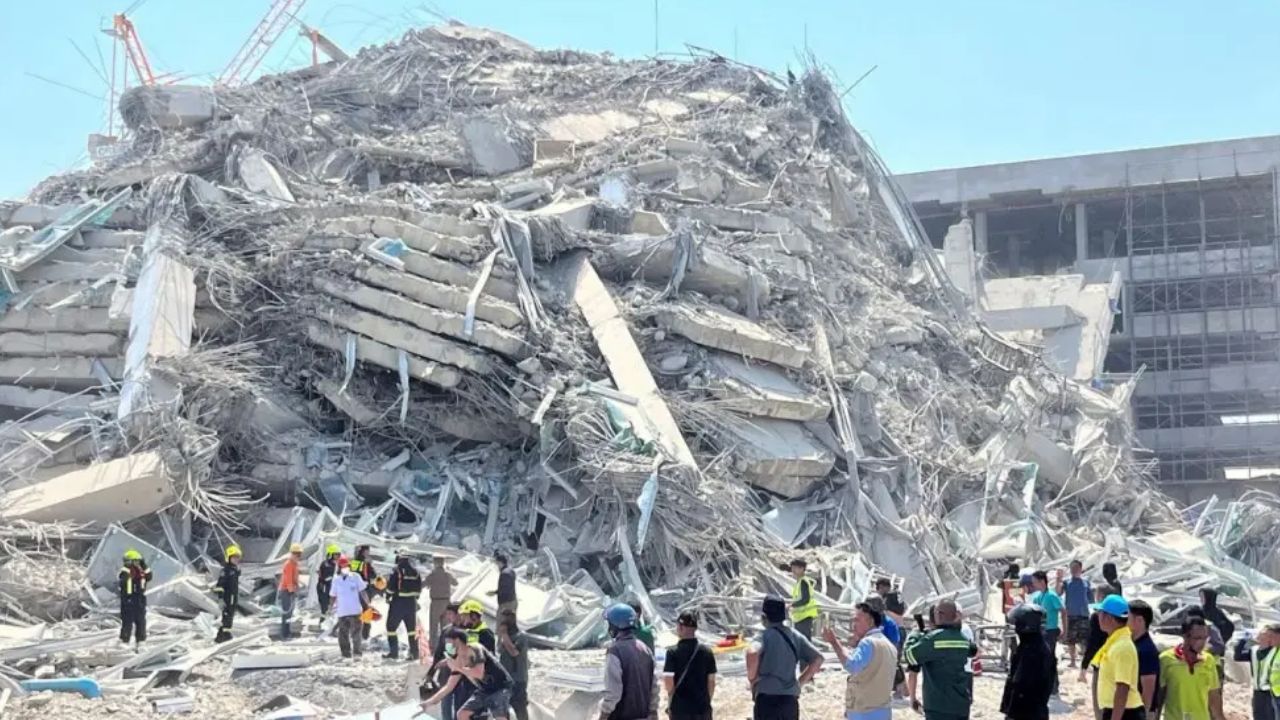
These incidents come on the heels of two powerful earthquakes—magnitude 7.7 and 6.4—that struck central Myanmar on March 28, 2025. In the aftermath, the World Health Organization (WHO) raised concerns about severe public health risks for tens of thousands of displaced residents, including increased exposure to tuberculosis (TB), HIV, and vector- and water-borne diseases.
Even before the March earthquakes, Myanmar was already grappling with an internally displaced population exceeding 3.5 million. Now, the numbers of homeless and at-risk communities are rising sharply, exacerbating the country’s ongoing humanitarian crisis.
Myanmar’s high seismic vulnerability stems from its geographic position along major fault lines. In particular, the Sagaing Fault, which cuts through central Myanmar, places cities like Sagaing, Mandalay, Bago, and Yangon at elevated risk. Together, these regions account for 46% of the nation’s population.
Despite this, Myanmar lacks an official national seismic hazard map, a critical gap in the country’s disaster preparedness. Notably, Yangon, though situated farther from the fault line, still faces significant risk due to its dense urban population and vulnerable infrastructure—as witnessed in the 1903 Bago earthquake, which also shook Yangon despite the distance from the epicenter.
As seismic activity continues to threaten Myanmar, experts urge the development of a national seismic strategy, improved early-warning systems, and increased public awareness and preparedness to mitigate the risks of future disasters.
Copyright dispute over franchise ownership clouds sequel’s future February 7, 2026: Just as excitement around…
14-year-old prodigy’s record knock caps dream tournament, but future U-19 appearances ruled out February 7,…
Romantic track from Echoes Of Us draws attention after Arijit’s playback retirement February 7, 2026:…
AIMIM chief mocks Assam CM over ‘Miya Muslims’ remark, sparks political row February 7, 2026:…
Singer speaks on halftime vision, Grammy high, and political backlash ahead of big night February…
Producer says Naagin was first planned as a film before becoming a TV franchise February…