
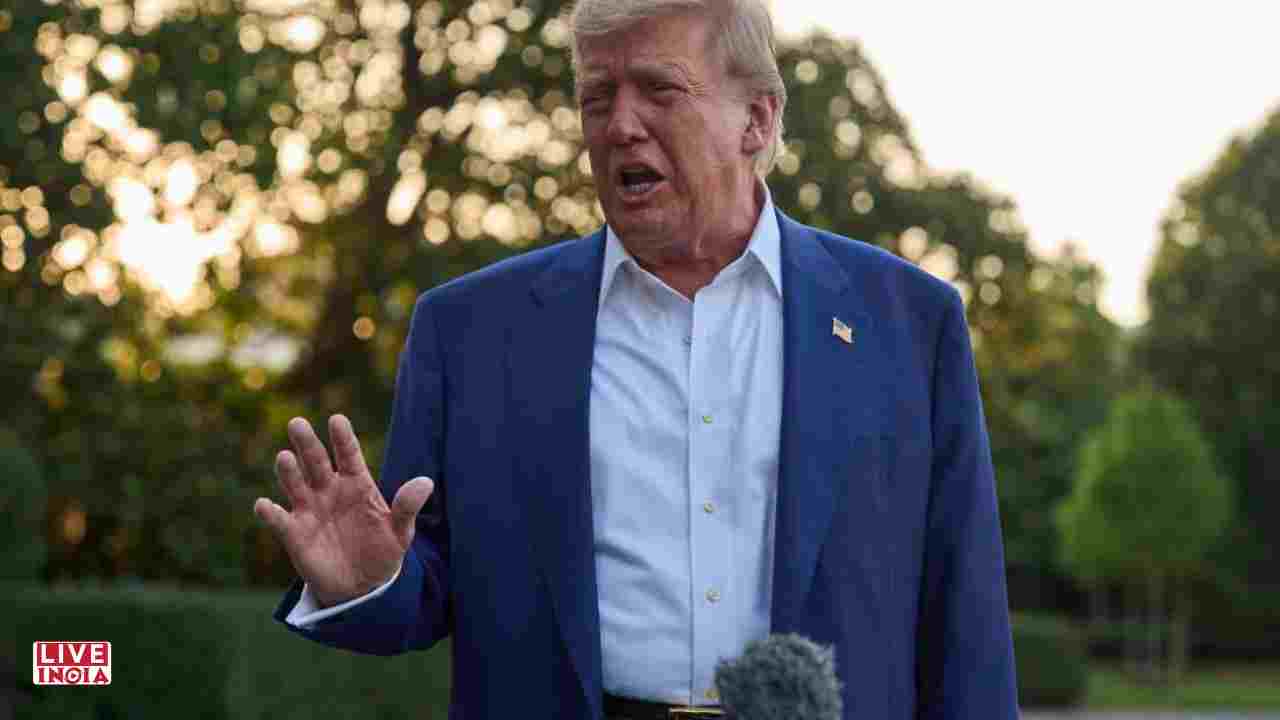


US President Donald Trump claims Iran’s nuclear facilities at Fordow, Natanz, and Esfahan are now “under rock” and beyond repair after American airstrikes; warns Israel to honour ceasefire.
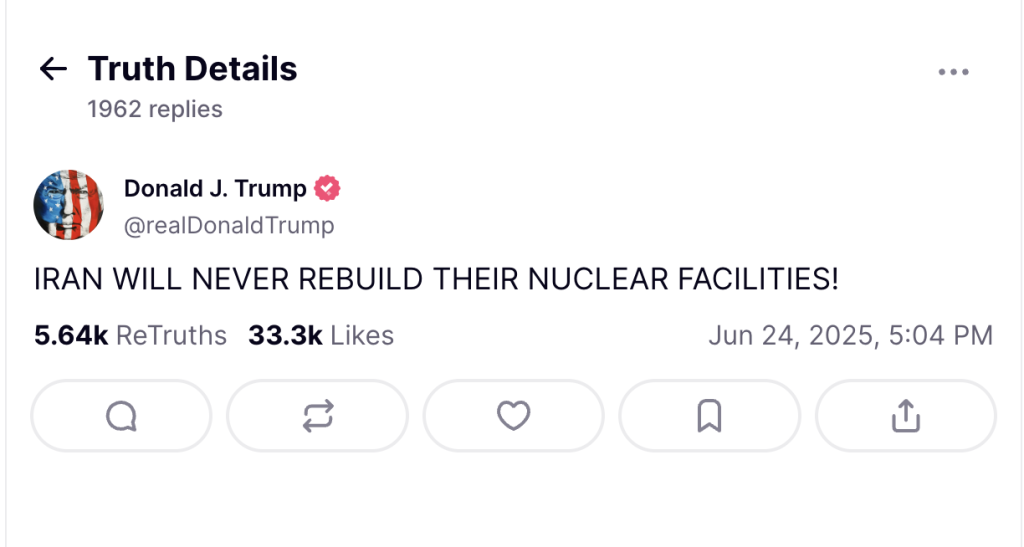
Washington [US], June 25 — In a dramatic assertion following the recent US-led airstrikes on Iranian nuclear facilities under Operation Midnight Hammer, President Donald Trump declared that Iran “will never be able to rebuild” its bombed-out sites, including the hardened installations at Fordow, Natanz, and Esfahan. Trump posted on Truth Social, stating unequivocally, “IRAN WILL NEVER REBUILD THEIR NUCLEAR FACILITIES!” — signaling a turning point in the military and diplomatic standoff that has rattled the Middle East.
Full Report:
Speaking to reporters after the strikes, Trump added,
“Iran will never be able to rebuild its nuclear facilities. From there? Absolutely not. That place is under rock. That place is demolished. The B2 pilots did their job better than anybody could have imagined…”
The airstrikes, part of Operation Midnight Hammer, targeted fortified Iranian nuclear sites that have long been at the center of international scrutiny. Trump emphasized that these locations are now buried under rubble.
In earlier posts, Trump attempted to ease tensions by urging Israel to honour a newly brokered ceasefire, posting on Truth Social:
“ISRAEL is not going to attack Iran. All planes will turn around and head home, while doing a friendly ‘Plane Wave’ to Iran. Nobody will be hurt, the Ceasefire is in effect!”
However, he issued a stark warning to Israel hours later:
“DO NOT DROP THOSE BOMBS. IF YOU DO IT IS A MAJOR VIOLATION. BRING YOUR PILOTS HOME, NOW!”
Despite the ceasefire, tensions briefly reignited when the Israeli Air Force (IAF) conducted a limited strike on an Iranian radar site north of Tehran on Tuesday. This came in direct response to Iran’s ballistic missile attack on Israel earlier that day — a breach of the ceasefire that had just been announced.
According to The Times of Israel, the Israeli strike was scaled down after a call between Trump and Israeli Prime Minister Benjamin Netanyahu. The two leaders agreed on a “symbolic” retaliatory strike to avoid further escalation. Following this, most Israeli fighter jets turned back mid-air, and only the radar site was hit.
The original Israeli military plan was reportedly more expansive, though details remain classified.
Meanwhile, the Iranian missile barrage continued, with Iran launching multiple projectiles at US military bases in Qatar, including the Al Udeid Air Base, which is the largest American installation in the region. These attacks were clearly in response to the earlier US airstrikes on Iranian nuclear infrastructure.
In a formal statement, Israel accepted the ceasefire proposed by President Trump, stating:
“In light of having achieved the objectives of the operation, and in full coordination with President Trump, Israel agrees to the President’s proposal for a bilateral ceasefire. Israel will respond forcefully to any violation of the ceasefire.”
Trump, celebrating the diplomatic success, posted:
“Iran will start the ceasefire and, upon the 12th Hour, Israel will start the ceasefire and, upon the 24th Hour, an official end to the 12-Day War.”
The 12-day conflict began on June 13, when Israel launched Operation Rising Lion, a massive airstrike targeting Iranian military and nuclear infrastructure. Iran retaliated with Operation True Promise 3, unleashing waves of missile and drone attacks on Israeli infrastructure.
With both sides now under a ceasefire brokered by Washington, attention turns to the long-term implications of Operation Midnight Hammer and whether Iran’s nuclear ambitions have truly been curtailed.