
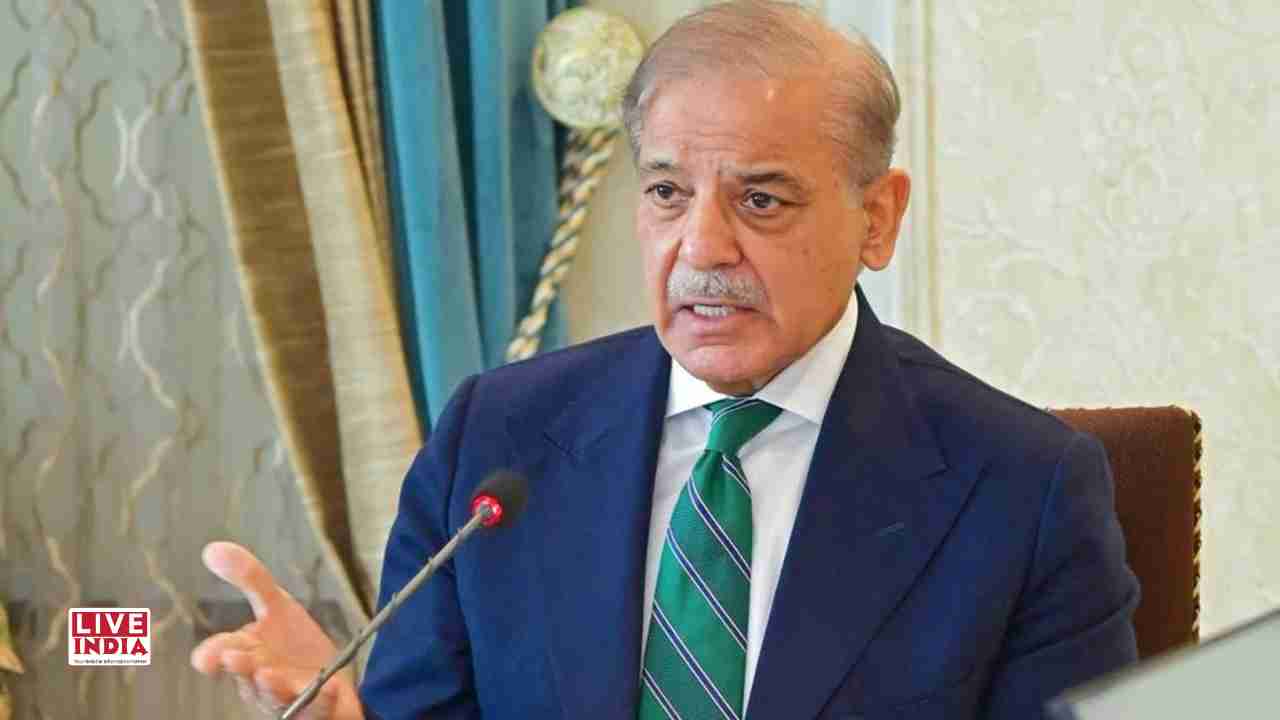


As India garners international support post-Pahalgam attack, Pakistan’s Prime Minister offers to participate in a neutral investigation—while his own Defence Minister admits to backing terror groups.
Khyber Pakhtunkhwa [Pakistan], April 26:
As global condemnation mounts over the deadly Pahalgam terror attack, which killed 26 civilians including one Nepali national, Pakistan’s Prime Minister Shehbaz Sharif has finally responded under international pressure. On Saturday, he extended Islamabad’s “willingness” to be part of a neutral, transparent, and credible investigation into the attack, according to a report by Dawn.
Speaking at a passing-out parade at the Pakistan Military Academy in Kakul, Shehbaz stated, “Continuing with its role as a responsible country, Pakistan is open to participating in any neutral, transparent and credible investigation.”
Sharif also reiterated Pakistan’s self-proclaimed position as the “world’s frontline state against terrorism,” claiming the country had suffered “immense loss” in the fight against extremism. “We have lost over 90,000 lives and suffered economic losses exceeding USD 600 billion,” he said.
However, these claims appeared contradictory when juxtaposed with a viral interview from a day earlier, in which Pakistan’s Defence Minister Khwaja Asif openly admitted that the country had been involved in training and funding terrorist groups. Speaking to Sky News journalist Yalda Hakim, Asif confessed, “We have been doing this dirty work for the United States for about three decades… That was a mistake, and we suffered for that.”
In the same interview, Asif warned of a potential “all-out war” with India, adding more fuel to an already tense diplomatic climate.
India, in response to the April 22 Pahalgam attack, has rolled out strong diplomatic measures—shutting the Attari Integrated Check Post, suspending the SAARC Visa Exemption Scheme (SVES) for Pakistani nationals, and scaling down diplomatic staff. It also halted the Indus Waters Treaty, a 1960 water-sharing agreement brokered by the World Bank.
Indian Prime Minister Narendra Modi, responding to the outrage, vowed justice: “The terrorists and those who conspired with them will face punishment beyond their imagination. The time has come to crush the last remaining safe havens of terror.”
As India solidifies international support and ramps up diplomatic pressure, Pakistan’s credibility is increasingly under question—caught between calls for neutrality and its own historical admissions of enabling terror networks.