
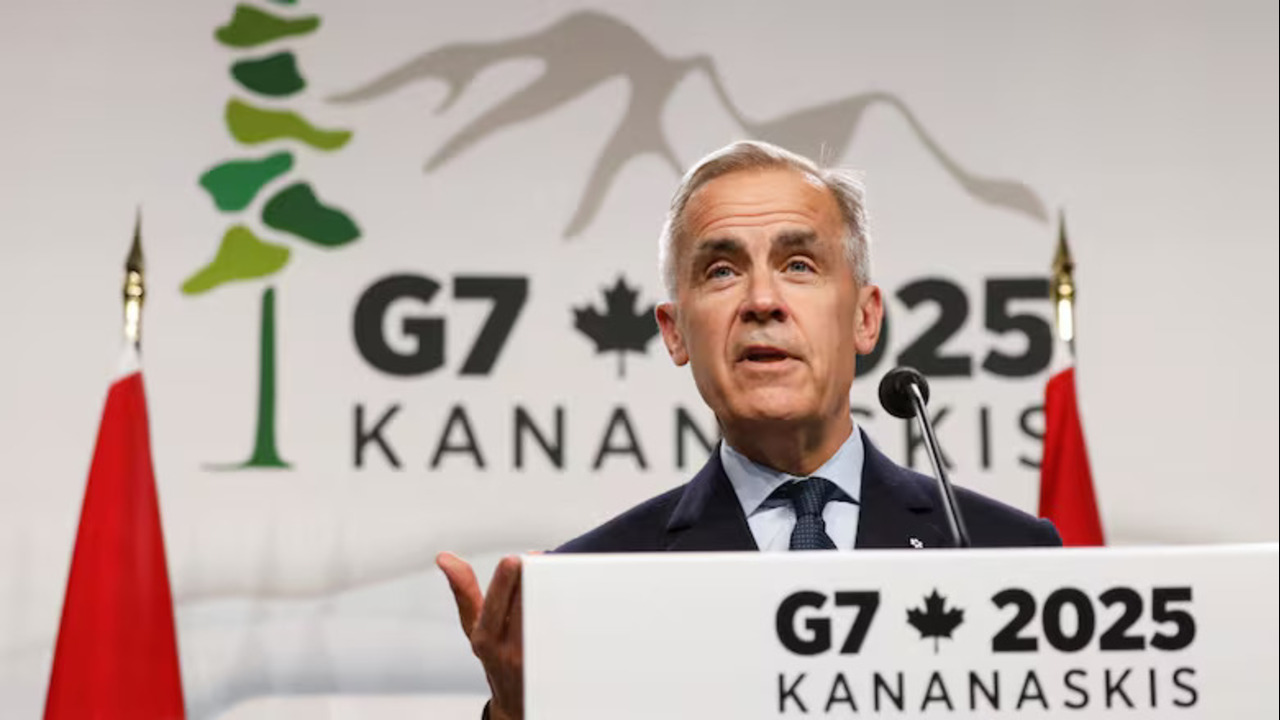


June 18, 2025: At the 50th G7 Summit in Kananaskis, Alberta, Canadian Prime Minister Mark Carney walked a diplomatic tightrope, managing to keep the group united despite growing strains — particularly with U.S. President Donald Trump, whose early exit highlighted the fragile state of global cooperation.

The summit began with pleasantries between Carney and Trump, including a nod to the 250th anniversary of the U.S. Army and a belated birthday wish for the president. Carney praised American leadership, stating, “The G7 is nothing without U.S. leadership, your personal leadership.” Though he extended similar compliments to other leaders like German Chancellor Friedrich Merz and French President Emmanuel Macron, his message to Trump carried added weight given the context of rising skepticism around U.S. multilateralism.
Also read: Is Iran’s Regime on the Brink as Israel Strikes Deep?
Yet it didn’t take long for that skepticism to reappear. Before official talks began, Trump reignited his calls for Russia’s re-entry into the group and even suggested including China — a proposal starkly out of step with the current G7 consensus. Despite Carney’s effort to steer the conversation forward, the moment revealed the summit’s underlying tension.
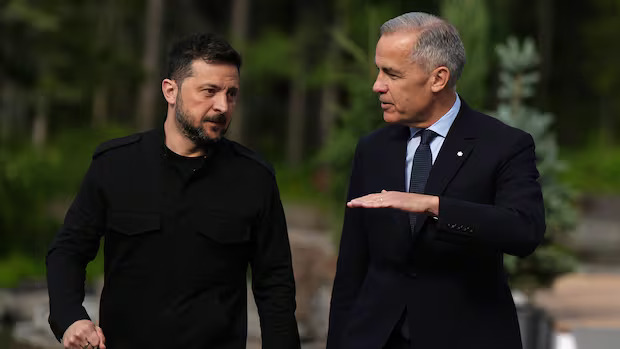
As the two-day summit progressed, Trump’s early departure — citing urgent developments in the Israel-Iran conflict — echoed his 2018 early exit from Charlevoix and reignited doubts about U.S. commitment to the G7’s mission. Still, Carney pressed ahead, welcoming each leader and emphasizing unity: “We might not agree on every issue, but where we will cooperate, we will make an enormous difference.”
While the summit avoided collapse, it also stopped short of a full joint communiqué. Instead, G7 leaders issued focused statements on AI, quantum technology, migrant smuggling, wildfires, critical minerals, and transnational repression — a move seen as a way to sidestep deeper disagreements.
Canada pledged $4.3 billion in new support for Ukraine and implemented fresh sanctions on Russia. However, efforts to push stronger language around the Israel-Iran conflict were reportedly softened at Washington’s request. Trump’s social media attack on Macron, following the French leader’s ceasefire suggestion, only fueled questions about G7 unity.
Still, Carney struck a hopeful tone in his final remarks. “Very frank exchanges, very strategic exchanges,” he said. “At a time when multilateralism is under great strain… that we got together, that we agreed on a number of areas… that’s important, that’s valuable.”
Carney’s self-posed question — “What was it like in the room?” — underscored the summit’s true success: keeping the world’s top democracies at the table during turbulent times. Whether that dialogue can translate into action remains the question ahead.