
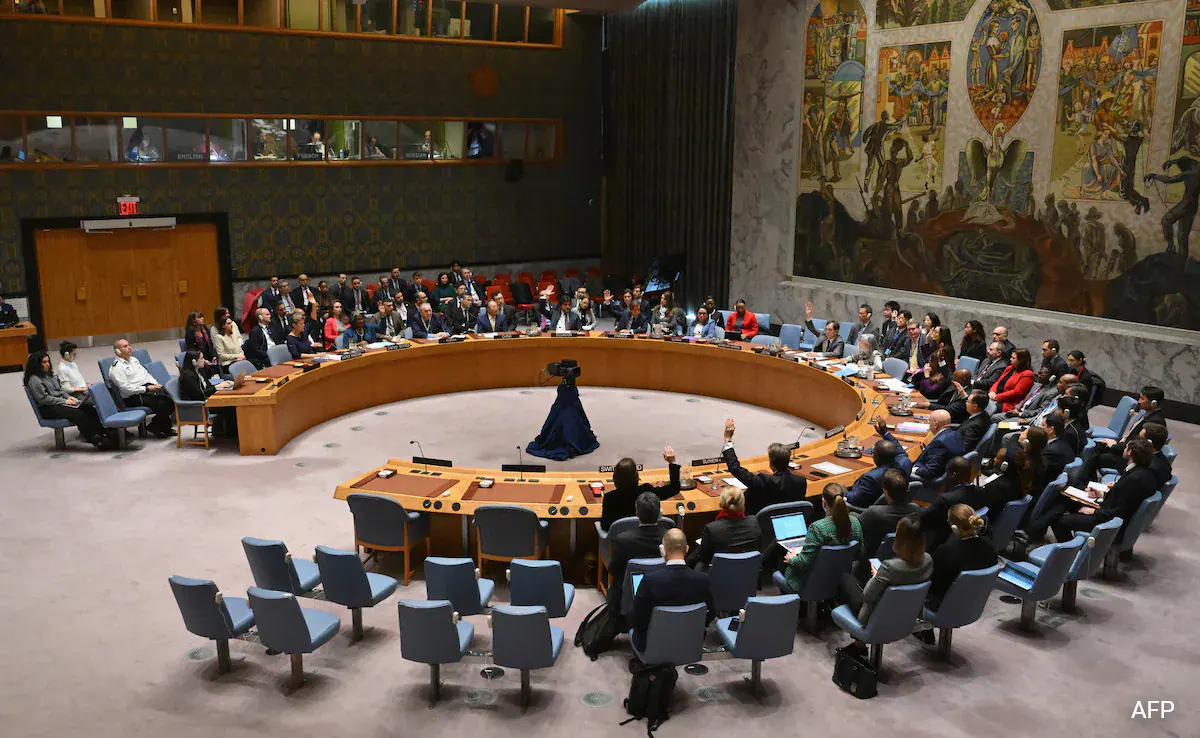


The UN Security Council condemned the April 22 Pahalgam attack and expressed alarm over Pakistan’s nuclear rhetoric and recent missile tests, rejecting Islamabad’s attempts to internationalise the issue.
UN Security Council Rebukes Pakistan Over Pahalgam Attack, Flags Lashkar Links and Escalatory Rhetoric
May 6, 2025: New Delhi:
In a rare rebuke, the United Nations Security Council (UNSC) has strongly condemned the April 22 Pahalgam terror attack and raised sharp concerns over Pakistan-based Lashkar-e-Taiba’s alleged involvement in the killing of 25 tourists and a pony operator. The closed-door session, convened at Pakistan’s request, instead turned into a pointed critique of Islamabad’s role in regional instability.
According to ANI sources, UNSC members grilled Pakistan over its domestic terror networks, particularly the alleged role of Lashkar-e-Taiba in orchestrating the massacre in Kashmir. Attempts by Islamabad to float a “false flag” narrative were dismissed, with UNSC members highlighting the religiously targeted nature of the killings.
The council also expressed serious reservations about Pakistan’s recent missile tests and nuclear rhetoric, calling them escalatory in nature. Multiple member states, including veto-holders, emphasized that such actions worsen an already volatile situation.
Also Read: Debt-Ridden, Pakistan Tests Missiles, Disregards Moody’s Major Economic Risk Warning!
🔹Pakistan’s Pushback Falls Flat
Despite being one of the UNSC’s non-permanent members, Pakistan’s appeal for international intervention was largely rebuffed. Members instead urged Islamabad to address its disputes bilaterally with India. The Indus Waters Treaty suspension and visa cancellations by India were also mentioned, but the focus remained firmly on the terror links emerging from Pakistani soil.
Pakistani envoy Asim Iftikhar reiterated his government’s rejection of any involvement and labeled India’s suspension of the Indus Waters Treaty as a violation of international norms.
🔹UN and Global Reactions
UN Secretary-General Antonio Guterres issued a strong condemnation of the Pahalgam killings, saying:
“Targeting civilians is unacceptable — and those responsible must be brought to justice through credible and lawful means.”
He added that “a military solution is not a solution” and urged both countries to step back from the brink.
Meanwhile, diplomats from Russia, Greece, and Tunisia echoed calls for de-escalation and peaceful resolution, calling the session “productive” but noting the urgency of restraint.
🔹The Broader Fallout
The Pahalgam attack, among the deadliest in recent decades, has prompted India to take firm diplomatic actions — including freezing the 1960 Indus Waters Treaty, shutting visa access for Pakistani nationals, and increasing pressure at global forums.
While no official statement has yet been issued by India or the UNSC, the message from the closed-door consultations appears clear: Pakistan’s alleged harboring of terror groups is under renewed international scrutiny, and its actions are drawing serious concern amid rising regional tensions.
🔹Tags:
Pahalgam terror attack, UNSC Pakistan India, Lashkar-e-Taiba, Pakistan missile test, Indus Waters Treaty, India Pakistan tensions, UN Security Council, Antonio Guterres, South Asia conflict, PahlagamTerrorAttack,