
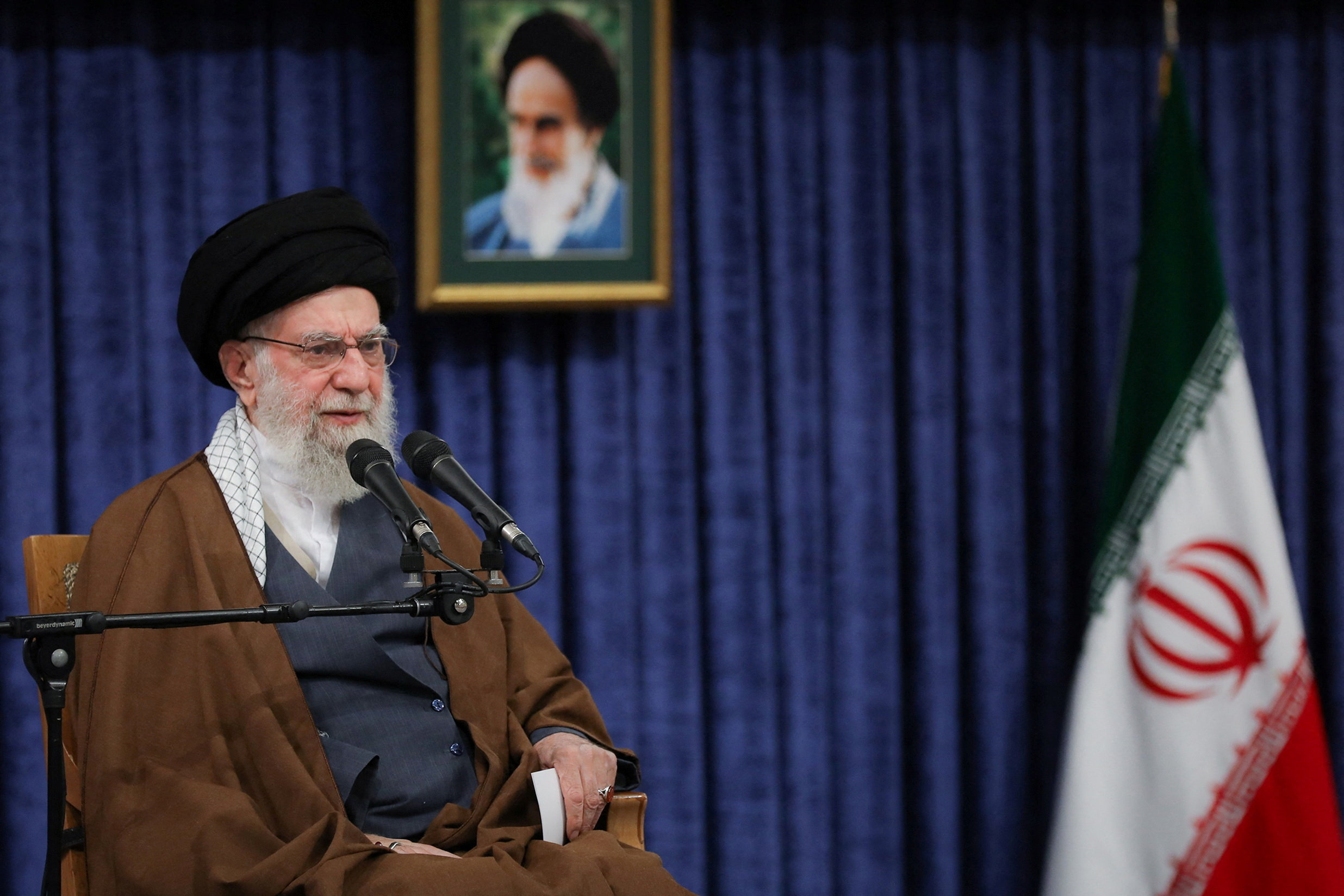


As a fragile ceasefire between the United States and Iran continues to hold, geopolitical risks remain high ahead of Saturday’s scheduled talks in Islamabad. Global risk analyst Ian Bremmer has cautioned that multiple factors — including the motivations of Iran’s new Supreme Leader Mojtaba Khamenei — could derail diplomatic progress.
Speaking in an interview , Bremmer described the upcoming Islamabad talks as a positive step but warned that deep tensions and unresolved strategic issues continue to threaten stability.
He suggested that Khamenei, who assumed leadership after the killing of his father Ali Khamenei in US and Israeli strikes, may be driven by a powerful desire for revenge. According to Bremmer, if Khamenei had the capability, he would not hesitate to assassinate Donald Trump, highlighting the emotional dimension shaping Tehran’s decisions.
Strait of Hormuz Activity Signals Continued Tensions
Despite the ceasefire, Bremmer pointed out that the strategic Strait of Hormuz remains only partially operational. In the previous 24 hours, just seven vessels passed through the narrow waterway — and only after receiving clearance from Iran.
This restricted activity underscores how fragile the situation remains, particularly given the strait’s critical role in global oil transport.
Key Issues That Could Derail the Ceasefire
Bremmer identified several unresolved demands that could threaten the ceasefire’s longevity. Chief among them is Washington’s insistence that Iran surrender all highly enriched uranium and halt its support for proxy groups such as Hezbollah and the Houthis.
Another concern involves command control within Iran’s military structure. Early in the conflict, decision-making authority was decentralized to local commanders to reduce the risk of leadership losses from targeted strikes.
While this strategy helped maintain deterrence, Bremmer noted it complicates ceasefire compliance.
Some local commanders, he warned, may act independently if they disagree with central orders, increasing the risk of sudden escalations.
The role of the powerful Islamic Revolutionary Guard Corps (IRGC) also remains uncertain, adding another layer of unpredictability.
US Military Movements Raise Questions About Intentions
Even as diplomacy continues, the United States is strengthening its military presence in the Gulf region. Bremmer noted that additional troop deployments are underway and that a third aircraft carrier group is being sent to the area.
He suggested that this buildup creates “optionality” for potential ground operations in Iran or around the Strait of Hormuz.
According to Bremmer, some analysts may interpret these moves cynically, arguing that the US could be using diplomacy as a temporary measure to stabilize oil prices and financial markets while preparing for further military escalation.
The ‘Mojtaba Factor’: Revenge Could Drive Risky Decisions
A major wildcard in the current geopolitical landscape is Mojtaba Khamenei himself. Bremmer believes that his leadership style may be heavily influenced by personal anger following the killing of family members during US-Israeli strikes.
He warned that Iran’s leadership may no longer be operating purely on rational calculations.
Instead, decisions could be guided by emotional motivations, including the desire to retaliate against the United States.
Bremmer emphasized that revolutionary regimes and religious theocracies often react unpredictably under pressure — particularly when they feel cornered.
This, he said, increases the likelihood of dangerous outcomes.
Will Israel Support the Ceasefire?
Turning to Israel’s role, Bremmer said Benjamin Netanyahu is unlikely to sabotage ceasefire efforts, largely because Israel relies heavily on US military and financial support.
However, he pointed to shifting public opinion within the United States, particularly among younger voters.
For the first time in polling history, a majority of Republicans under 50 reportedly do not support Israel, while Democrats in the same age group remain largely critical of US-Israel policies.
Bremmer noted that many younger Americans view the conflict as an “Israel-first” war rather than an “America-first” one — a narrative that could pose political challenges for Trump and the broader MAGA movement.
India, Pakistan and the Diplomatic Equation
Addressing the role of regional players, Bremmer said India has continued purchasing Middle Eastern oil without facing major opposition from the US.
Meanwhile, Pakistan has gained diplomatic visibility by hosting the talks in Islamabad.
Bremmer attributed Pakistan’s mediator role to its relationships with the US, China, and Saudi Arabia.
However, he stressed that Pakistan’s involvement does not alter the strategic balance between India and Pakistan.
He pointed to India’s technological progress, particularly in artificial intelligence and digital innovation, as evidence of its rising global stature.
India’s expanding population — approaching 1.5 billion — and its role as a bridge between the G7 and the Global South further strengthen its international position.
Pakistan, he said, lacks comparable capabilities and remains far behind India in technological and economic development.