



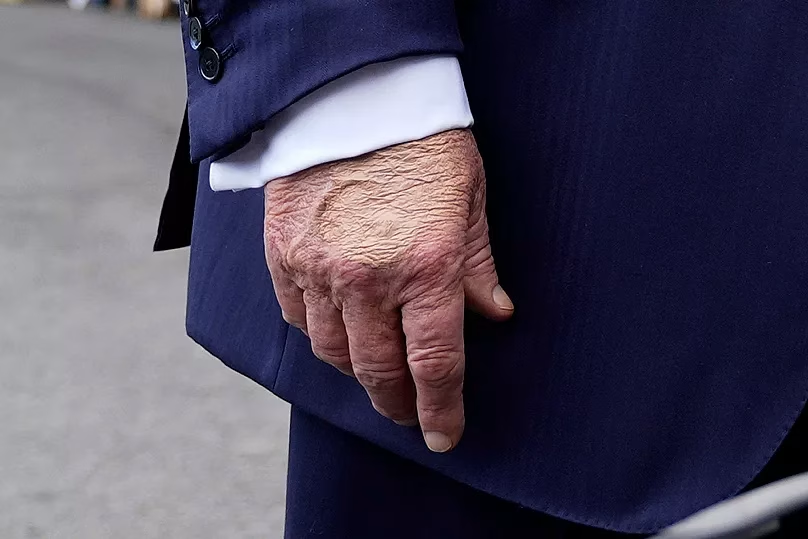
July 18, 2025: US President Donald Trump, aged 78, has been diagnosed with chronic venous insufficiency (CVI), a common vein condition that affects blood flow in the legs, according to a statement from the White House. The diagnosis came after the President experienced swelling in his lower legs and bruising on his right hand, prompting a series of medical tests.
White House spokeswoman Karoline Leavitt described the conditions as “benign,” explaining that the bruising on Trump’s hand was likely due to frequent handshakes during diplomatic meetings.
In a medical memo from Sean Barbabella, the President’s physician, it was confirmed that comprehensive diagnostic vascular studies, including bilateral lower extremity venous Doppler ultrasounds, showed no concerning signs such as deep vein thrombosis or arterial disease. The findings pointed to chronic venous insufficiency, which is common especially in people over 70 years of age.
CVI occurs when the veins in the legs have difficulty sending blood back to the heart, often due to malfunctioning valves inside the veins. This can lead to blood pooling in the legs, causing symptoms such as swelling, cramps, varicose veins, skin changes, and ulcers. While the condition is not immediately dangerous, it can cause discomfort and impact quality of life.
Risk factors for CVI include age, obesity, pregnancy, family history, leg injuries, surgeries, and prior blood clots. The condition affects roughly 1 in 20 adults and is more prevalent in older individuals.
Treatment options for CVI range from lifestyle modifications such as regular exercise, leg elevation, and weight management, to medical interventions including compression therapy with stockings or bandages and medications that improve blood flow. In severe cases, surgical options may be considered.
President Trump is reportedly managing the condition with appropriate care, and his medical team has assured the public that there are no serious health concerns at this time.