
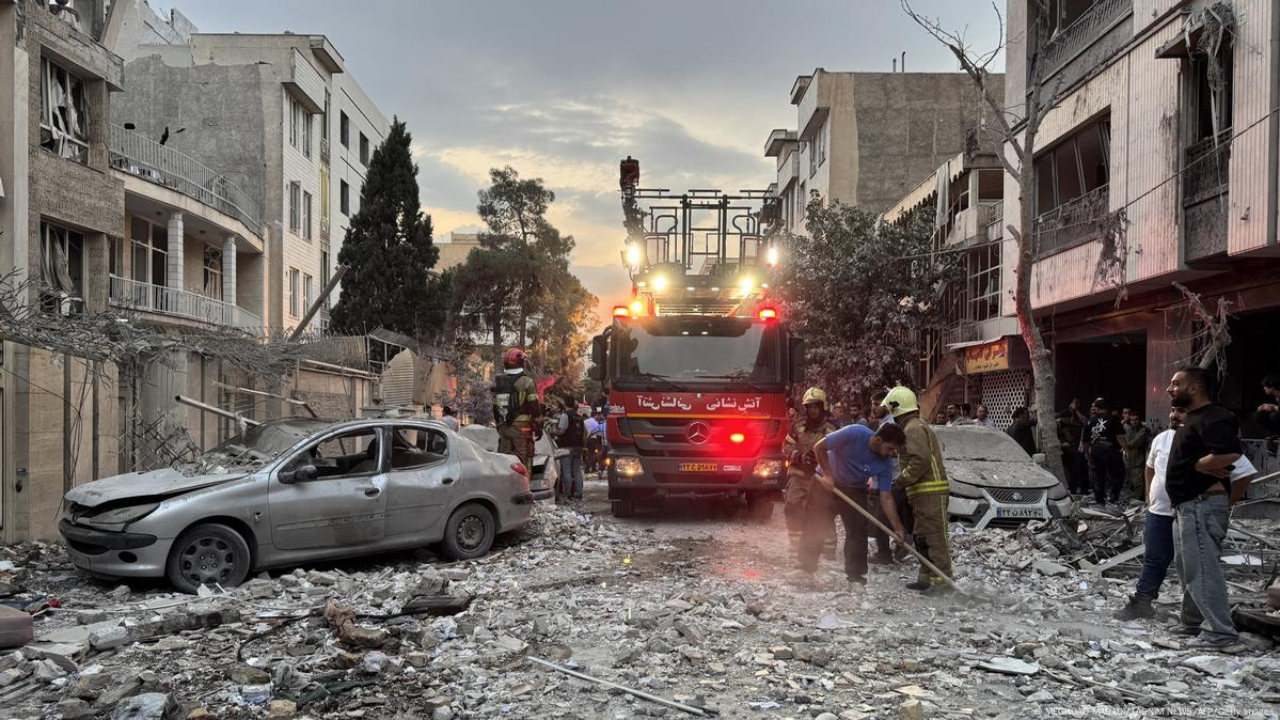


June 19, 2025: In a sharp escalation of hostilities, Iran launched a powerful retaliatory strike against Israel following a series of targeted assassinations carried out by the Israeli military in Tehran. The conflict, which erupted on June 13, has pushed both nations to the brink of a full-scale war.
According to a U.S. official speaking to The Wall Street Journal on June 18, Israel is rapidly depleting its stockpile of advanced Arrow missile interceptors amid the ongoing bombardment. The official also revealed that the U.S. is simultaneously “burning through” its own interceptor arsenal to shield Israel from incoming Iranian missiles.
Israel’s offensive began with a high-profile assassination campaign, targeting senior Iranian leadership and key figures in the country’s nuclear programme. Among those killed were Iran’s armed forces chief, the head of the elite Revolutionary Guards, several top generals, and over six nuclear scientists. Although Israel claimed its goal was to dismantle Iran’s nuclear infrastructure, the attacks were seen as an attempt to cripple the Islamic Republic’s state apparatus.
Iran, however, responded with remarkable speed and resilience. New commanders were quickly appointed, and by the same day, Tehran had launched a barrage of ballistic missiles aimed at strategic sites across Israel. The counterstrikes hit critical infrastructure including an oil refinery in Haifa, the prestigious Weizmann Institute of Science near Tel Aviv, and Soroka Medical Center in Beersheba.
A photograph taken on June 19 shows damage to a building at the Weizmann Institute in Rehovot, illustrating the reach and impact of Iran’s retaliatory measures.
As the military confrontation intensifies, both Israel and its allies face the challenge of sustaining defense systems under immense pressure, raising fears of further escalation in an already volatile region.