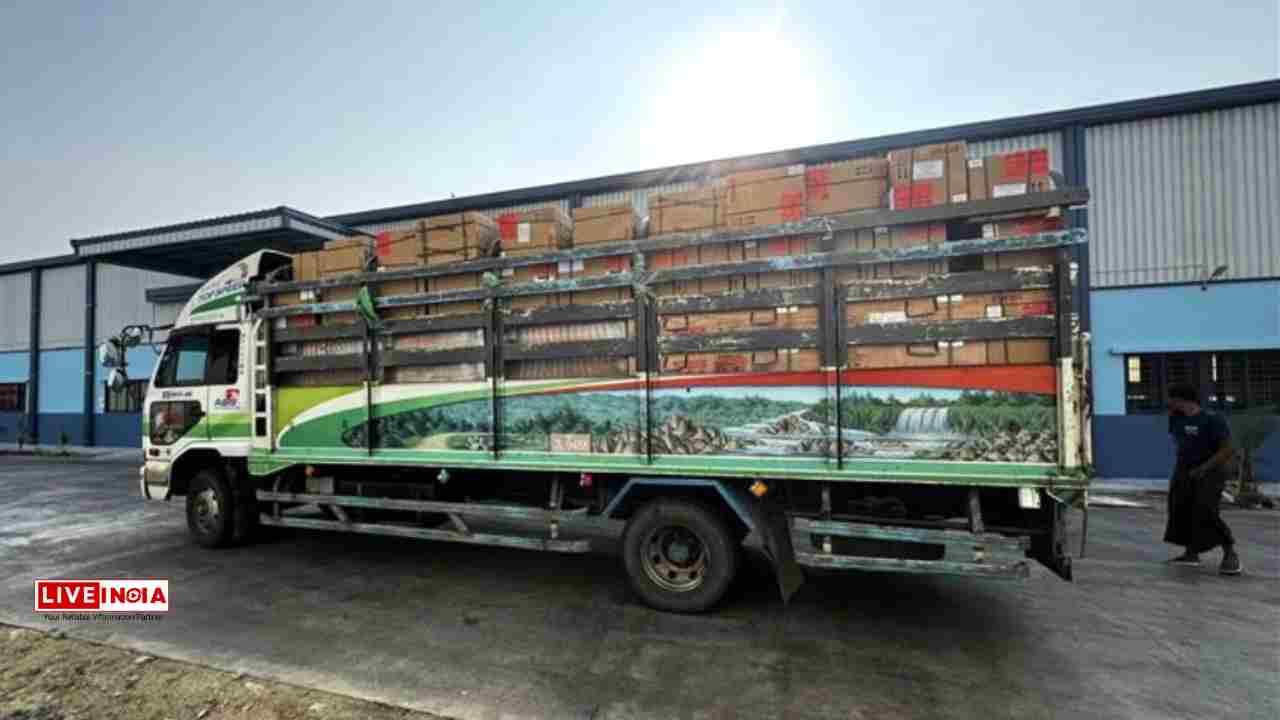
WHO Ramps Up Emergency Response in Myanmar: Medical Aid Dispatched After Deadly Earthquakes
New Delhi, March 30: In a swift humanitarian response to the devastating twin earthquakes that struck Myanmar, the World Health Organization (WHO) has dispatched nearly three tons of medical supplies to the hardest-hit areas, including Nay Pyi Taw and Mandalay, to help hospitals overwhelmed by thousands of casualties.
According to an official WHO statement, the emergency shipment includes trauma kits and multipurpose tents, which were delivered within 24 hours of the 7.7 and 6.4 magnitude quakes that jolted central Myanmar on Friday. These supplies have reached the 1,000-bed hospital in Nay Pyi Taw and are en route to Mandalay General Hospital and other regional trauma centers.
The powerful quakes have left at least 1,700 people dead, more than 3,400 injured, and nearly 300 missing, as reported by Myanmar’s military-led government. The US Geological Survey (USGS) warns that the death toll could exceed 10,000, as full-scale damage assessments remain ongoing.
The affected areas, including Bago, Magway, Shan State, Sagaing, and Nay Pyi Taw, are seeing a surge in demand for medical services. Local hospitals, already under pressure from Myanmar’s ongoing civil conflict, are struggling to handle the flood of trauma cases. There is an urgent need for surgical care, anesthetics, blood transfusions, mental health services, and clean water and sanitation.
The WHO’s initial shipment includes tents to create temporary triage zones and trauma kits for treating severe injuries such as fractures and lacerations. A second wave of support, including Inter-Agency Emergency Health Kits (IEHKs) designed to care for 10,000 people over three months, will be dispatched by WHO on Sunday.
In anticipation of worsening conditions, WHO has activated its global Emergency Medical Teams (EMTs) network, with 26 teams already expressing interest in deploying field hospitals to Myanmar. The scale of health infrastructure damage, particularly in Sagaing and Mandalay, remains unclear due to disrupted power and communication lines.
Sultan Mohammed Al Shamsi, Vice Chairman of the UAE Aid Agency, emphasized the urgency of coordinated global response, highlighting WHO’s efforts in supporting rapid response teams in regional hospitals and conducting needs assessments to identify critical health gaps.
Prior to the quake, 12.9 million people in Myanmar were already in need of humanitarian health assistance in 2025, largely due to the nation’s prolonged internal conflict and economic instability. The current disaster has now pushed the healthcare system further into crisis.
The international community, including neighbors like India, China, and Thailand, has pledged support, while WHO continues to lead medical aid coordination.
As rescue operations continue across the quake-ravaged country, the WHO’s rapid response stands as a crucial lifeline for thousands fighting for survival amid the rubble.
Sunny Deol and Akshaye Khanna face off in a high-stakes courtroom drama of ethics and…
No refund for Vande Bharat and Amrit Bharat tickets cancelled within eight hours of departure…
Services to four destinations suspended till February 28 over regional security concerns February 3, 2026:…
Eight Opposition MPs suspended after repeated disruptions over national security debate February 3, 2026: The…
Makers consider recast after Deepika Padukone’s exit from Kalki 2898 AD 2 February 3, 2026:…
Former India captain calls award a special moment, vows to keep winning matches for the…