
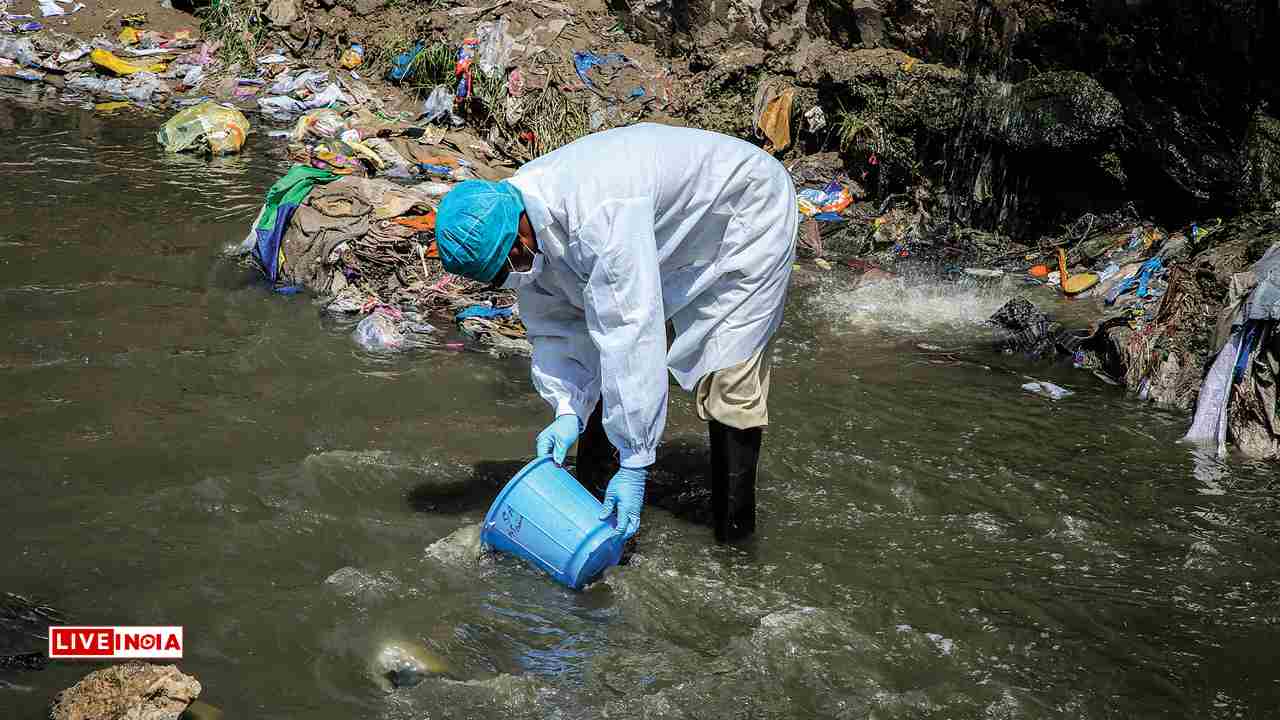


Widespread traces of Poliovirus Type 1 found in sewage samples across four provinces, highlighting urgent need to boost vaccination efforts.
Islamabad [Pakistan], March 23: The Regional Reference Laboratory for Polio Eradication at Pakistan’s National Institute of Health has confirmed the detection of Wild Poliovirus Type 1 in sewage samples collected from 18 districts across the country, as reported by ARY News.
The National Emergency Operations Centre for Polio stated that environmental samples, taken between February 21 and March 6, tested positive for poliovirus. These samples were collected from sewage drains across all four provinces of Pakistan.
The virus was found in 12 districts of Sindh, two districts each in Punjab and Khyber Pakhtunkhwa, and one district in Balochistan, along with the capital city, Islamabad. Specific areas include Islamabad, Chaman (Balochistan), South Waziristan and Dir (Khyber Pakhtunkhwa), Lahore and Dera Ghazi Khan (Punjab), and several districts in Sindh like Badin, Dadu, Hyderabad, Jacobabad, Shaheed Benazirabad, Sujawal, Qambar, Sukkur, and four districts in Karachi—East, West, Central, and Kemari.
Out of the districts tested, only four showed no presence of the virus. So far in 2025, Pakistan has reported six confirmed polio cases—four in Sindh, one in Punjab, and one in Khyber Pakhtunkhwa. In comparison, the country recorded 74 cases in 2024, primarily in Balochistan, Khyber Pakhtunkhwa, and Sindh.
Polio remains a highly contagious and incurable disease, posing severe risks to children under five. Experts emphasize that consistent administration of the oral polio vaccine (OPV) is essential to building immunity and preventing transmission. Health authorities continue to urge parents to ensure that their children receive all scheduled vaccine doses to protect them from this life-threatening illness.
This recent environmental detection raises concerns about silent transmission and the urgent need to intensify eradication efforts nationwide.