The recent killing of notorious drug trafficker Nemesio ‘El Mencho’ Oseguera Cervantes has once again drawn attention to the often-overlooked role women play in Latin America’s drug cartels.
Widely considered one of the world’s most-wanted criminals, El Mencho had a $15 million bounty on his head and was pursued by both Mexican and United States authorities for years. His downfall reportedly came after one of his lovers provided critical information that led the Mexican military to his hideout in the mountains of Tapalpa, according to international media reports.
Although the identity of the woman has not been revealed, her involvement in locating the cartel boss underscores a growing reality—women have long been embedded in cartel operations, often playing crucial roles behind the scenes.
Women In Cartels: From Support Roles To Strategic Leadership
Drug cartels in Latin America have traditionally been viewed as male-dominated organisations, with men typically serving as foot soldiers, hitmen, and leaders. However, experts say women have been involved in nearly every layer of cartel operations—from smuggling and intelligence to finances and leadership.
According to Henry Ziemer, an analyst at the Center for Strategic and International Studies, wives of cartel leaders often gain access to sensitive operational details.
“If you are the wife of a senior cartel boss, you are likely aware of logistics, strategies, and internal networks. When the boss is captured or killed, these women can sometimes take over major portions of the operation,” he explained in an interview.
In many cases, women who begin as spouses or companions gradually assume greater responsibilities, particularly in financial management and logistics.
Griselda Blanco: The Notorious ‘Queen of Cocaine’
One of the most infamous female figures in cartel history is Colombian drug lord Griselda Blanco, widely known as the “Queen of Cocaine.”
Active during the 1970s and 1980s, Blanco played a central role in smuggling large quantities of cocaine from Colombia to Miami. She reportedly worked alongside multiple partners, including her husbands, to build an extensive trafficking network.
Blanco was also linked to powerful criminal groups such as the Medellín Cartel and had connections to notorious drug lord Pablo Escobar.
Her violent reputation became legendary, with experts describing her as exceptionally ruthless even by cartel standards. Blanco’s story has gained renewed attention after being portrayed by actress Sofía Vergara in the Netflix series Griselda.
Interestingly, Blanco was known for recruiting women as smugglers, believing they could carry out operations with less suspicion than men.
Antonella Marchant: Financial Strategist Of The Los Marchant Clan
Another prominent female figure in cartel operations is Antonella Marchant, who worked alongside her father in managing the Los Marchant clan in Chile.
Her responsibilities reportedly focused on financial operations and logistics. The group specialised in importing cocaine from Bolivia and distributing it across parts of Santiago.
Authorities dismantled the operation after a major raid in December 2021 uncovered more than 300 kilograms of cocaine. In 2023, Marchant and her father were sentenced to 15 years in prison, while her brother received a 12-year sentence.
Rosalinda González Valencia: The Financial Mind Behind A Powerful Cartel
Another significant figure is Rosalinda González Valencia, widely known as “La Jefa” (The Boss) and wife of El Mencho.
She is believed to have played a key role in managing financial operations tied to the Los Cuinis cartel, a group closely linked to the Jalisco New Generation Cartel led by her husband.
Experts suggest her marriage to El Mencho played a strategic role in his rise to power. Mexican public security specialist David Saucedo noted that El Mencho’s leadership position was partly secured through alliances formed via marriage.
González Valencia has been accused of overseeing money laundering operations and was formally charged in 2018. Analysts believe her role in managing finances made her a central figure within cartel leadership structures.
Hidden Power Structures Behind Criminal Networks
Experts studying organised crime say that traditional perceptions of cartel structures often overlook women’s involvement.
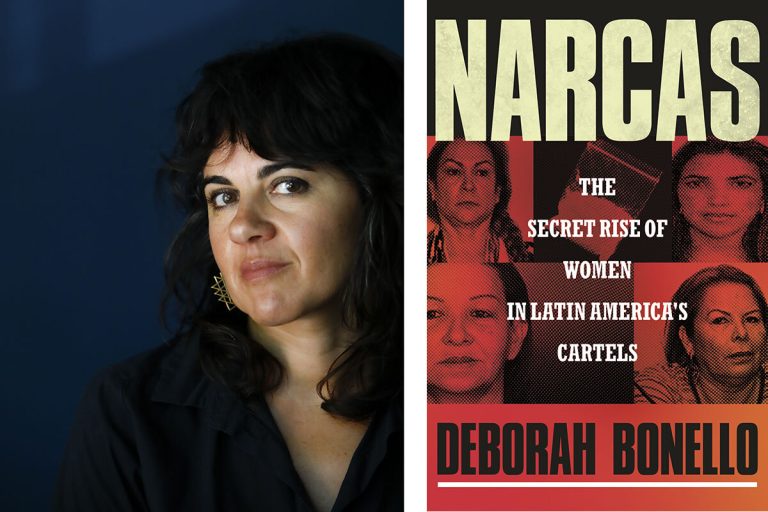
According to author Deborah Bonello, relationships within cartel families rarely resemble conventional domestic arrangements. Instead, they often operate as strategic partnerships that blend personal ties with business operations.
In many cases, women manage finances, coordinate logistics, or supervise smuggling routes—roles that are critical to the functioning of criminal networks.
Changing Perception Of Women In Organised Crime
The case surrounding El Mencho’s death has once again highlighted the evolving role of women within drug trafficking networks.
Far from being limited to symbolic or supportive roles, women have increasingly become strategists, financiers, and operational leaders within cartel systems.
As law enforcement agencies continue to dismantle drug networks across Latin America, investigators are paying closer attention to female figures who often operate behind the scenes but wield significant influence.