
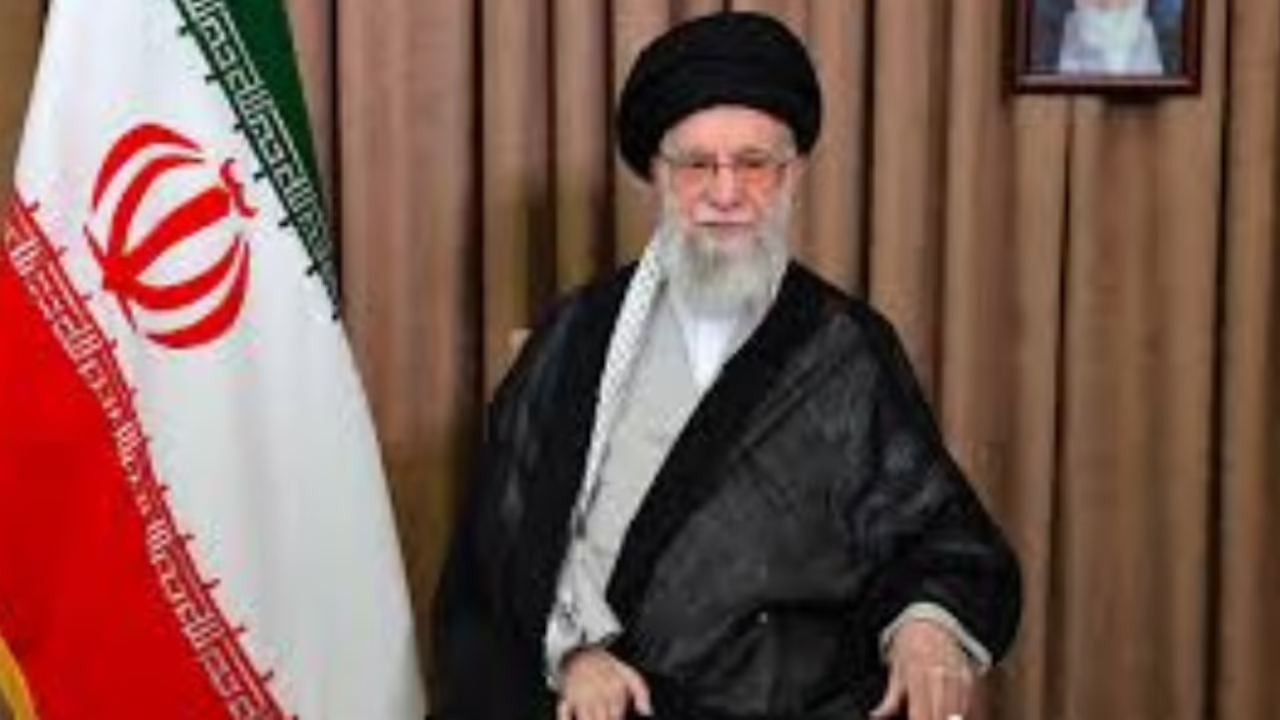


Tehran/Tel Aviv/Washington – June 18: The Israel-Iran conflict has taken a dangerous turn as Iran’s Supreme Leader Ayatollah Ali Khamenei issued a defiant warning to the United States following ultimatums and thinly-veiled death threats from both Israeli Prime Minister Benjamin Netanyahu and US President Donald Trump.
In a post on X, Khamenei said Iran would “never surrender” to American demands, rejecting Trump’s call for “unconditional surrender” amid the escalating military standoff. “The harm the US will suffer will definitely be irreparable if they enter this conflict militarily,” Khamenei warned from a secret location.
Reacting to Trump’s threats, the Ayatollah said, “The Iranian nation isn’t frightened by such threats,” and warned of severe consequences if the US joins Israeli operations against Iran.
Also read:United Yet Uneasy: G7 Shows Strain At Kananaskis Summit
Trump’s Threat: “We Know Where He’s Hiding”
President Donald Trump issued a stern warning, declaring the U.S. and Israel “know exactly where the so-called ‘Supreme Leader’ is hiding.” He stopped short of calling for Khamenei’s assassination but cautioned, “We are not going to take him out — at least not for now.” Trump also claimed the U.S. had given Iran “chance after chance” and threatened that things would become “much worse” if Tehran refused to back down.
Missiles Fly, Cities Burn
Since Friday, Israel has launched major aerial attacks on Iran’s nuclear and military infrastructure, prompting a fierce Iranian counterattack. Iran fired hundreds of ballistic missiles at Israeli cities including Tel Aviv and Jerusalem, primarily targeting civilian areas. In a dramatic escalation, Iran’s Revolutionary Guard Corps confirmed it launched Fattah-1 hypersonic missiles on Wednesday under the code name “Operation Honest Promise 3.”
Ayatollah Khamenei declared, “In the name of God, the battle begins,” vowing no mercy for “the terrorist Zionist regime.”
Israel Warns Tehran Residents
Israeli Defense Minister Yoav Gallant and Minister Israel Katz stated that while Israel does not aim to target civilians, Tehran’s residents would “pay the price” of their government’s decisions if regime military infrastructure is embedded in populated areas.
Nuclear Alarm Bells
At the heart of the conflict is Iran’s nuclear program. Israel and the U.S. claim Tehran is dangerously close to building a nuclear bomb. The International Atomic Energy Agency (IAEA) confirmed Israeli airstrikes hit key centrifuge production facilities in Karaj and Tehran, both previously monitored under the 2015 Joint Comprehensive Plan of Action (JCPOA).
Steve Witkoff, U.S. Special Envoy to the Middle East, warned that Iran’s uranium enrichment—now reaching 60% purity—is a short technical leap from weapons-grade levels (90%). “This cannot be allowed,” Witkoff stressed. Trump backed the view, stating, “Iran has to get rid of the concept of a nuclear weapon.”
International Backing for Israel
As the conflict deepens, G7 nations—including Germany and France—have pledged support to Israel to prevent Iran from obtaining a nuclear weapon. The U.S. has also signaled it may intervene militarily if Iranian aggression continues.
What’s Next?
With Khamenei defiant, Trump threatening military action, and Israel bombarding strategic sites, the Middle East faces a perilous moment. Diplomatic options are rapidly narrowing, and the next moves by Tehran, Tel Aviv, or Washington could determine whether this spirals into a full-scale regional war.