



From beating Pakistan to leading South Asia, India’s egg intake has steadily risen, yet remains far below the global benchmark of nutritional standards.
New Delhi, June 29:
“Sunday ho ya Monday, roz khao ande” – the popular slogan promoting egg consumption in India is finally finding ground in real numbers. As per data from Our World in Data, India has not only caught up but surpassed all its South Asian neighbours in annual per capita egg intake, signaling a positive shift in protein consumption.
Also Read: Nutritionist Shares No 1 Most Important Weight Loss Tip
From Lagging Behind to Leading South Asia
Historically, between 1961 and 1976, India consumed more eggs per person than Pakistan. However, Pakistan took the lead in 1978 and maintained it for over three decades. That changed in 2018, when India once again overtook Pakistan — and has maintained the lead ever since.
By 2022, the numbers were clear:
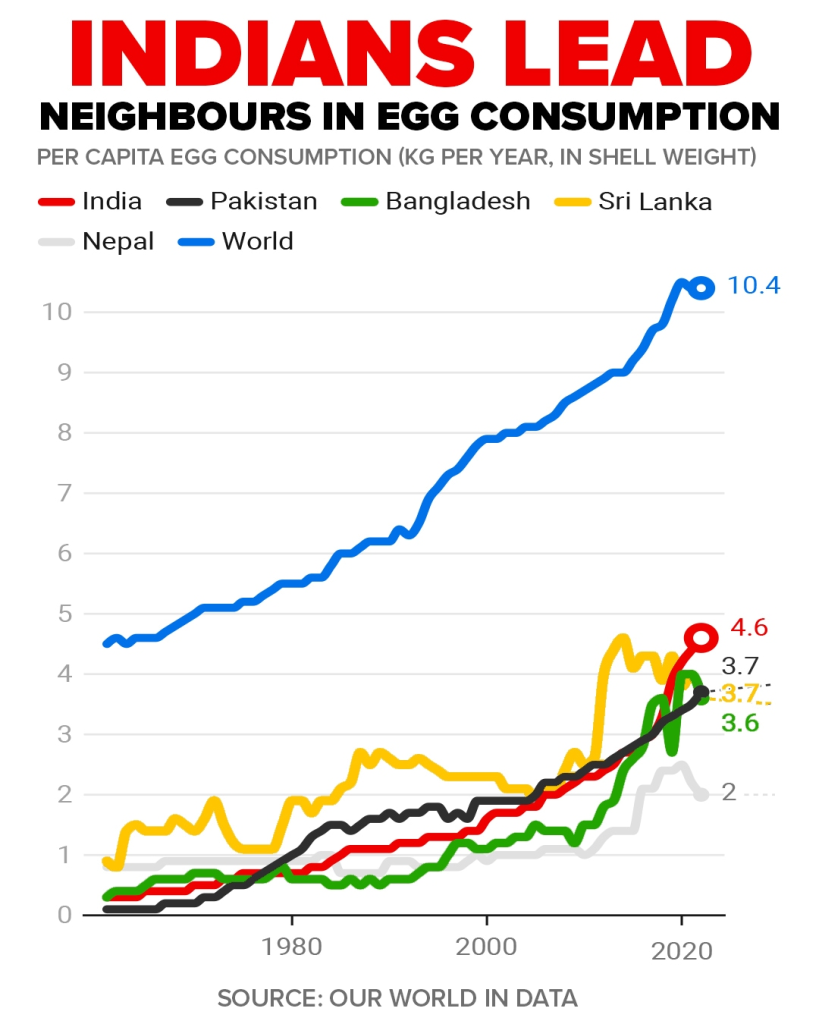
- India: 4.6 kg per capita (shell weight)
- Pakistan: 3.7 kg
- Bangladesh: 3.6 kg
- Sri Lanka: 3.7 kg
- Nepal: just 2 kg
This surge is attributed to rising incomes, better food access, and increased awareness of dietary protein.
Also Read: Monsoon Skincare Guide: 5 Essential Tips to Keep Your Skin Healthy and Glowing
Still Far From the Global Standard
Despite the regional lead, India still lags behind the world average in egg consumption. The global per capita figure stands at 10.4 kg, more than double India’s 4.6 kg. Nutritionists point out that this shortfall reflects broader challenges in aligning Indian diets with international health standards.
What Are Indians Really Spending On?
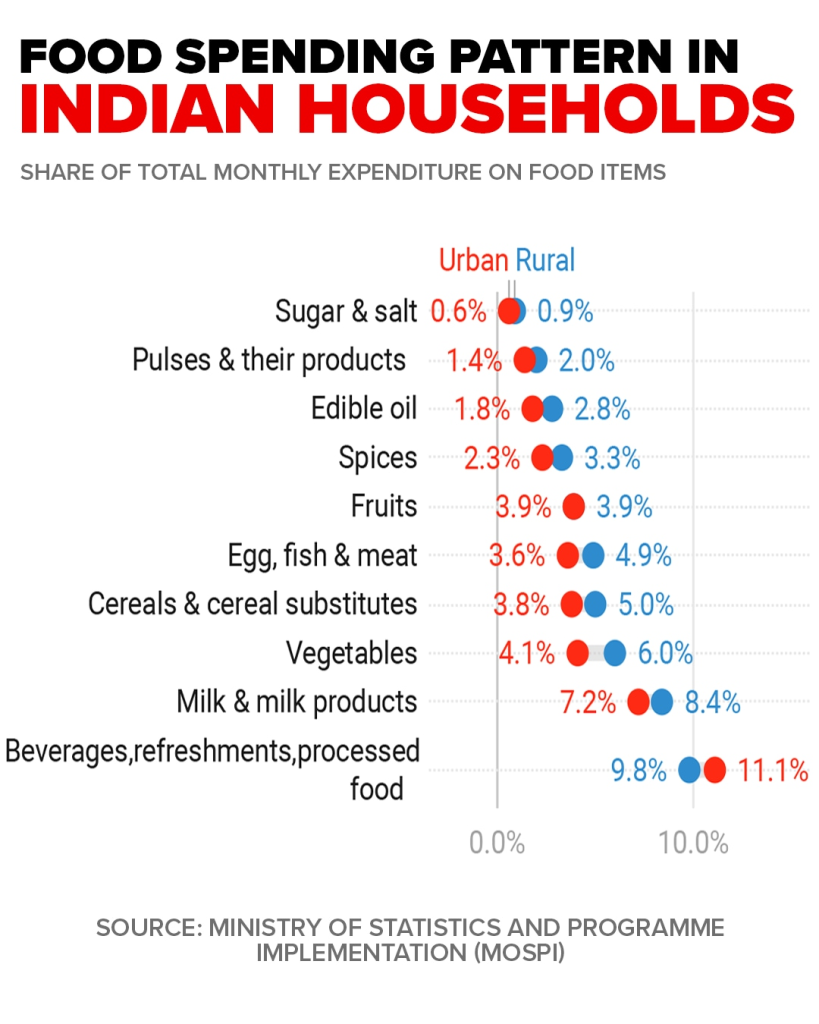
Recent data from the Ministry of Statistics (2023-24) sheds light on food spending patterns:
- Rural Indians: Spend ₹1,939/month on food (47% of their monthly expenses)
- Urban Indians: Spend ₹2,776/month (40% of their monthly expenses)
However, a large chunk goes to processed foods — with snacks, soft drinks, and ready-to-eat items topping the chart:
- Urban India: 11.1% on processed items
- Rural India: 9.8%
Followed by: - Milk & dairy: 7.2% (urban), 8.4% (rural)
- Vegetables vs Cereals: Urban (4.1% vs 3.8%), Rural (6% vs 5%)
This spending trend indicates a growing tilt towards convenience foods, which may not always support balanced nutrition.
Conclusion
India’s upward egg consumption trend is encouraging but not enough. While the country now leads South Asia, it must work harder to bridge the gap with global standards. As affordability improves and health awareness spreads, policymakers and health advocates alike must ensure that nutritional gains don’t get overshadowed by processed food preferences.
Tags:
India egg consumption, per capita egg intake India, global nutrition gap, food spending India, processed food trends, dietary protein India, India vs Pakistan egg consumption, South Asia food habits