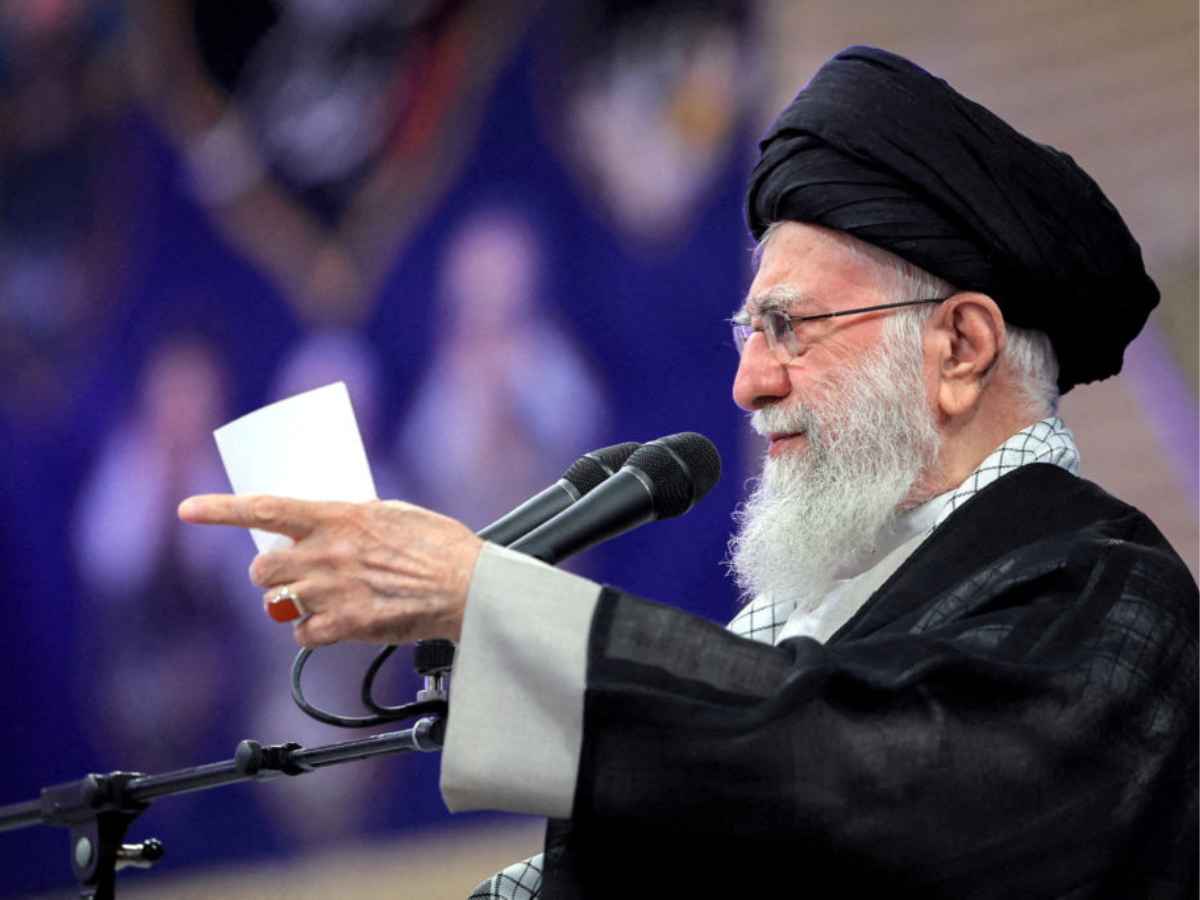
Iran- Israel War: Khamenei’s Aide Calls for Missile Strike on US Fleet, ‘Now Our Turn To Act’
June 22, 2025: Iranian Supreme Leader Ali Khamenei – Tensions in the Middle East escalated dramatically on Saturday night as Iran’s top political and military leaders issued stark warnings following a surprise U.S. airstrike on three major nuclear facilities—Fordo, Natanz, and Isfahan. The attacks, carried out by American B-2 stealth bombers and bunker-buster munitions, were confirmed by U.S. President Donald Trump in a televised address, where he called the operation a “spectacular military success.”
In response, Hossein Shariatmadari, a key advisor to Supreme Leader Ayatollah Ali Khamenei and editor of the state-run Kayhan newspaper, called for an immediate and forceful retaliation. Shariatmadari urged Iran’s military to launch missile strikes on U.S. naval assets in Bahrain and to shut down the Strait of Hormuz—a strategic maritime chokepoint crucial for global oil shipments—to vessels from the U.S., U.K., Germany, and France.
Trump’s Warning and Iran’s Defiance
President Trump, addressing the nation late Saturday, stated that the strikes were intended to “permanently degrade” Iran’s ability to enrich uranium and warned that “any retaliation will be met with far greater force.”
Meanwhile, Iranian Foreign Minister Seyed Abbas Araghchi condemned the strikes as a violation of international law and the United Nations Charter. “The U.S., a permanent member of the UN Security Council, has committed a grave act of aggression against Iran’s peaceful nuclear program,” Araghchi said in a statement on X (formerly Twitter). He added that Iran “reserves all options” under the right to self-defense.
No Civilian Risk, Says Tehran
Iranian state media sought to calm domestic fears, reporting that there was “no danger” to civilian populations following the U.S. strikes. The Atomic Energy Organization of Iran confirmed that nuclear activities would continue, despite the damage to the facilities.
Casualties and Regional Fallout
The U.S. strikes came in the second week of an escalating conflict between Iran and Israel, which began with Israeli operations on June 14. Israeli airstrikes have so far killed at least 657 people in Iran, with thousands more injured. Iran has retaliated, striking an Israeli hospital and areas near a Microsoft office in Beer Sheva.
Israel’s Prime Minister Benjamin Netanyahu justified the offensive, warning of an “imminent nuclear threat” from Tehran and launching “Operation Rising Lion” to dismantle Iranian missile and command centers.
Strategic Risks in the Gulf
Military analysts now fear a wider regional conflict, particularly if Iran follows through on threats to close the Strait of Hormuz—a move that would send global oil prices soaring and provoke a broader U.S. and NATO response. The United States has already evacuated non-essential personnel from its embassy in Baghdad and authorized dependents to leave military installations in Bahrain, Kuwait, and Qatar.
As diplomatic efforts in Geneva stall, the world watches with unease. A single miscalculation could drag multiple nations into an all-out war, with devastating consequences for global stability.
Indirect Muscat negotiations face agenda dispute as US urges citizens to leave Iran February 6,…
Production house rejects claims linking Delhi missing girls rumours to film publicity February 6, 2026:…
‘Tere Sang’ teaser goes viral ahead of Valentine’s Week release February 6, 2026: Singer Arijit…
Former Bigg Boss 9 contestant and singer Suyyash Rai has sparked a social media firestorm…
Congress MLC says Siddaramaiah will remain CM for full five-year term February 6, 2026: Congress…
In a major legal blow, Bollywood actor Rajpal Yadav surrendered to the Tihar Jail authorities…