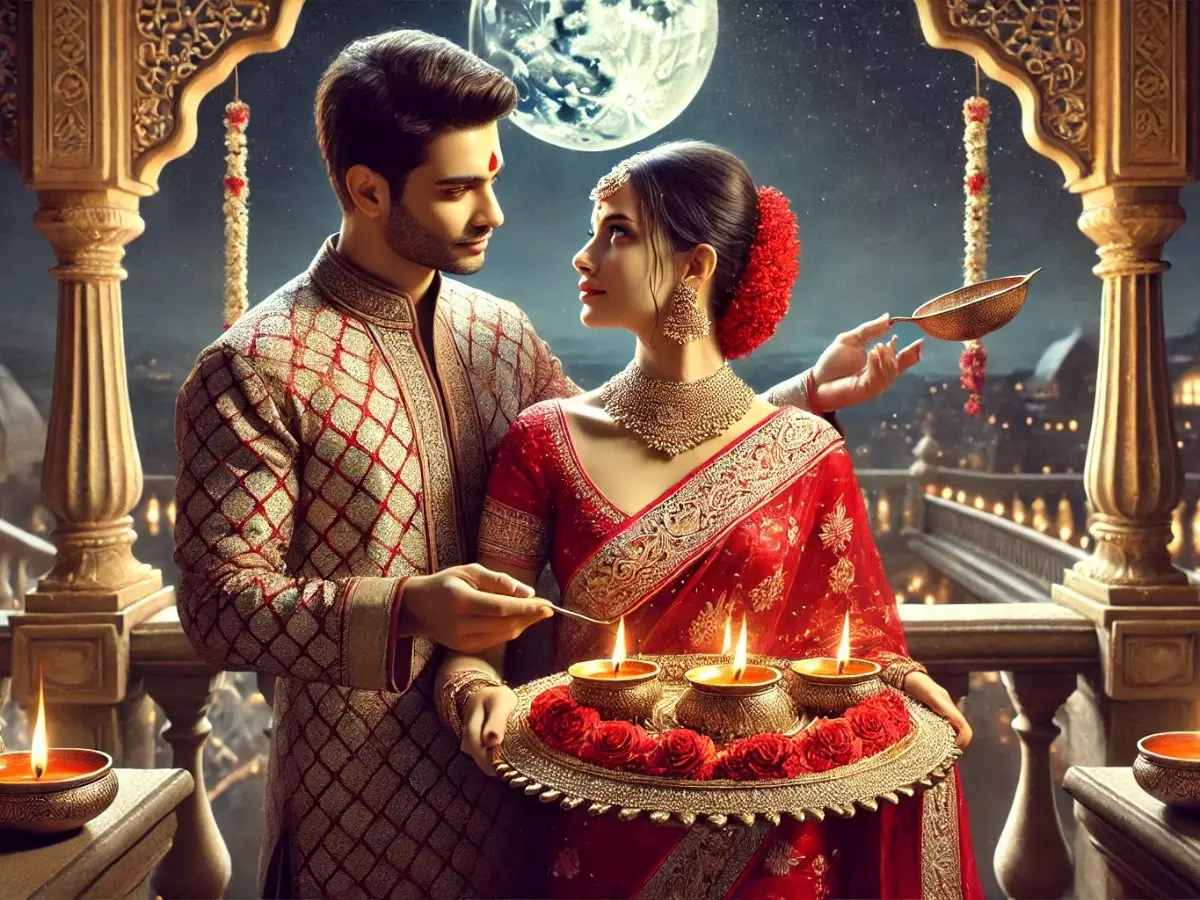
October 17, 2024: In recent years, Karva Chauth, a traditional Hindu festival where married women fast for the health and longevity of their husbands, has taken on a modern twist. Today, more and more men are choosing to fast alongside their wives, transforming the festival into a celebration of equality, shared love, and mutual respect.
The Traditional Roots of Karva Chauth
Historically, Karva Chauth has been observed by women in northern India as an act of devotion toward their husbands. The ritual involves fasting from sunrise to moonrise, without food or water, with the aim of ensuring a long and prosperous life for their spouses. Women dress in festive attire, apply mehndi (henna) designs on their hands, and offer prayers in the evening before breaking their fast after sighting the moon.
While the tradition itself is deeply rooted in cultural and religious beliefs, it was traditionally a woman-centric practice. However, as societal values have shifted toward gender equality and modern relationships have become more collaborative, Karva Chauth is being reinterpreted to suit the dynamics of today’s couples.
Men Fasting Alongside Their Wives
One of the most notable changes in modern-day Karva Chauth celebrations is the involvement of men. Increasingly, men are participating by observing the fast with their wives, symbolizing a partnership based on equality and mutual support. For many couples, this act signifies their shared commitment to each other’s well-being, not just one partner’s responsibility toward the other.
Men fasting on Karva Chauth is also a way to show solidarity with their wives, who undergo a physically demanding day of fasting. By joining them in the ritual, husbands express their love, understanding, and respect, acknowledging the festival as a two-way street in their marriage.
The Evolution of Relationships
The modernization of Karva Chauth reflects the evolving nature of relationships in Indian society. Today’s couples are more likely to see marriage as a partnership where both individuals contribute equally, and the festival has adapted to reflect these values. Men fasting for their wives highlights the idea that the well-being of the relationship depends on both partners equally.
For many younger couples, the act of fasting together is seen as a romantic gesture, a way to strengthen emotional bonds and celebrate their love. In urban areas, where both spouses often share responsibilities at work and at home, this shared fasting symbolizes mutual dedication and care.
Bollywood’s Influence on the Modern Karva Chauth
Popular culture, especially Bollywood films, has played a significant role in portraying Karva Chauth as a symbol of love and devotion. Many iconic Bollywood scenes feature husbands breaking their wives’ fasts, adding a touch of romance to the ritual. This has contributed to the growing trend of men participating in the festival, creating a new cultural norm that celebrates equality in marriage.
Celebrating Love, Equality, and Togetherness
The modern version of Karva Chauth, where both partners fast together, has become more than just a religious ritual—it has evolved into a celebration of partnership. In an age where gender equality is a major focus in relationships, this shared act of fasting symbolizes love, commitment, and respect from both sides.
Couples now use the occasion to reconnect, spend time together, and reflect on the strength of their bond. Whether they are fasting to honor tradition, to celebrate their love, or both, Karva Chauth has become a shared experience of togetherness for modern couples.
Conclusion
As traditions adapt to contemporary values, Karva Chauth has evolved from a woman-centric festival to a celebration of mutual devotion and love. The practice of men fasting alongside their wives exemplifies the shift toward equality and partnership in relationships today. By modernizing the tradition, couples continue to honor their cultural roots while embracing a more balanced and supportive approach to marriage.
In a deeply moving interview on the On Purpose podcast on February 5, 2026, singer…
On February 5, 2026, Prime Minister Narendra Modi addressed the Rajya Sabha to reply to…
In a shocking development for fans of the newly launched reality show The 50, veteran…
In a viral Instagram video shared on February 4, 2026, comedian Samay Raina delivered a…
New details have emerged in the investigation of the firing incident outside filmmaker Rohit Shetty’s…
Singer Talwiinder, the enigmatic masked voice behind hits like Khayaal, has finally addressed the whirlwind…