
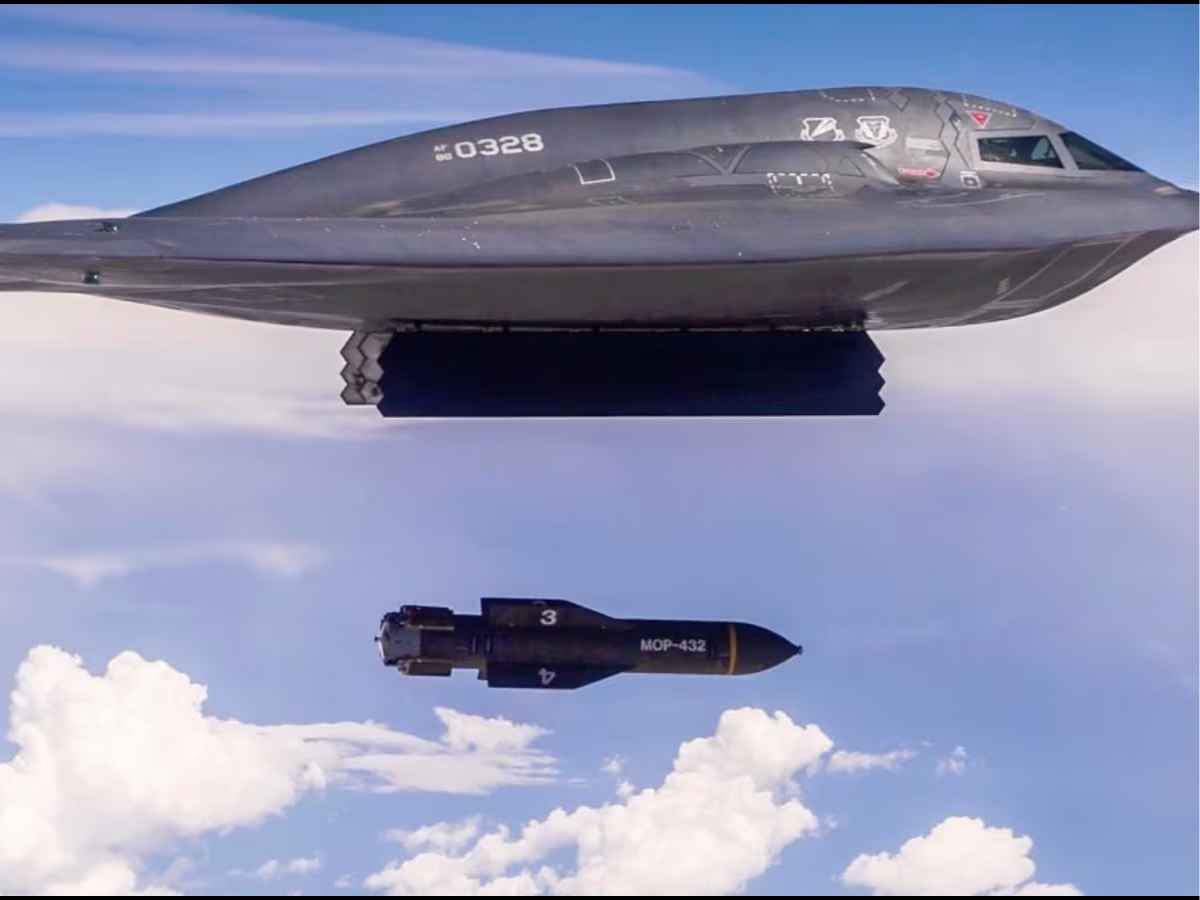


June 22, 2025: GBU-57– In a dramatic and unprecedented escalation, the United States has launched a series of precision airstrikes targeting three key Iranian nuclear facilities amid the ongoing conflict between Israel and Iran. The strikes, described by U.S. President Donald Trump as a “spectacular military success,” mark a turning point in the Middle East conflict, drawing both global concern and condemnation.
According to multiple sources, the U.S. deployed six GBU-57A/B Massive Ordnance Penetrator (MOP) bombs — also known as “bunker busters” — to strike the heavily fortified Fordow nuclear site, buried deep beneath the mountains in Iran. The Fordow facility, previously considered unreachable by conventional missiles, was reportedly hit with devastating precision.
In addition to Fordow, nuclear sites at Natanz and Esfahan were targeted using 30 Tomahawk cruise missiles launched from U.S. Navy submarines in the region.
First Known Combat Use of ‘Bunker Buster’ Bomb
The GBU-57 MOP, a 13,600-kg bomb capable of penetrating over 200 feet underground, was used operationally for the first time in Saturday’s strike. The weapon, carried exclusively by the U.S. Air Force’s B-2 Spirit stealth bombers, is designed to destroy deeply buried weapons of mass destruction.
The B-2 bombers, which have a striking range of up to 11,500 miles with refueling, were reportedly used to deliver the MOPs. U.S. defense officials called the operation one of the most complex stealth bombing campaigns in recent history.
Trump Declares Sites “Obliterated”
In a phone call with Fox News’ Sean Hannity, former President Donald Trump, who was briefed in real time, claimed the airstrikes had “completely obliterated” Iran’s nuclear infrastructure at all three locations.
“This was a spectacular military success. The Fordow facility is gone. Natanz is gone. Esfahan is gone,” Trump said. “We have eliminated the threat with surgical precision.”
Global Reactions Pour In
The international response was swift. U.N. Secretary-General António Guterres expressed grave concern over the strikes, urging all parties to avoid escalation.
“I am gravely alarmed by the U.S. military action in Iran. I call on all sides to de-escalate immediately to prevent a wider regional war,” Guterres said.
As tensions soar in the region, fears of a broader military conflict involving Iran, Israel, and the United States have intensified. Iranian authorities have not yet officially confirmed the extent of the damage, though early reports from state-linked outlets suggest widespread disruption at the targeted facilities.
What’s Next?
With the Middle East on edge, the international community watches closely for Iran’s response. The strikes, although praised in some U.S. political circles, are expected to generate significant diplomatic fallout and could provoke retaliation from Tehran.