



June 21, 2025: Astronomers have released an unprecedentedly detailed image of the Sculptor Galaxy (NGC 253), showcasing the galaxy in thousands of colors and revealing intricate details of its structure and stellar composition. Captured by the European Southern Observatory’s Very Large Telescope (VLT) using the MUSE instrument, this image provides a unique opportunity to zoom in on individual star-forming regions while simultaneously observing the galaxy’s overall structure.
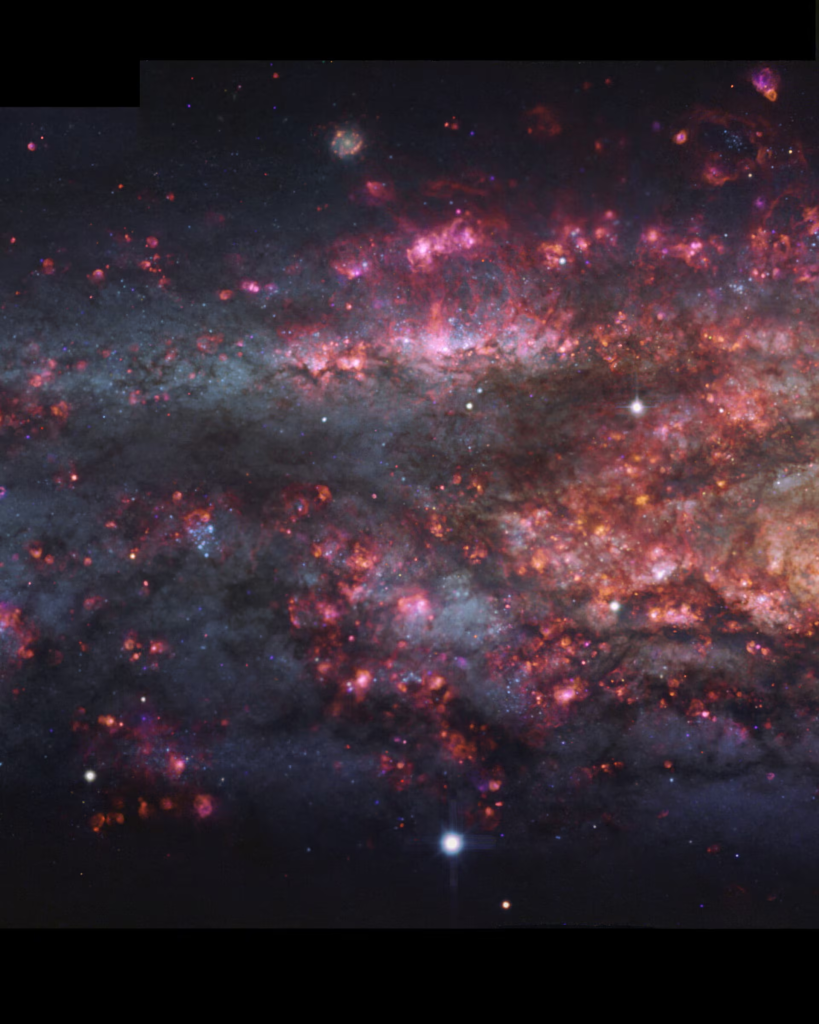
The image required over 100 exposures spanning 50 hours of observation time, making it one of the most detailed views of this galaxy to date. Located about 11 million light-years from Earth, the Sculptor Galaxy is one of the closest large galaxies to the Milky Way and is a key object for studying star formation and galactic evolution.
One of the most exciting outcomes of this observation is the discovery of 500 new planetary nebulae—shells of gas and dust ejected by dying stars. These nebulae provide vital clues about stellar life cycles and help astronomers map cosmic distances more accurately.
The ultra-detailed view also reveals how gas flows within the galaxy, highlighting the processes by which stars form from gas clouds. This detailed map will significantly advance researchers’ understanding of galactic dynamics and evolution.
Future research plans include analyzing this rich dataset to further study the Sculptor Galaxy’s gas flows, star formation activities, and verify its distance with greater precision.
This breakthrough demonstrates the power of modern astronomical instruments and techniques to deepen our understanding of the universe, one galaxy at a time.