
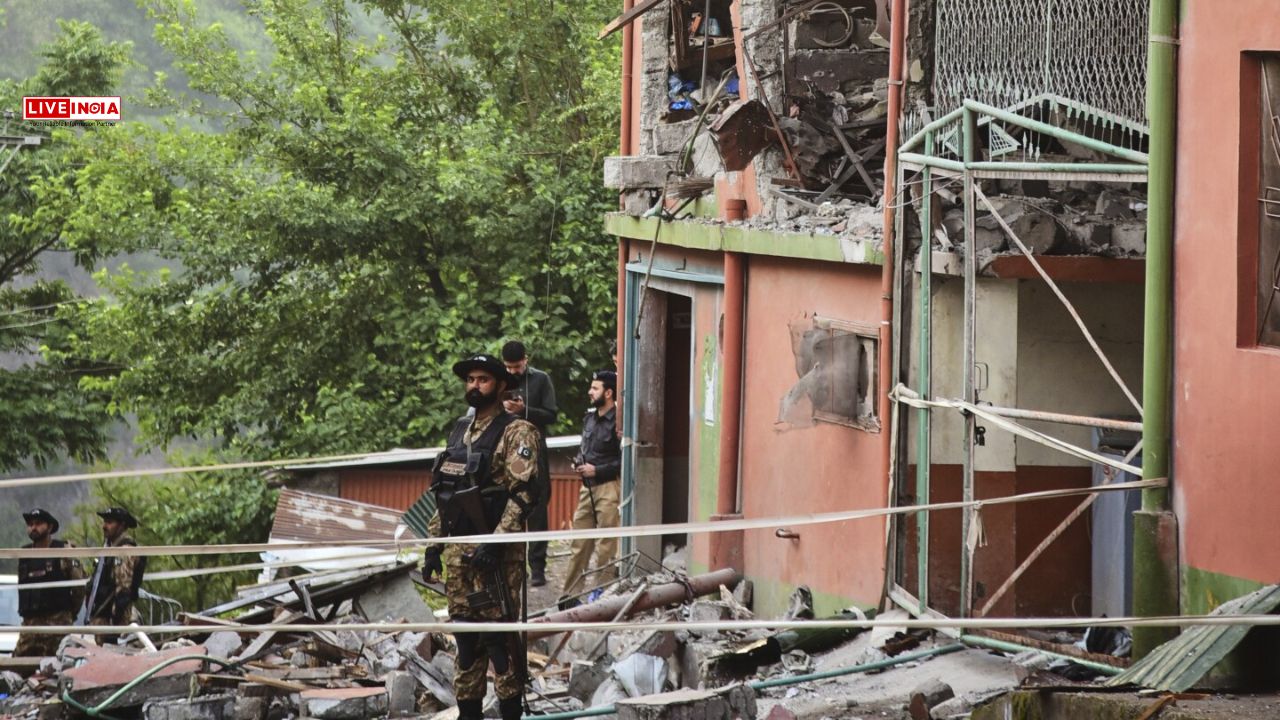


Amid global calls for restraint, Pakistan’s Defence Minister offers to ease tensions if India halts further action following the Pahalgam retaliation.
New Delhi | May 7, 2025:
Following India’s precision military strikes on nine terror-linked sites in Pakistan and Pakistan-occupied Kashmir (PoK) under Operation Sindoor, Pakistan’s Defence Minister Khwaja Asif has indicated that Islamabad is open to ending the standoff — provided India stops further military escalation.
In a statement to Bloomberg, Asif said,
“We will wrap up this tension if India backs down,”
while also claiming Pakistan never initiated hostilities.
India launched the tri-services offensive in the early hours of May 7 in retaliation for the brutal April 22 Pahalgam terror attack that killed 26 civilians, including one Nepali tourist. The Indian strikes targeted training camps and launch pads operated by Lashkar-e-Taiba, Jaish-e-Mohammed, and Hizbul Mujahideen.
Also Read: PM Modi Named Operation Sindoor: A Symbolic Tribute to the Widows of Pahalgam Massacre
10 Key Points on Operation Sindoor and Its Fallout
Also Read: “Sit In Pubs To Counter India”: Prominent Pak Journalist Najam Sethi’s Bizarre Remark
- India Responds with Precision:
Indian Armed Forces carried out air and missile strikes on nine terror sites across Pakistan and PoK. These included hubs in Bahawalpur, Muridke, Kotli, Muzaffarabad, and Sialkot. - Pakistan Signals Willingness to De-escalate:
Defence Minister Khwaja Asif stated that if India halts further military action, Pakistan is prepared to “wrap up the tension.” - India Justifies Action as Preemptive:
Foreign Secretary Vikram Misri said intelligence agencies had credible inputs of impending cross-border terror strikes, necessitating a measured response. - Investigation Links Pahalgam Attack to Pakistan:
Misri highlighted that the attackers’ communications traced back to Pakistan and social media handles associated with Lashkar-e-Taiba. Eyewitness accounts have helped identify the attackers. - India’s Strike Meant to Deter Future Attacks:
Misri reaffirmed that Operation Sindoor was “measured, proportionate, and non-escalatory,” aiming to dismantle terror infrastructure and prevent further strikes. - Shehbaz Sharif Calls It an ‘Act of War’:
The Pakistani Prime Minister responded sharply, asserting Pakistan’s right to respond to what he termed a “provocative Indian act.” - Global Powers Urge Restraint:
- Russia expressed “deep concern” over the military escalation.
- China urged both countries to maintain peace and stability, opposing all forms of terrorism.
- US Secretary of State Marco Rubio called for calm, saying he is closely monitoring the situation.
- Civilian Casualties Reported:
Ten civilians in India were killed due to unprovoked Pakistani firing along the LoC and International Border post-Operation Sindoor. - India Ramps Up Border Vigilance:
Home Minister Amit Shah ordered all paramilitary units to recall personnel currently on leave and increase border readiness. - Diplomatic and Economic Measures Already in Place:
Prior to the military response, India suspended the Indus Waters Treaty, cancelled Pakistani visas, and closed airspace and seaports to Pakistani entities.
Also Read: S Jaishankar’s One-Line Warning to the World After Operation Sindoor
Context
India’s Operation Sindoor marks one of its most assertive retaliatory actions since the 2016 surgical strikes and 2019 Balakot airstrikes. It has been praised domestically as a fitting reply to terrorism and seen as a warning that cross-border aggression will invite strong and targeted consequences.
Tags: Operation Sindoor, India Pakistan Tensions, Khwaja Asif, Pahalgam Attack, Indian Air Force, Terror Strike Retaliation, Indo-Pak Conflict, OperationSindoor,