
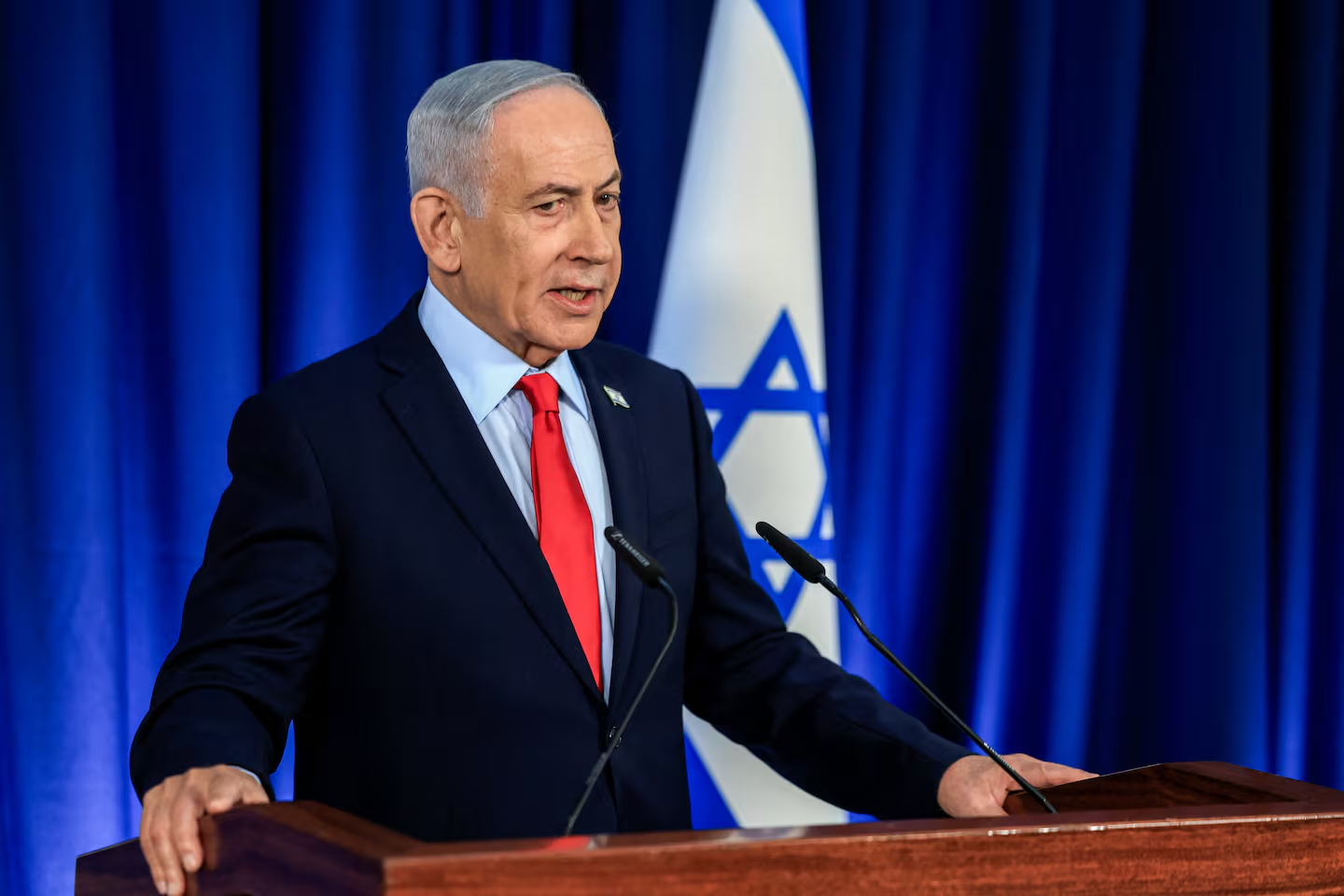


In a significant pivot aimed at preventing a total collapse of global energy markets, Israeli Prime Minister Benjamin Netanyahu announced late Thursday, March 19, 2026, that Israel will suspend further attacks on Iranian offshore gas fields.
The decision follows a direct intervention by President Donald Trump, who publicly cautioned against targeting energy “crown jewels” after the initial Israeli strike on Iran’s massive South Pars field triggered a wave of devastating retaliatory attacks across the Gulf.
1. The “Trump Doctrine” in Action
During a televised press conference in Jerusalem, Netanyahu emphasized the coordination between the two leaders while acknowledging the U.S. President’s lead on regional strategy.
- The Request: “At the request of President Trump, Israel will hold off on any further attacks on the offshore gas field,” Netanyahu stated.
- The Alliance: Reaffirming his close ties with the White House, he added, “He’s the leader. I’m his ally.”
- White House Stance: Earlier on Thursday, President Trump confirmed he had told Netanyahu “Don’t do that” regarding the gas field strikes, noting that while the two “get along great,” he would intervene if Israeli actions conflicted with U.S. interests.
2. Regional Energy Under Fire
The de-escalation comes as the “plumbing” of the global energy system faces unprecedented threats. Despite the death of top leaders—including the late Ayatollah Ali Khamenei—Iran, now led by Mojtaba Khamenei, has proven capable of asymmetric warfare.
- Retaliatory Strikes: Following the South Pars hit, Iranian drones and missiles targeted facilities in Qatar (Ras Laffan), Saudi Arabia (Yanbu), Kuwait, and the UAE.
- Maritime Chaos: A vessel was set ablaze off the UAE coast, and another was damaged near Qatar. The Strait of Hormuz remains effectively closed to most commercial traffic.
- Red Sea Disruption: Even alternative routes are failing; an Iranian drone successfully hit a Saudi refinery on the Red Sea, which had been the primary fallback for oil exports.
3. Market Shockwaves
The conflict has pushed the global economy toward a “stagflation” crisis:
- Oil Prices: Brent crude briefly surged above $119 a barrel on Thursday—a staggering 60% increase since the war began on February 28.
- Natural Gas: European gas benchmarks have doubled in the past month, leading to emergency calls for stability from the UK, France, and Germany.
War Status Report: March 20, 2026
| Category | Status / Impact |
| Israeli Objective | Claims Iran can no longer enrich uranium or make ballistic missiles. |
| Iranian Status | Led by Mojtaba Khamenei; retaining high drone/missile capability. |
| Energy Impact | South Pars (Iran) and Ras Laffan (Qatar) significantly damaged. |
| Brent Crude | $119/barrel (High Volatility). |
| Strait of Hormuz | Closed/Blockaded; navigation severely restricted. |