
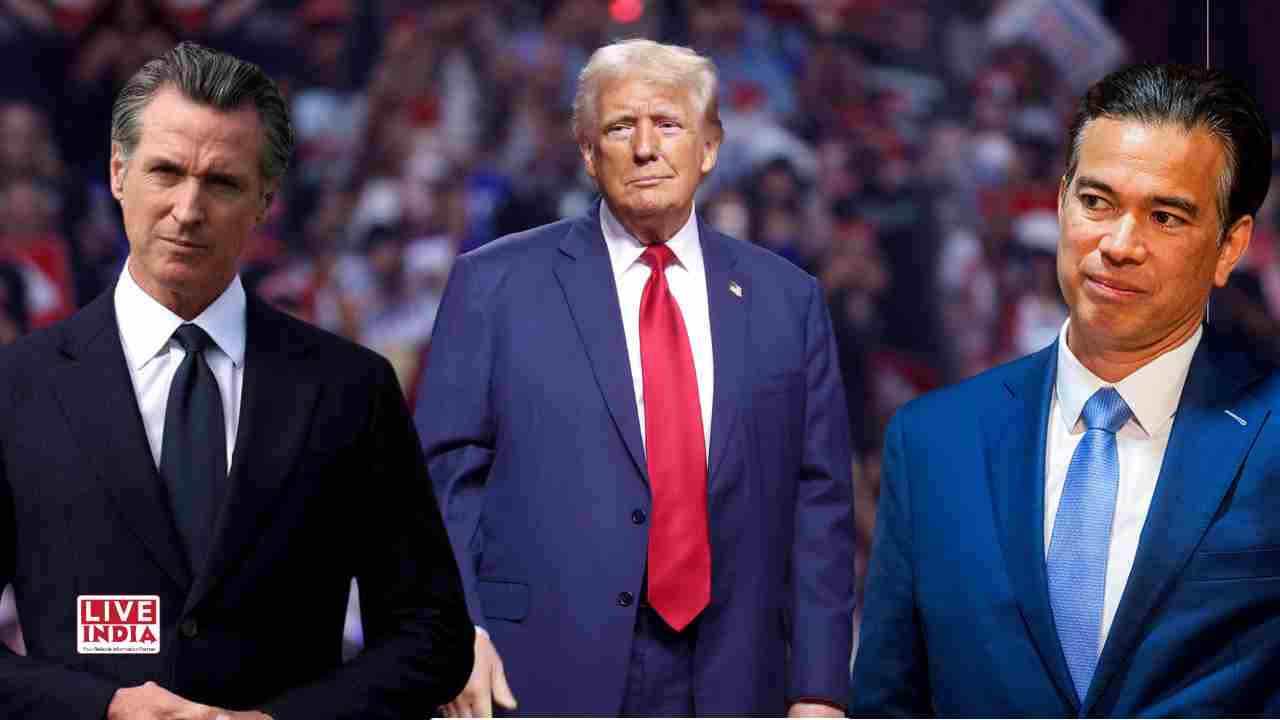


Governor Gavin Newsom and AG Rob Bonta file lawsuit challenging Trump’s use of emergency powers to impose broad tariffs, calling it illegal and damaging to California’s economy
New Delhi, April 17: In a bold legal move, California Governor Gavin Newsom and Attorney General Rob Bonta have filed a lawsuit in the U.S. District Court for the Northern District of California, challenging President Donald Trump’s authority to unilaterally impose broad tariffs using the International Economic Emergency Powers Act (IEEPA).
The lawsuit argues that Trump’s invocation of emergency powers to enforce sweeping reciprocal tariffs on nations such as Mexico, China, and Canada is both unconstitutional and economically damaging, especially to California—the nation’s largest economy.
“President Trump’s unlawful tariffs are wreaking chaos on California families, businesses, and our economy—driving up prices and threatening jobs,” said Newsom. “We’re standing up for American families who can’t afford to let the chaos continue.”
Allegations of Overreach
According to the suit, Trump’s use of IEEPA is unprecedented, as the law does not authorize tariffs among its listed executive powers. Passed in 1977, the act allows for certain emergency measures in the event of foreign threats to national security or economic stability—but tariffs are not among them.
“The president’s chaotic and haphazard implementation of tariffs is not only deeply troubling, it’s illegal,” Bonta said. “California understands that global trade policy is not just a game.”
The lawsuit also invokes the U.S. Supreme Court’s “major questions doctrine,” which holds that broad executive actions with national economic impact require explicit congressional authorization. This doctrine was previously used to strike down President Obama’s Clean Power Plan and President Biden’s student loan forgiveness program.
Fallout From Tariffs
California’s leadership claims that the tariffs have already disrupted supply chains, inflated costs, and caused billions in economic losses to the state’s agriculture, manufacturing, and small businesses.
The legal action follows Trump’s imposition of tariffs under his “Fair and Reciprocal Plan,” where duties were raised to match or exceed those of countries with which the U.S. has trade deficits. This move triggered global market instability, with financial markets in Asia and Europe plunging, and U.S. equities also hit.
Trump recently paused the tariffs for 90 days after several countries, including India, sought trade negotiations. However, the White House’s fact sheet noted that China retaliated with tariffs up to 245%, worsening tensions.
As the battle over tariffs intensifies, California’s lawsuit could become a landmark case in defining executive authority on trade and setting legal precedents on how far emergency powers can be stretched.