
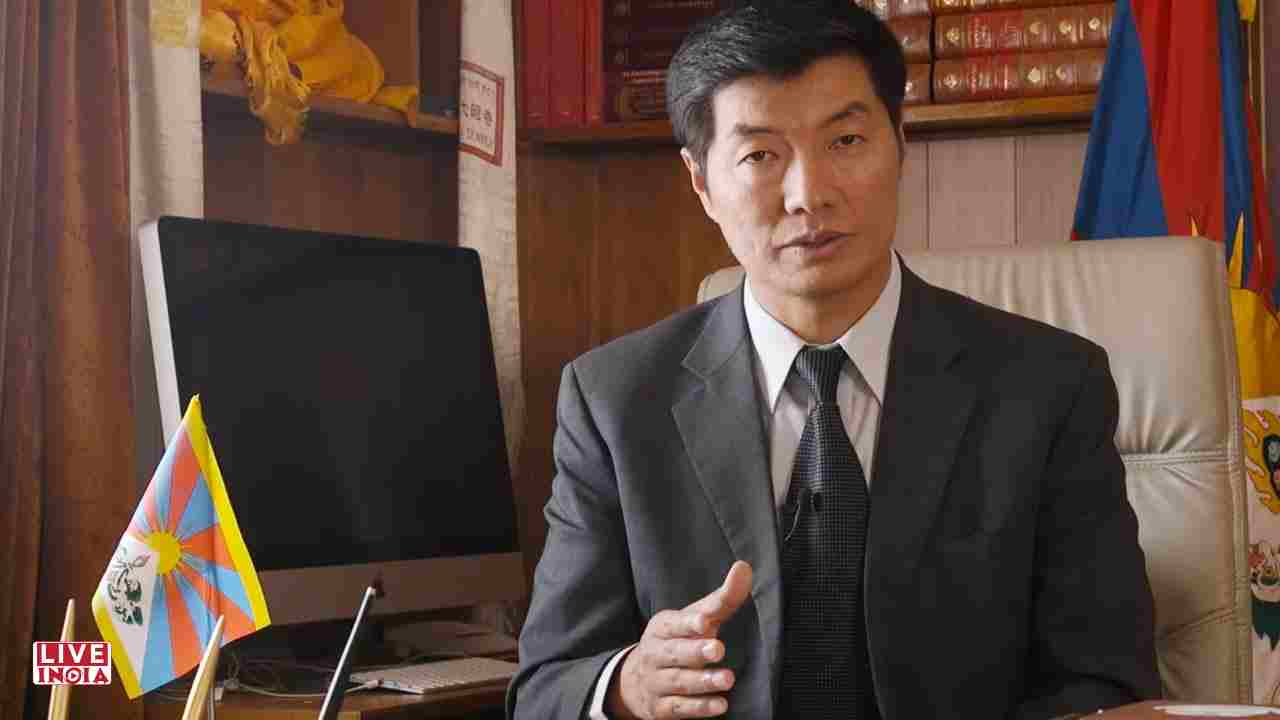


Exiled Tibetan leader says Beijing’s “tentacles are everywhere,” seeking power not only in politics but also in religion and spirituality
New Delhi [India], September 14 — Former Tibetan Prime Minister in exile, Lobsang Sangay, has issued a stark warning about China’s growing ambitions to dominate not only political and economic spheres but also spiritual and religious domains. Speaking in New Delhi, Sangay said Beijing’s push to control the succession of the Dalai Lama carries grave geopolitical consequences that extend far beyond Tibet, affecting nations across South and Southeast Asia and even the Vatican.
“The Chinese world order is what we experienced as Tibetans. They want to control everything — politics, economy, and now religion,” Sangay told ANI.
“Control, Not Faith” – Sangay on Beijing’s Spiritual Grip
Sangay emphasized that Beijing has no genuine regard for Buddhism or spirituality but is solely interested in control. He cited China’s interference in Tibetan Buddhist institutions, its imposition of state-backed imams in Xinjiang, and its manipulation of the Panchen Lama’s role, accusing Beijing of diluting and destroying centuries-old traditions.
“China doesn’t care about reincarnation or spirituality. They only want to control the office of the Dalai Lama. Even the so-called Panchen Lama has been kept in Beijing, far away from monasteries, undermining his credibility,” Sangay said.
He warned that if unchecked, China could extend this pattern to Buddhist institutions in Sri Lanka, Thailand, Laos, and Cambodia, interfering in their religious leadership just as it meddles in politics.
Echoes of the Vatican Agreement
Drawing parallels, Sangay pointed to China’s 2018 agreement with the Vatican, which allowed Beijing a say in appointing bishops. “Tomorrow, they might want a say in selecting the Pope,” he cautioned.
He mocked China’s overreach with a pointed hyperbole:
“They will say, this is not the Shankaracharya — this is the one we like!”
Dalai Lama’s Successor – A Global Flashpoint
China has declared it will decide the next Dalai Lama’s successor, using a selection process involving the golden urn and central government approval. However, the 14th Dalai Lama has already indicated his successor will be born in a “free world,” outside China’s influence.
For Sangay, this dispute is not just a Tibetan issue but a global crisis of faith, sovereignty, and freedom.
“The selection of the Dalai Lama is not just about Tibet. It has major geopolitical ramifications across Asia and the world. China’s tentacles are everywhere,” he said.