
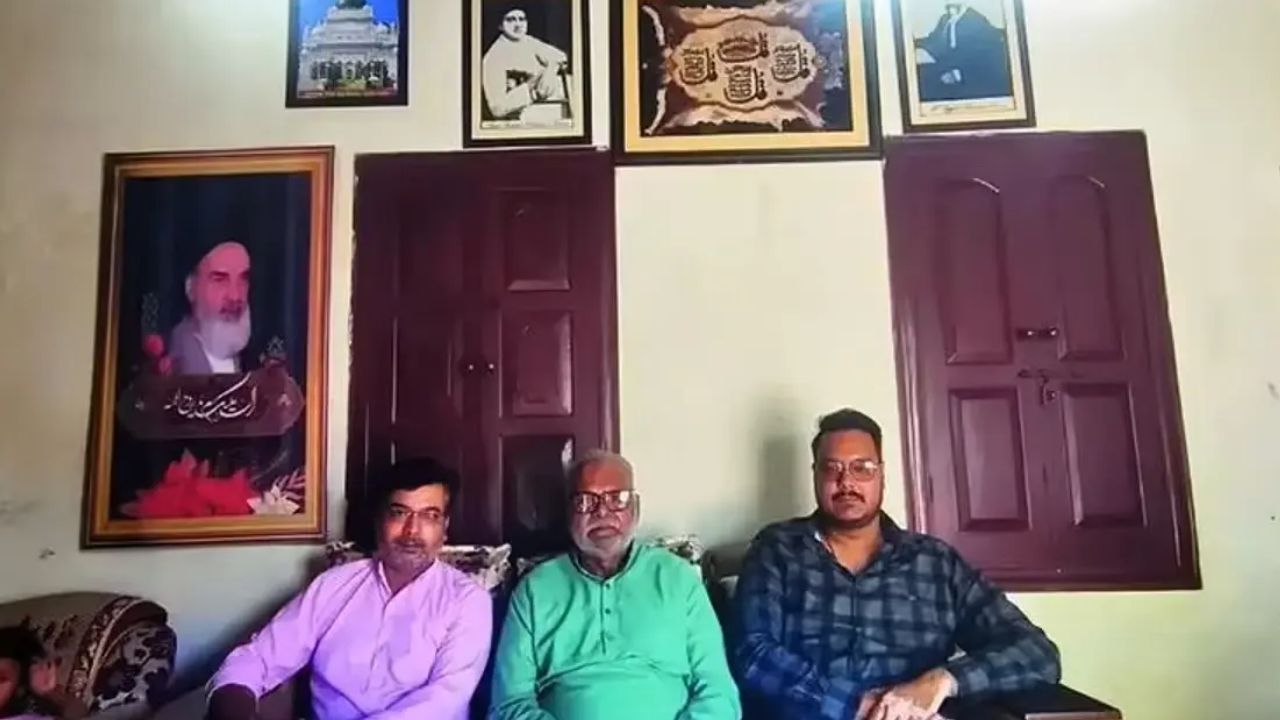


Uttar Pradesh’s Kintoor village traces a remarkable ancestral link to Ayatollah Khomeini and Iran’s revolutionary past.
April 11, 2026: A small village in Barabanki district of Uttar Pradesh holds a unique historical connection with Iran. Kintoor is believed to be the ancestral home of Ayatollah Ruhollah Khomeini, who led the landmark Iranian Revolution of 1979. His grandfather, Syed Ahmad Musavi Hindi, was born in Kintoor in 1790 before migrating to Iran’s Khomein, where the family later rose to prominence. Notably, Musavi retained the suffix “Hindi” to honor his Indian roots.
Historical accounts suggest that Musavi Hindi moved to Iran around 1830, possibly amid the growing influence of British Raj in India. Settling in Khomein, his lineage became influential in religious and intellectual circles. His descendants included Ayatollah Mustafa Hindi and eventually Khomeini himself, who emerged as a central figure in reshaping Iran’s political landscape by overthrowing the Pahlavi dynasty.
The connection between India and Iran continues to resonate culturally and spiritually among locals in Barabanki. Residents highlight how this shared history reflects deep civilizational ties between the two nations. The legacy is also linked to contemporary figures like Ayatollah Ali Khamenei, considered a disciple of Khomeini. Despite modern geopolitical tensions in West Asia, including conflicts involving the United States and Israel, this historical bond remains a symbol of enduring cultural connection.