
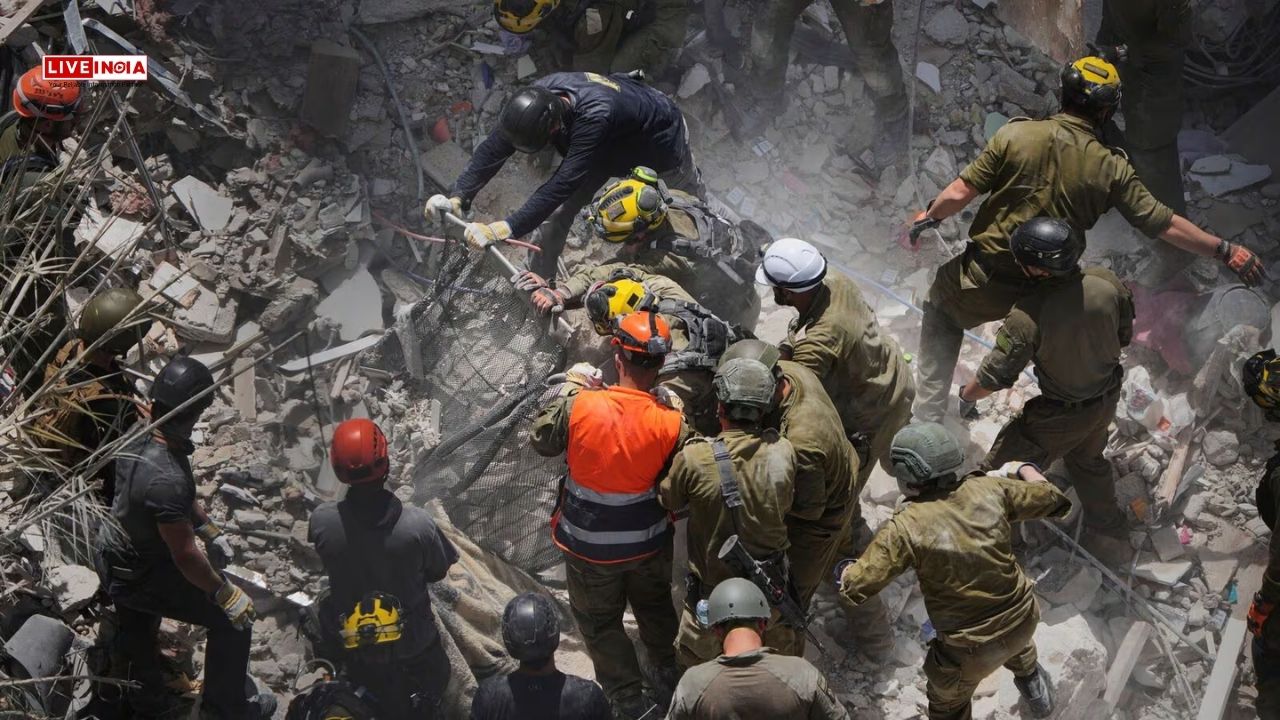


As Israel accuses Iran of deploying cluster munitions, here’s what makes these weapons so dangerous—even long after a war ends.
🗓️ June 20, 2025 | As tensions between Israel and Iran escalate into their seventh day of conflict, Israel has alleged that Iran fired missiles containing cluster bombs—a controversial and widely banned form of weaponry. According to Israeli officials, one such missile scattered bomblets over civilian areas, aiming to maximize damage and casualties.
Also Read: Iran Israel Stock Exchange Soars Amid Worst Tensions in Years
This is reportedly the first use of cluster munitions in the current conflict, raising significant alarm over humanitarian and legal implications.
💣 What Are Cluster Bombs?
Cluster bombs are a type of explosive weapon designed to disperse dozens or even hundreds of smaller submunitions over a wide area. These bomblets are packed into a shell that detonates mid-air, blanketing an area equivalent to several football fields.
The danger? Many of these submunitions fail to explode on impact and lie dormant for months—or even years—posing grave risks to civilians long after the war ends.
They can be:
- Dropped from aircraft or
- Launched via ground-based missile systems.
⚔️ First Use & Historical Context
Also Read: Trump’s Decision on Joining Israel-Iran Air War Expected in Two Weeks, Says White House
- First Used: During World War II.
- Developed Extensively: In the Cold War era for targeting widely dispersed enemy troops, tanks, and infrastructure.
Despite their military intent, cluster bombs are notoriously imprecise, with weather and environmental conditions affecting their accuracy, increasing the chance of unintended civilian casualties.
🌐 Global Ban & the 2008 Convention
In response to their devastating effects, 123 countries signed the Convention on Cluster Munitions (CCM) in 2008, which:
- Prohibits the use, production, transfer, and stockpiling of cluster bombs.
- Mandates destruction of existing stockpiles.
➡️ Came into force: 2010
🚫 Non-signatories: United States, Russia, China, Ukraine, and Iran are among the major countries that did not sign the treaty.
⚠️ Recent Use in Ukraine
In March 2025, Russia used cluster munitions in Dobropillia, Ukraine, killing 11 people and injuring 40—a grim reminder of their indiscriminate nature.
🧩 Conclusion
With Israel accusing Iran of using these weapons, the stakes have intensified, not just militarily but morally. Cluster munitions may serve short-term battlefield goals, but their long-term humanitarian toll is undeniable.
📌 Tags:
cluster bombs, Iran Israel war, Israel missile attack, cluster munitions explained, Convention on Cluster Munitions, unexploded bombs, humanitarian law
📢 Hashtags:
#ClusterBombs #IsraelIranConflict #WarCrimes #InternationalLaw #Explained #MiddleEastWar