
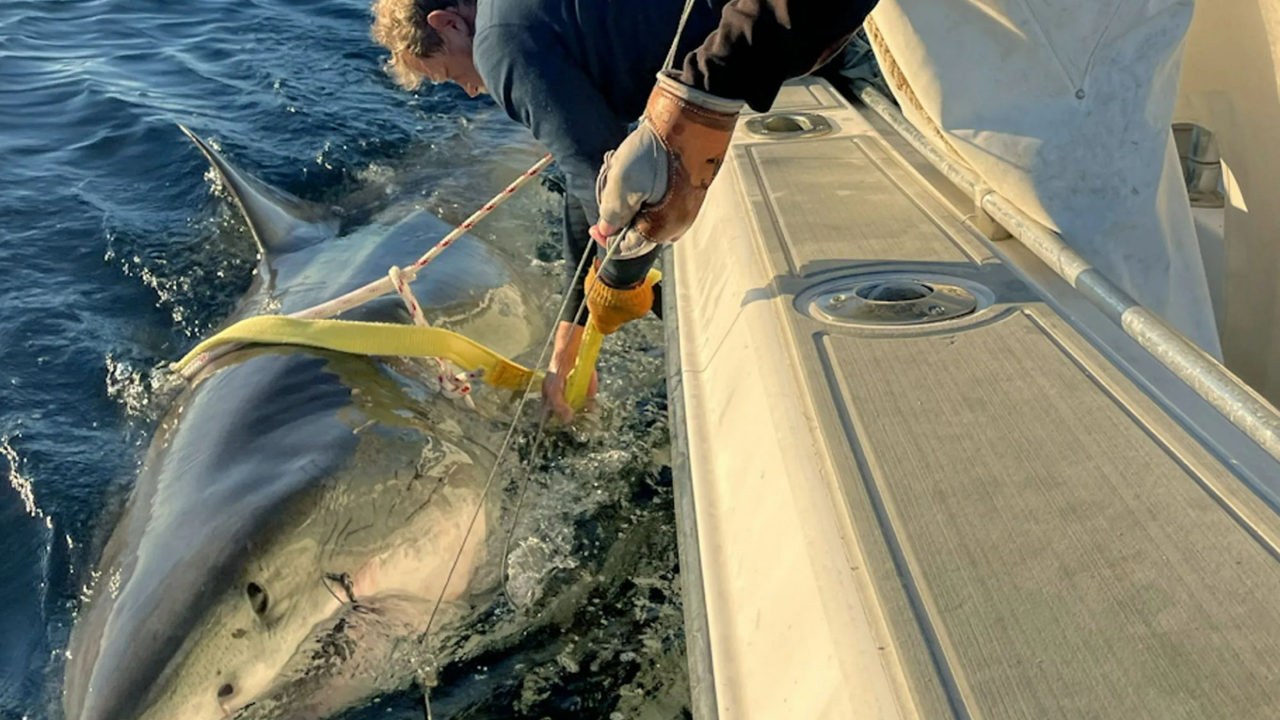


Washington D.C. [US], July 25 – A colossal great white shark, dubbed “Contender,” has recently surfaced off the coast of New England and continues its northward migration along the Atlantic coastline this summer, according to researchers from OCEARCH, a nonprofit marine research organization.
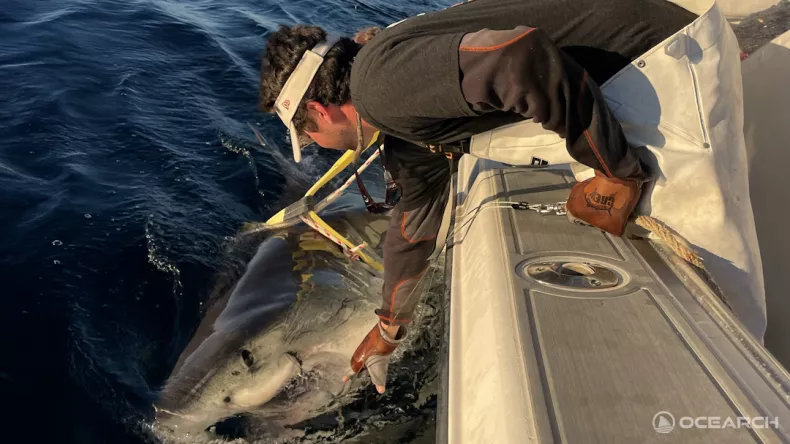
Measuring an impressive 13 feet 9 inches and weighing 1,653 pounds, Contender holds the distinction of being the largest male white shark ever tagged in the western Atlantic by OCEARCH.
The apex predator was initially tagged in January, approximately 45 miles off the Florida-Georgia coast. His presence was again detected last Friday, July 18, when his tag pinged about 50 miles east of Nantucket, Massachusetts, nestled between Nantucket Shoals and Georges Bank. While his beacon has not pinged since that date, OCEARCH data scientist John Tyminski confirmed to Newsweek on Thursday that this northern movement is characteristic for white sharks this time of year as they migrate to their summer-fall foraging grounds.
Summer Foraging Grounds and Data Collection
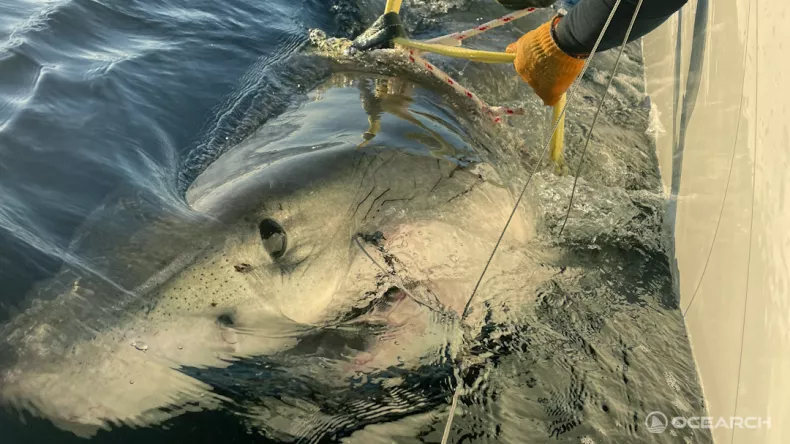
Western North Atlantic white sharks typically utilize two broad regions during the summer and fall months: Cape Cod and Atlantic Canada. Tyminski explained that “Both of these areas have healthy populations of seals which can be a rich food source especially for larger white sharks like Contender,” though white sharks are also opportunistic feeders, consuming various fish, squid, and other marine mammals.
Prior to his recent appearance off New England, Contender had pinged just 22 miles off the coast of Cape Hatteras, North Carolina, in early June. An OCEARCH staffer noted on Instagram that the Outer Banks serves as a common “rest stop” for these white sharks, providing rich food resources to help them prepare for long journeys, potentially over 1,000 miles, up to Canada.
A “ping” is transmitted when a SPOT tag, attached to a shark’s dorsal fin, rises above the surface, sending real-time location data to researchers via satellite. OCEARCH has successfully tagged 446 animals to date. The organization’s global shark tracker allows the public to monitor Contender and other ocean predators. The SPOT tag on Contender is expected to provide valuable data for approximately five years, aiding in the understanding of his movements and migration patterns. Researchers have also collected important biological samples, including urogenital material, which are currently undergoing analysis.
Contender vs. Nukumi: The Giants of the Atlantic
While Contender is the largest male white shark tagged by OCEARCH in the Atlantic, a massive 17-foot-2-inch female white shark named Nukumi holds the title as the largest specimen OCEARCH has ever tagged and released. Nukumi, named after a Native American mythological figure, was first tagged off Lunenburg, Nova Scotia, in October 2020 and weighed an astounding 3,541 pounds. Her last ping was recorded in 2021.
According to the Florida Museum of Natural History, white sharks are estimated to reach a maximum size of about 20 feet, with unconfirmed reports of some reaching up to 23 feet in length. The museum’s website also notes that the white shark has been responsible for more fatal attacks on humans than any other shark species, primarily due to its size, power, and feeding behavior.